
It’s Palm Sunday…and our second full day in Madrid.
This day began with an excursion to the Monastery of San Lorenzo de El Escorial outside of Madrid.
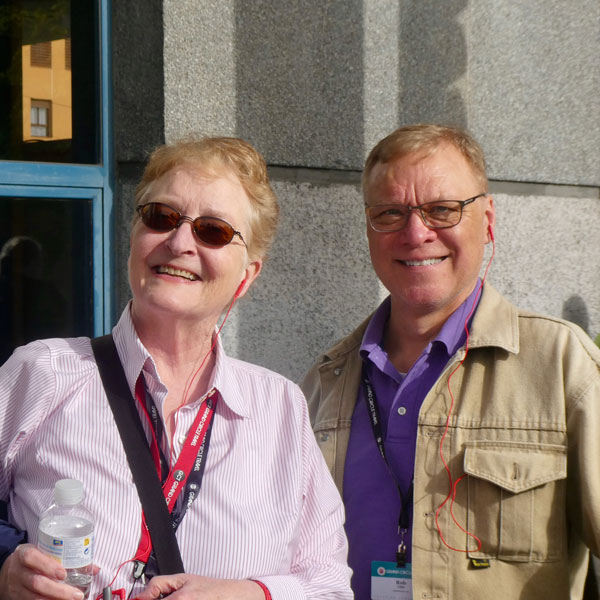
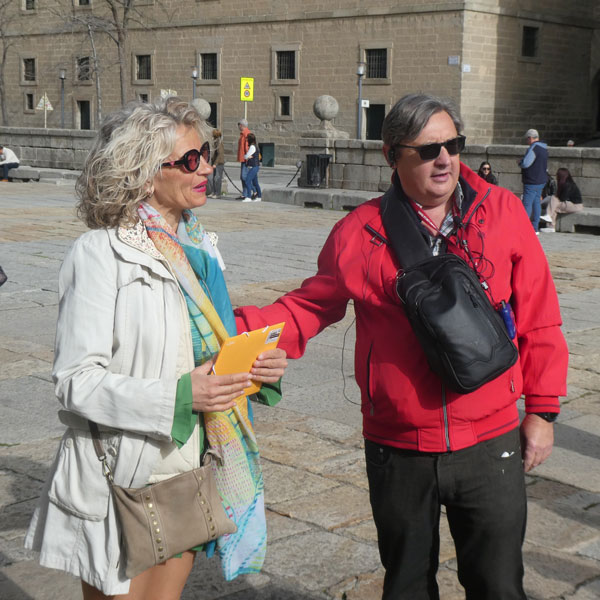
As can be read in their expressions, Rob’s and Peg’s anticipation of our destination was palpable…even so early in the morning.
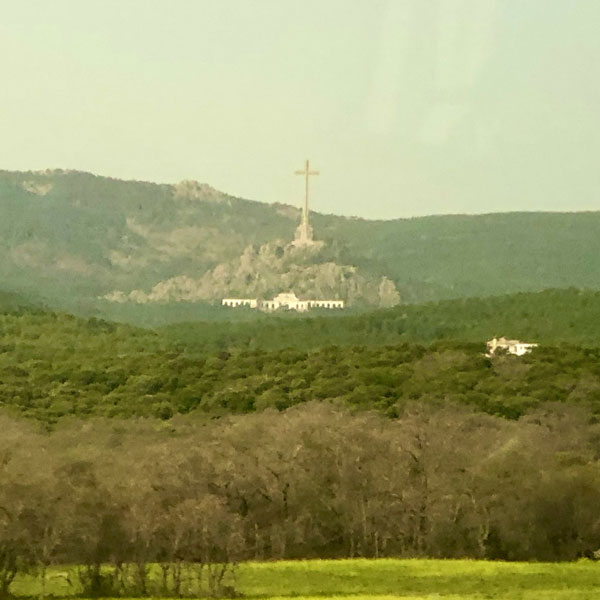
The El Escorial complex is a Spanish architectural treasure…and surprisingly close (probably not by accident) to what had once been the final resting place of fascist dictator Francisco Franco. (Maybe he thought “location…location…location” when he chose to build the former Valley of the Fallen memorial in such close proximity to the royal monastery. BTW, his corpse has since been removed and access to the monument is restricted to those praying and paying their respects to the victims of the Spanish Civil War. Read: no tourists.)
Construction of El Escorial began in 1563 and ended in 1584. Conceived by King Philip II1, the building was intended to serve multiple purposes:
– a burial place for his father, Charles V
– a Hieronymite monastery
– a palace for himself
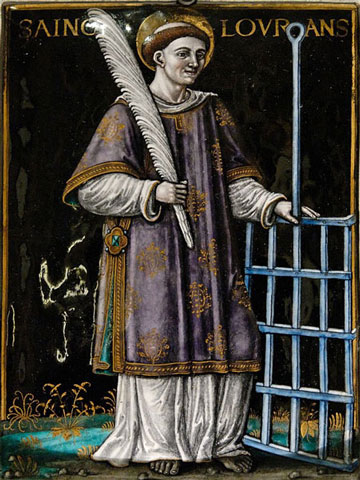
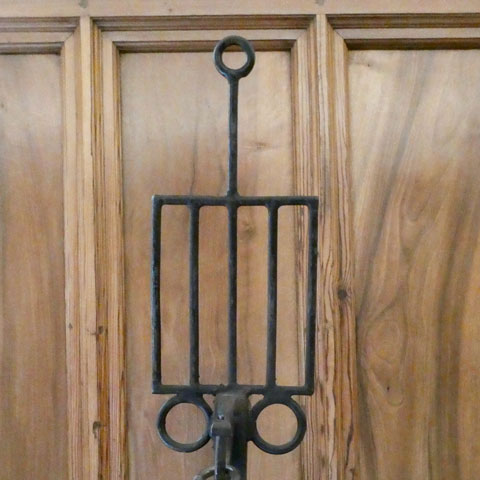
The first architect, Juan Bautista de Toledo, designed the ground plan on a gridiron scheme, recalling the grill on which San Lorenzo, the patron saint of the building, was martyred. And this grill motif is integrated in design elements throughout the site…similar to the way that Disney works the three-circle Mickey Mouse logo subtly into their entertainment venues.
Built of granite and austere in its design, El Escorial is four stories tall with large towers at each corner. Arranged as a quadrangle, the complex includes a church, a monastery, a royal palace, a college and a library.
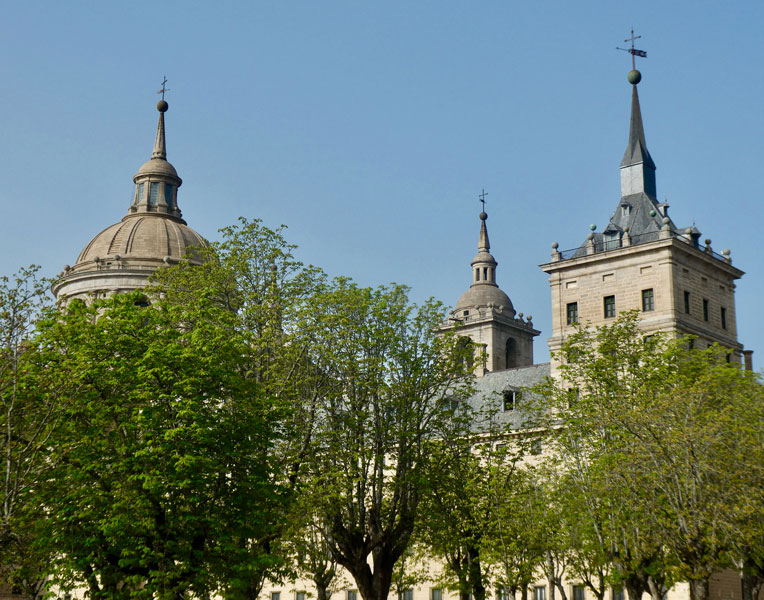
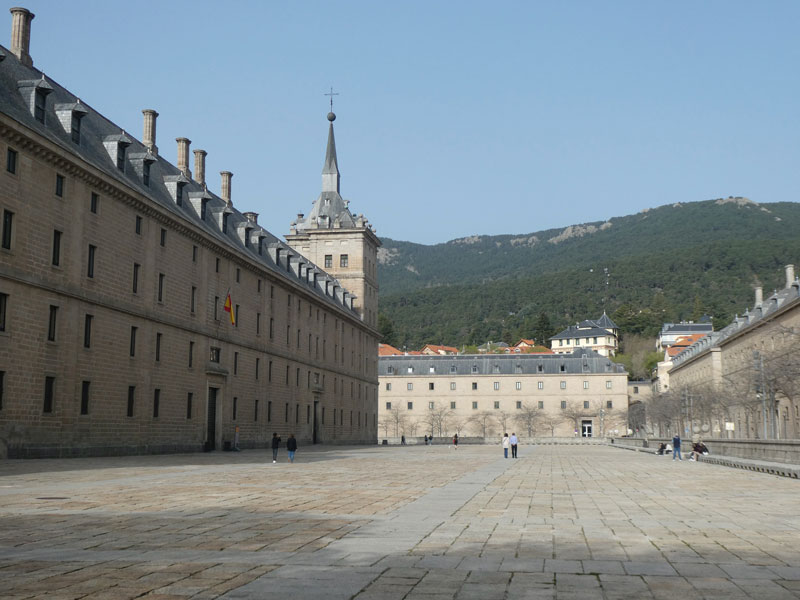
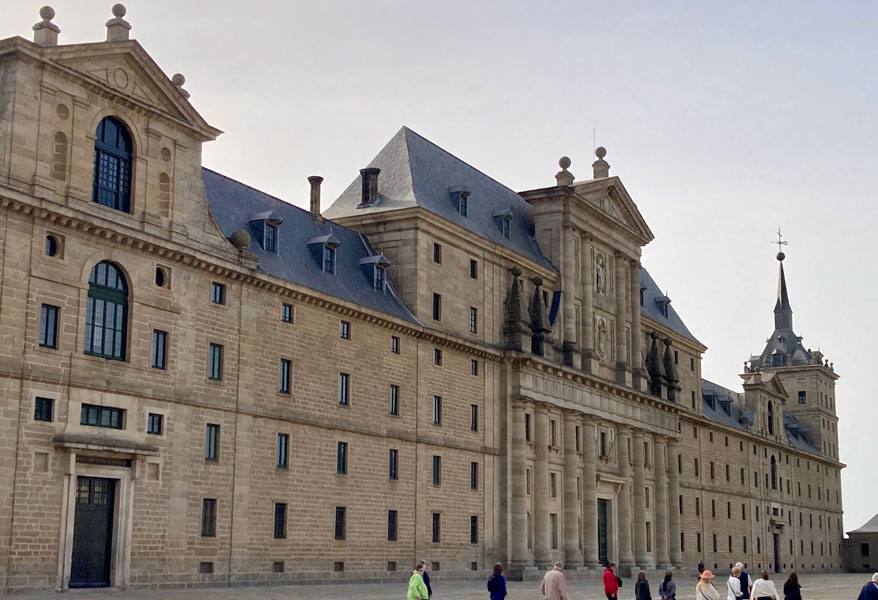
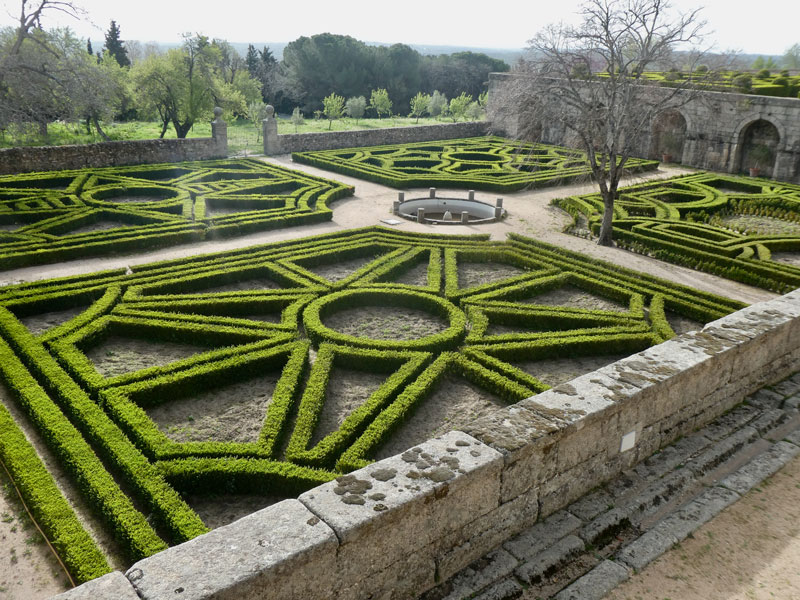
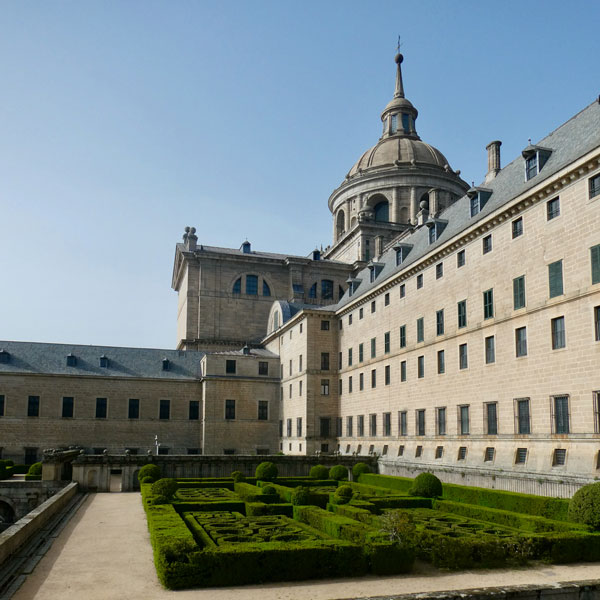
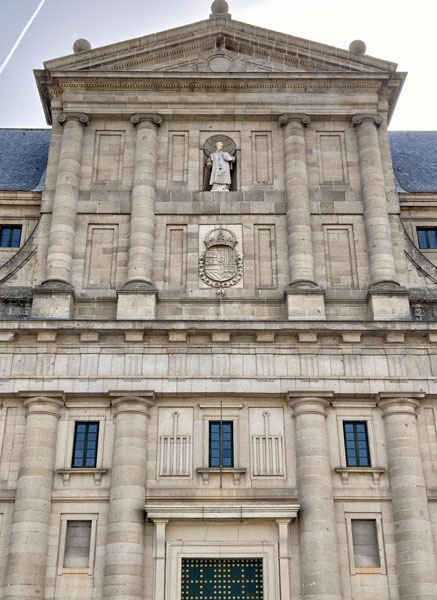
While no longer the residence for any living royalty, the facility is still serving multiple functions. As a monastery, Augustinian monks have replaced the original Hieronymite order. The all-boys school is now co-ed and functioning. The basilica is an active house of worship. (We were denied access to it because of back-to-back Palm Sunday services on the day of our visit.)
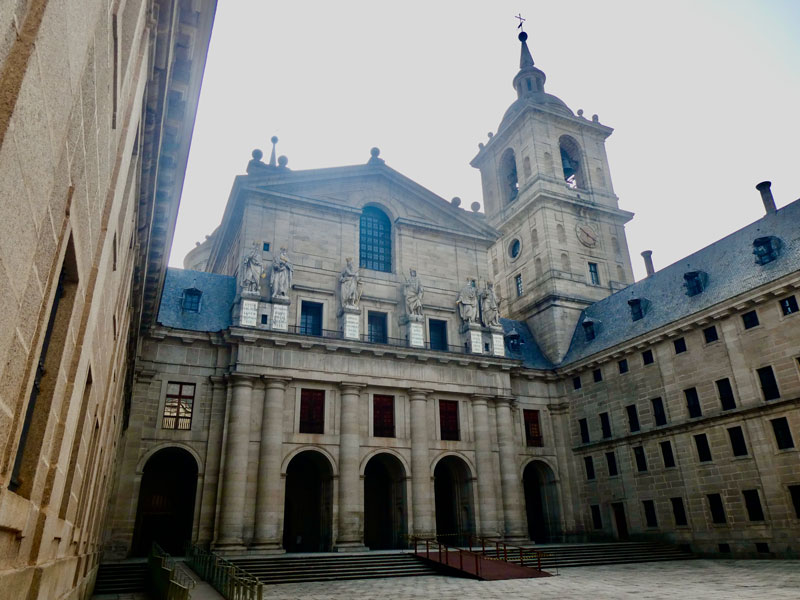
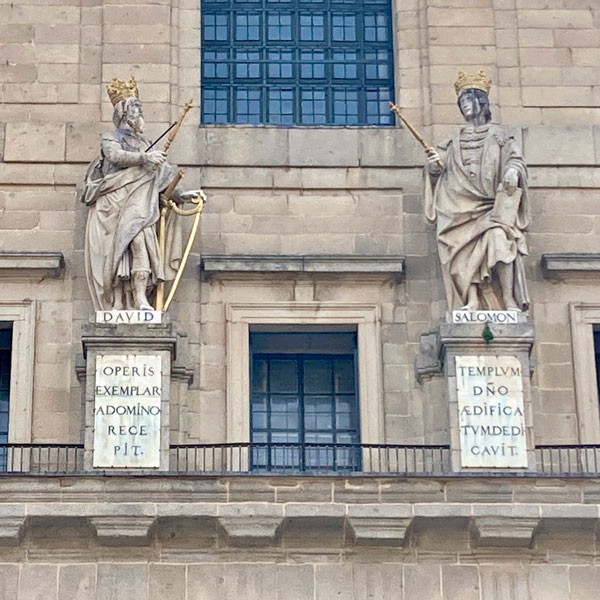
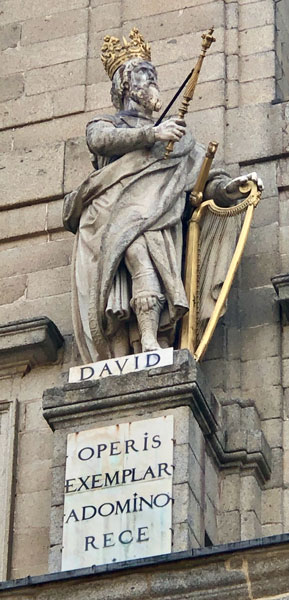
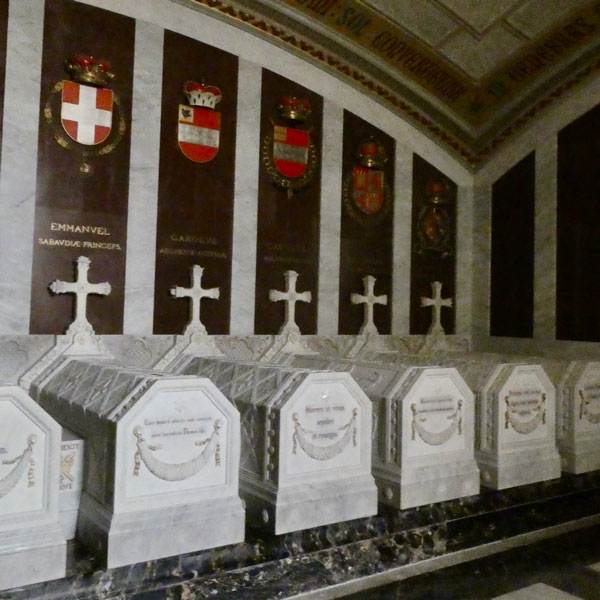
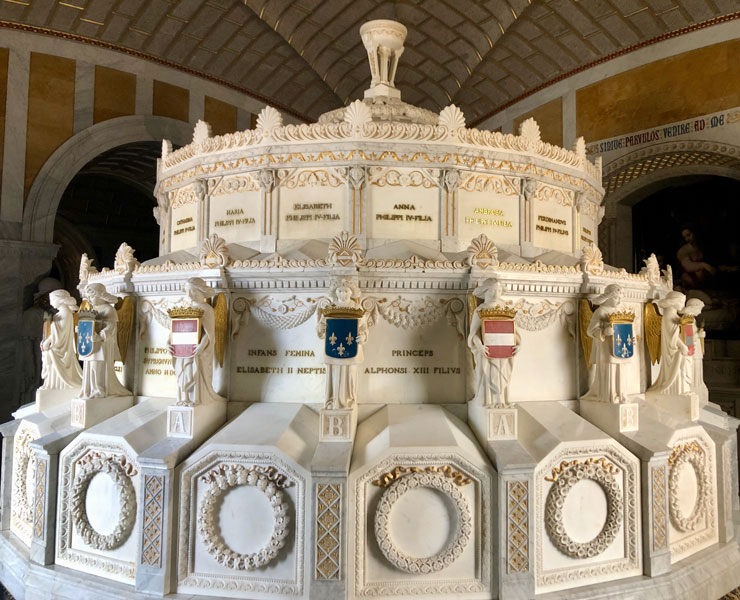
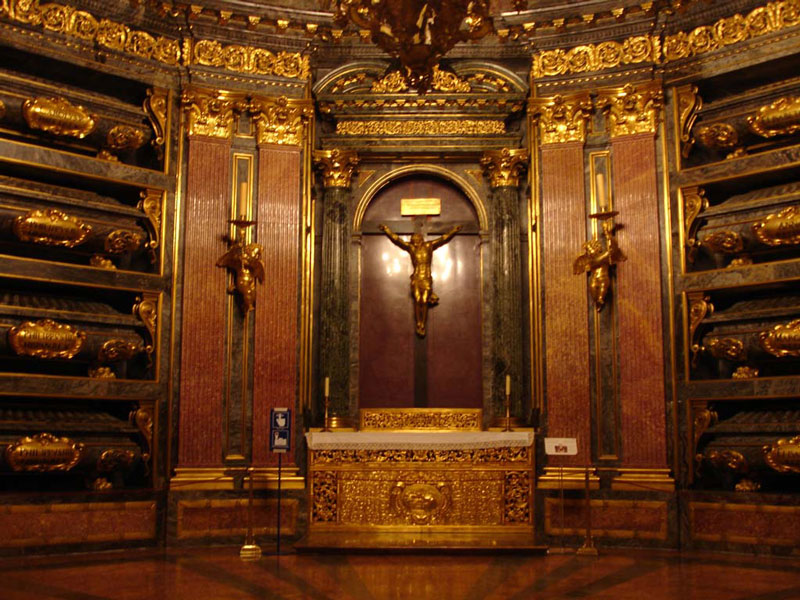
And, with a few exceptions, the crypt below the altar is the final resting place of most Spanish kings, their queens and their extended family members such as other wives, children not in the line of succession, bastard siblings, etc.
The buildings are filled with religious paintings and frescoes. All four perimeter walls of the colonnaded cloister are lined with biblically-themed frescoes to inspire prayer and contemplation.
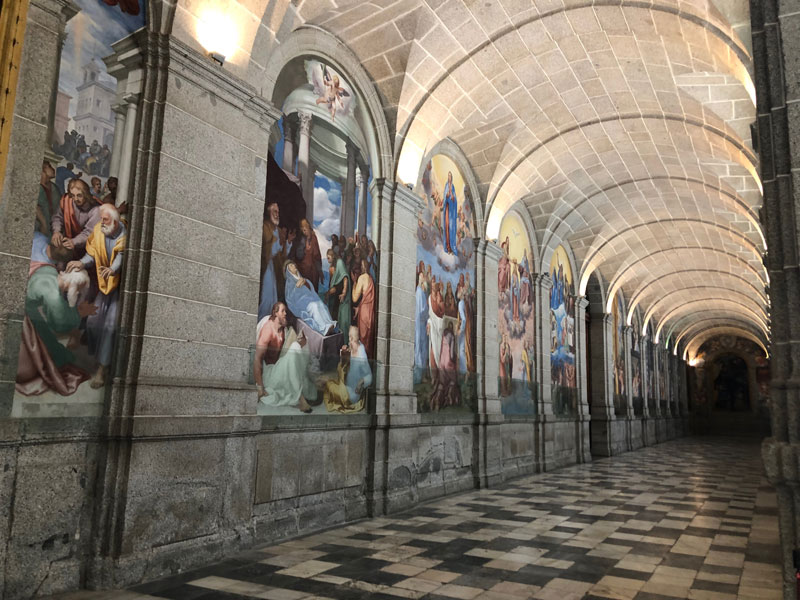
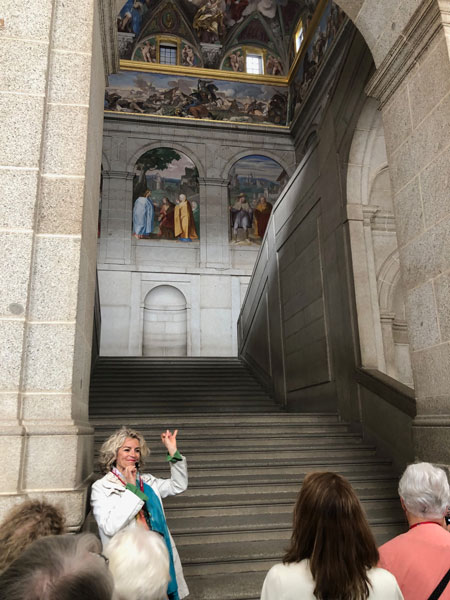
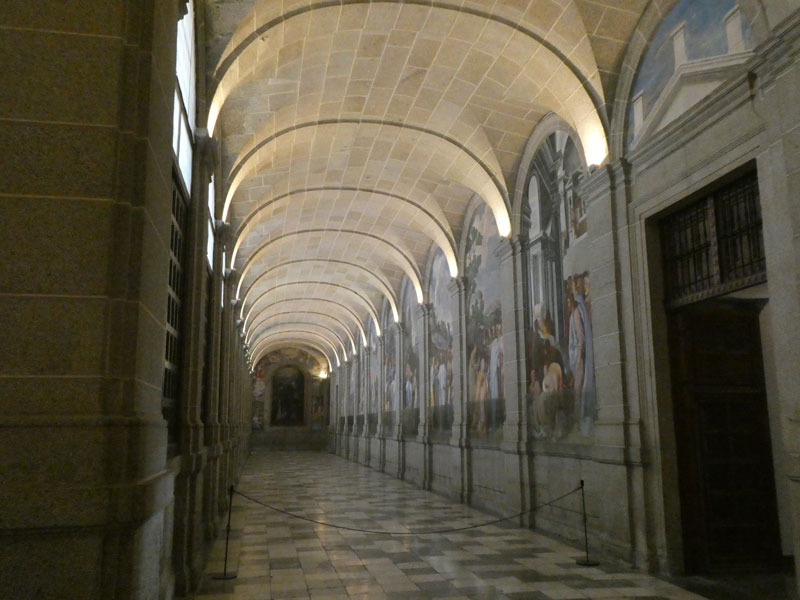
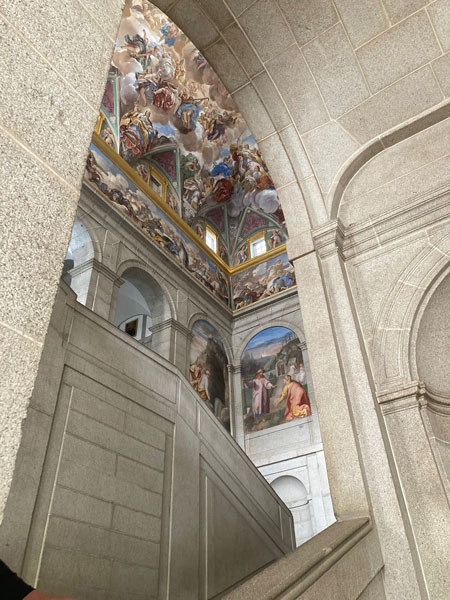
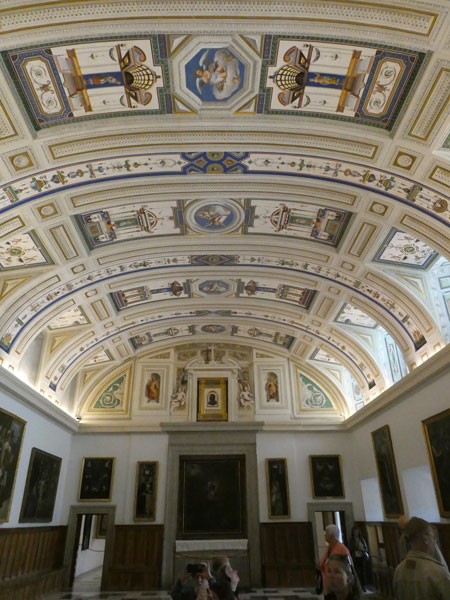
And while most of the artwork considered by Spain to be national treasures have been removed to the Prado, there are still fine works of art by Spanish masters at El Escorial.
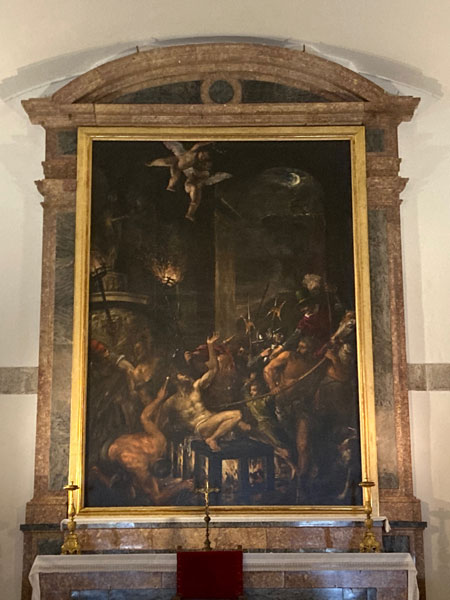
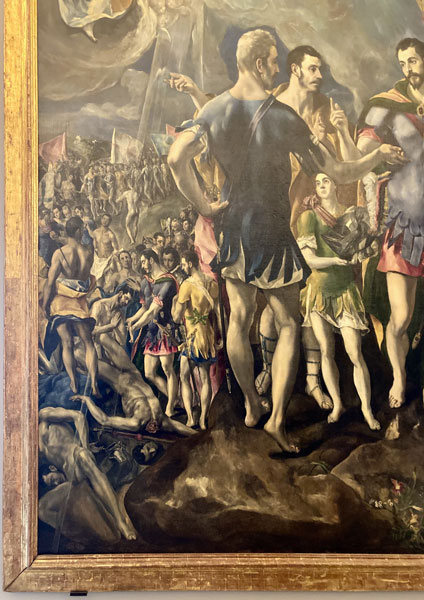
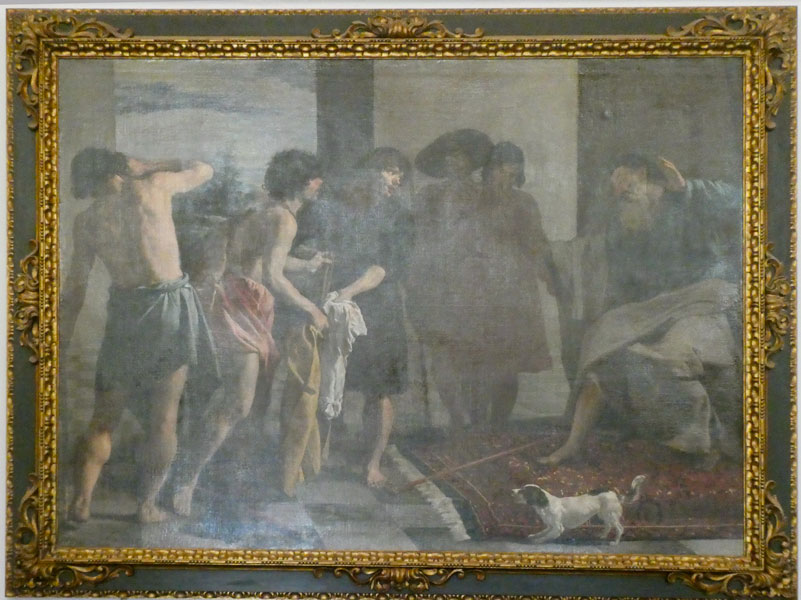
There were two on display that had been rejected by Phillip as not keeping with his harmonious vision. (See below)
One is a painting of St. Lorenzo being martyrized on the grill that was meant to grace the basilica altar (left). But the king considered it to be too dark and it was repurposed to a small chapel off the cloister. Another, El Martirio de San Mauricio y la Legión Tebana by El Greco (center) was likewise rejected by the king for emphasizing the large figures chatting in the foreground while relegating the martyrdom of the title to the lower left corner. (The third painting (right), depicting Joseph’s brothers trying to hoodwink papa Jacob, is just my little salute to Joseph and the Amazing…Technicolor Dreamcoat. The artist was Diego Velázquez.)
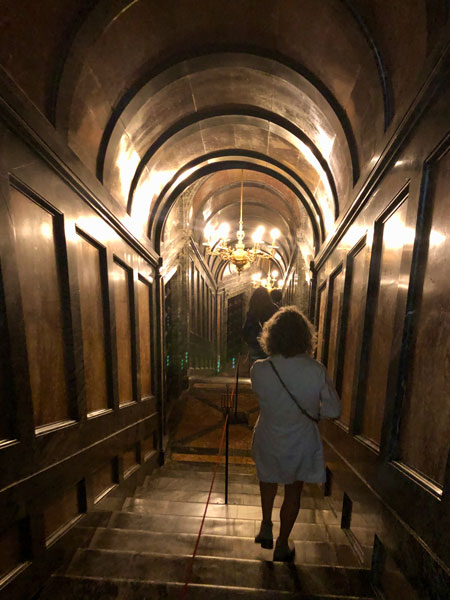
We next visited some actual royals-in-residence. (This may be out of order. We covered a lot of ground without getting our bearings.) The royal crypt, located 12 meters below the basilica’s altar, is visually stunning with its dark marble coffins set in tiered niches that culminate in an elaborate “heavenly” dome over the whole space. Fun fact: the bodies (actually just the bones) that are interred throughout the crypt are “prepared” for entombment by remaining in the “Rotting Room” for 30 years prior to burial. We passed two such rooms en route to the royal crypt: one for the actual royals and one for their “peripherals”.
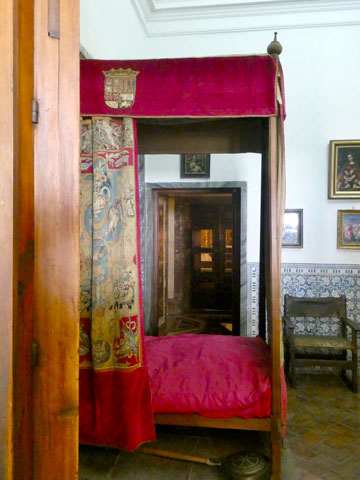
Topside again, we continued our tour of the building, entering the small palace constructed around the perimeter of the basilica’s high altar. Home of the king and queen when in residence, it was not overly ostentatious and definitely not oversize. The most telling feature of the royal rooms was the placement of both the king’s and the queen’s chambers on opposite sides of the sacristy. This allowed the waking royals to witness (if not physically attend) a mass by just falling out of bed, so to speak.
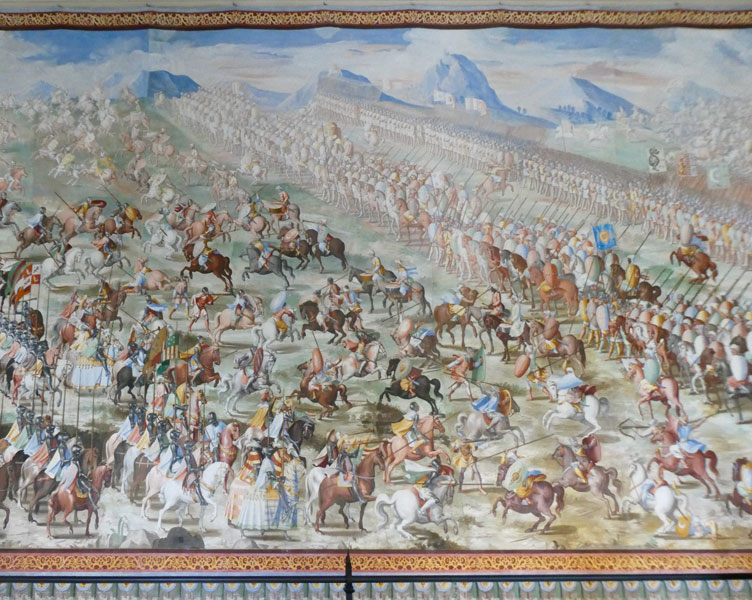
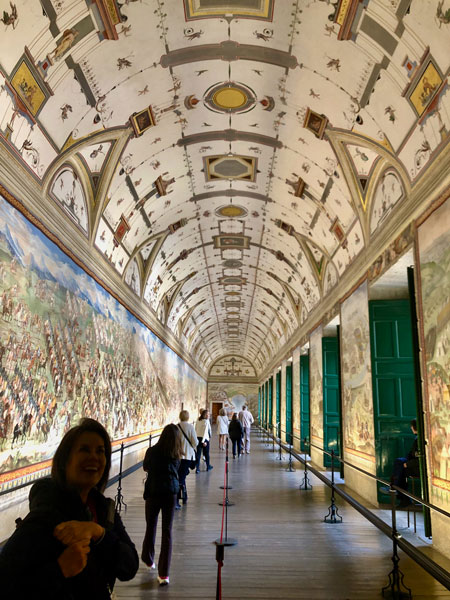
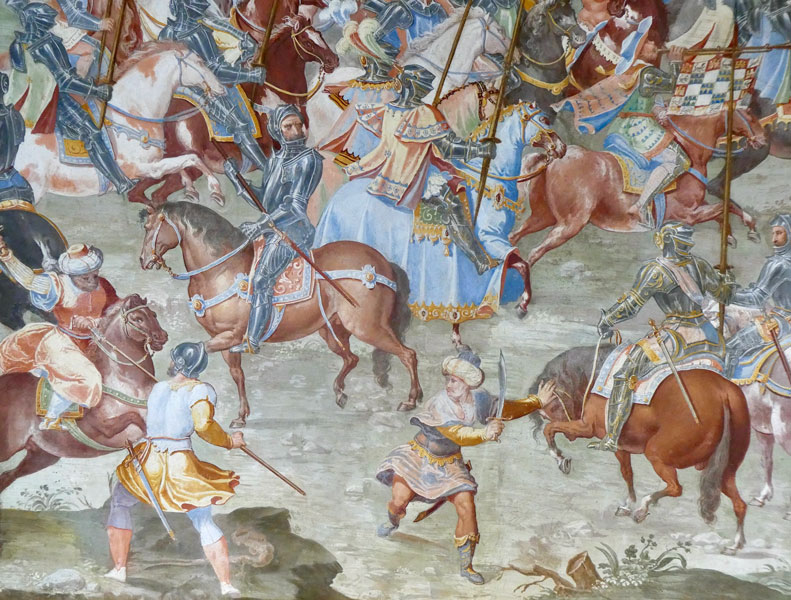
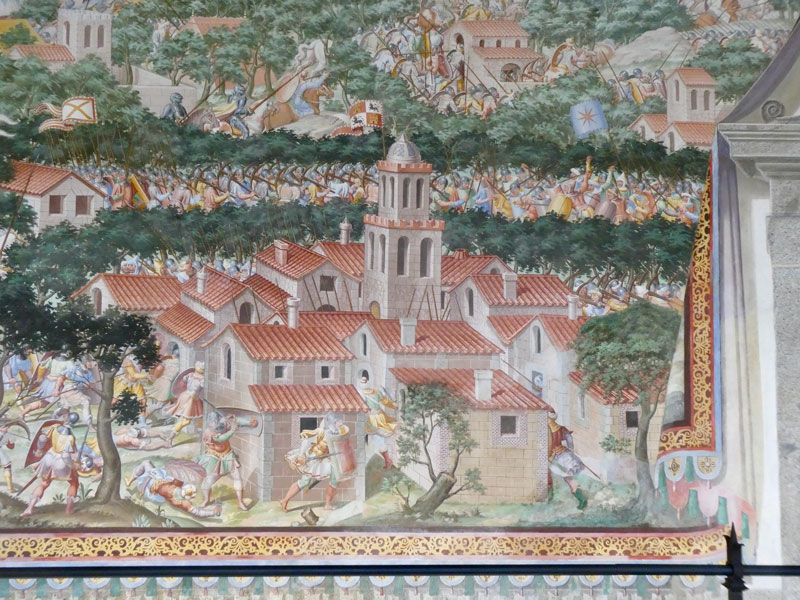
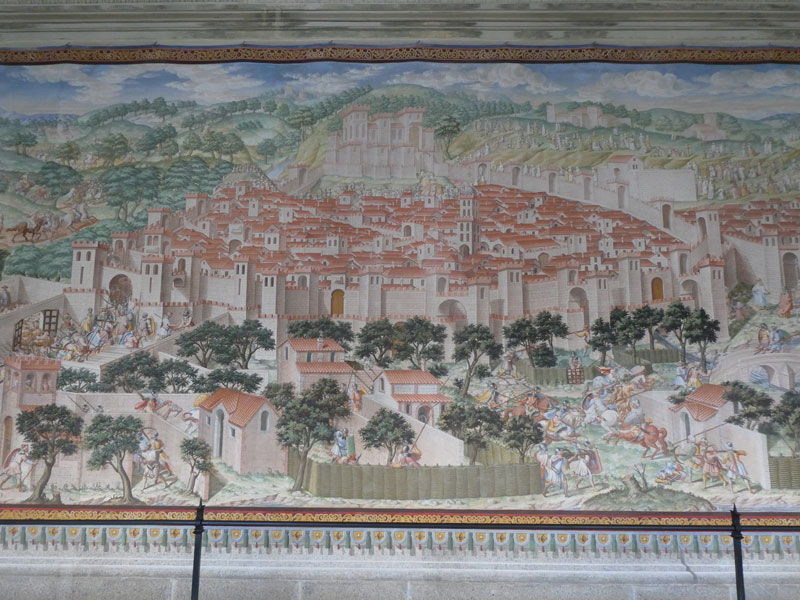
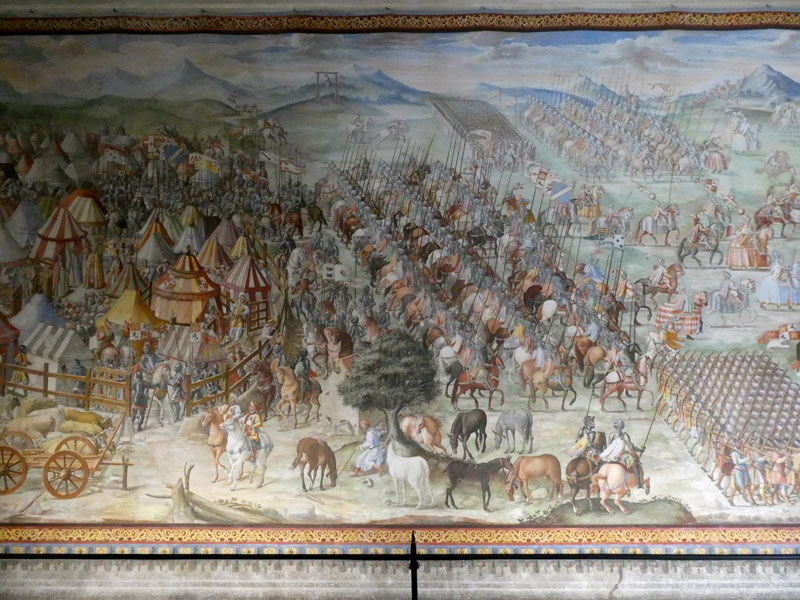
Our final “big room” at El Escorial was the Queen’s Gallery. More popularly known as the Hall of Battles, it was reminiscent of Versailles’ Hall of Mirrors…only with painted images of battles and battle sites. The entire room is a visual recounting of the expulsion of the Moors in murals.
After the extensive (and exhausting) tour of El Escorial, we welcomed the relaxing hour-long bus ride back to our hotel to decompress.
Once again, the mild weather allowed us to dine al fresco at a small restaurant just down the street from our hotel. Here, we stumbling through the ordering process, supplementing their picture menu with our ridiculously-poor Spanish. The server, however, was incredibly patient and very accommodating…and we somehow bumbled our way to three delicious meals with liquid refreshments. Plus, we were entertained. First, by a pair of rambunctious toddlers (who spoke better Spanish than we did) who were dining with their parents; and then, secondly, by the hullabaloo that ensued when a bird took a flying dump on the table of six nearby Gen Z-ers. Its aim was apparently perfect.
Then, at 4 PM, we re-boarded our bus for a ride to central Madrid for a guided tour with Juanjo. During the trip, we passed a number of Madrid landmarks–a gateway arch, fountains, City Hall, a view down the Gran Via–until our vehicle was rerouted and we had to disembark due to a Palm Sunday procession that was starting to wind its way through the area.
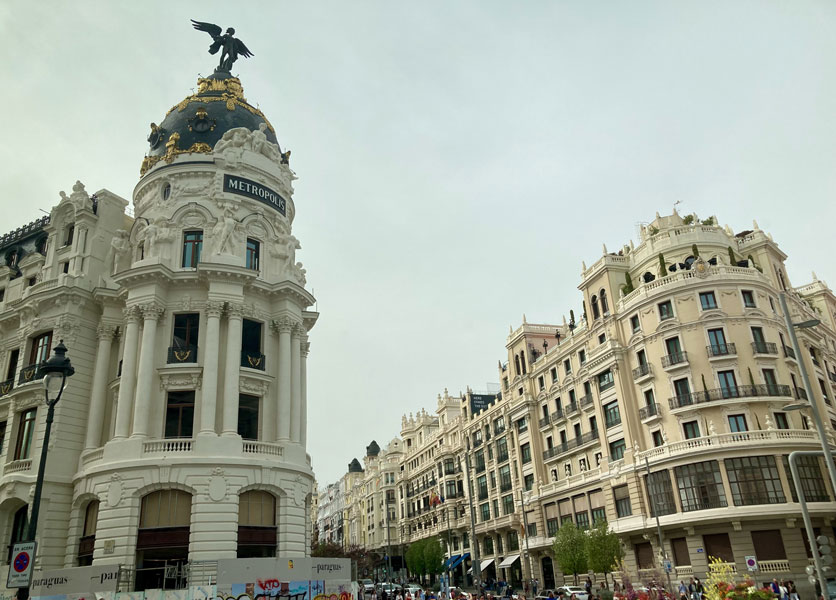
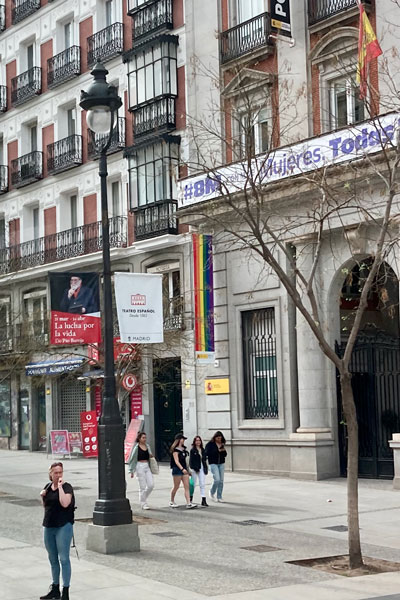
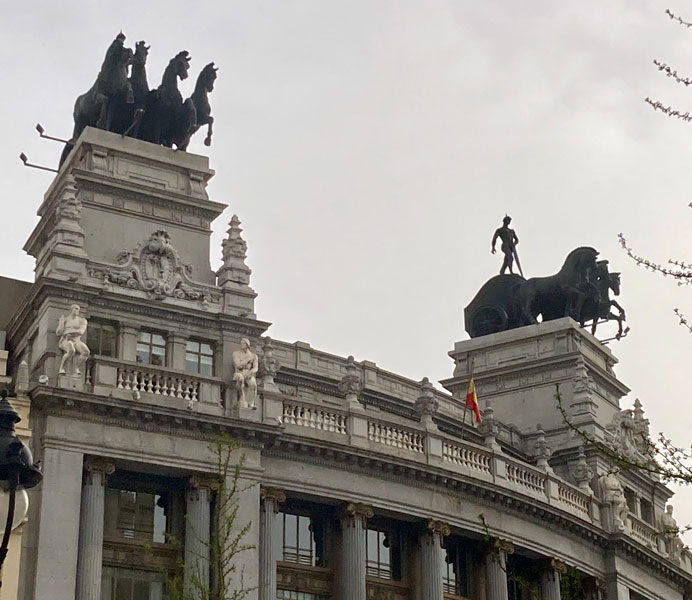
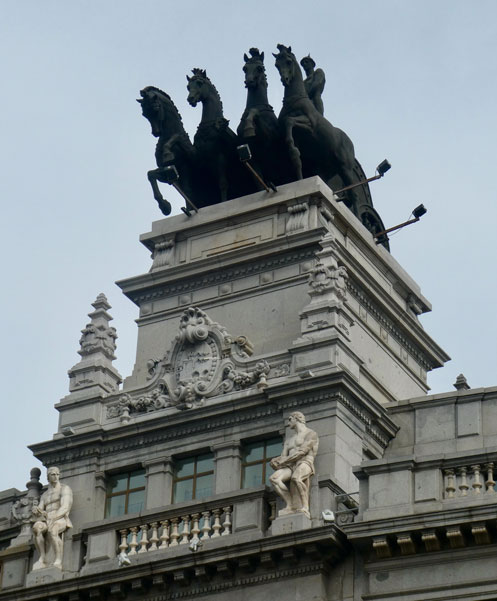
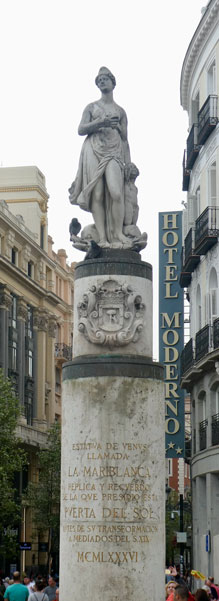
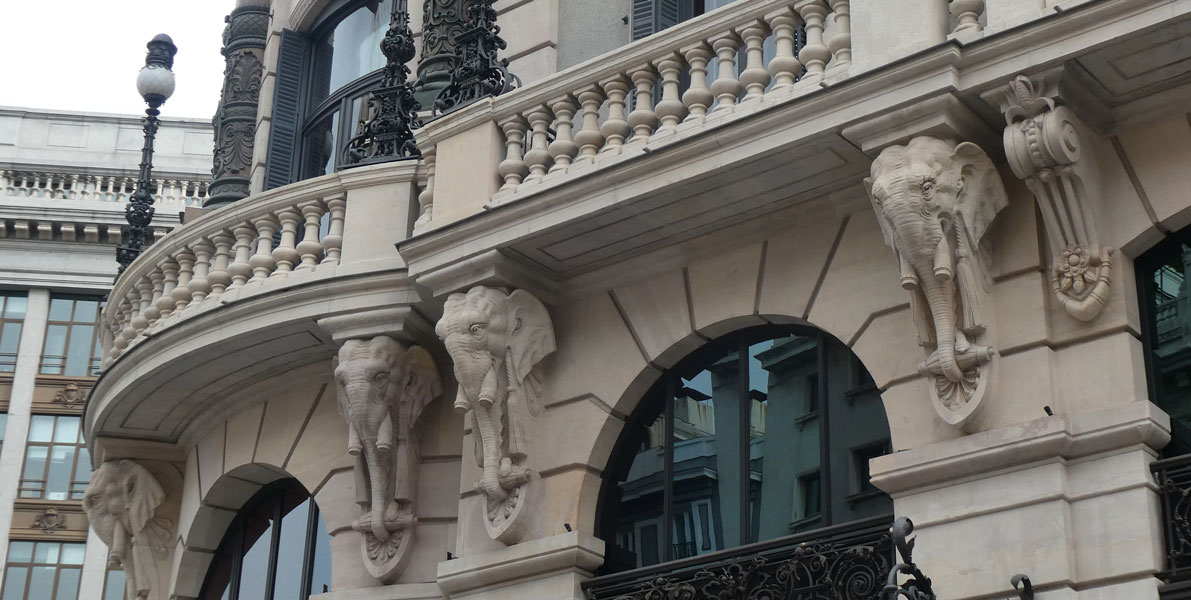
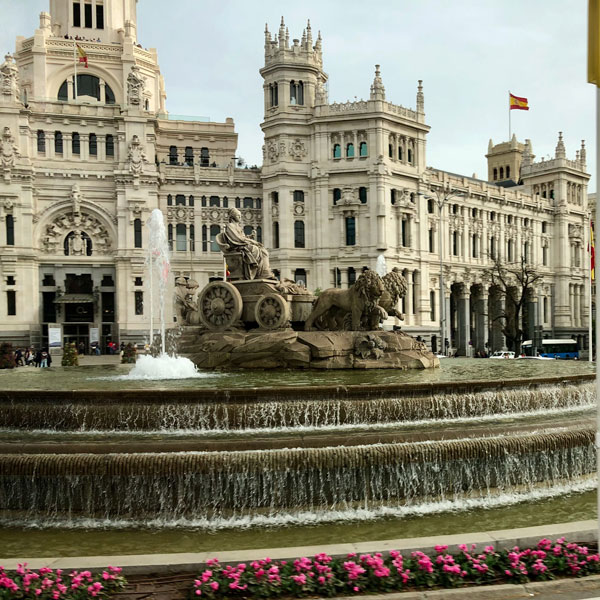
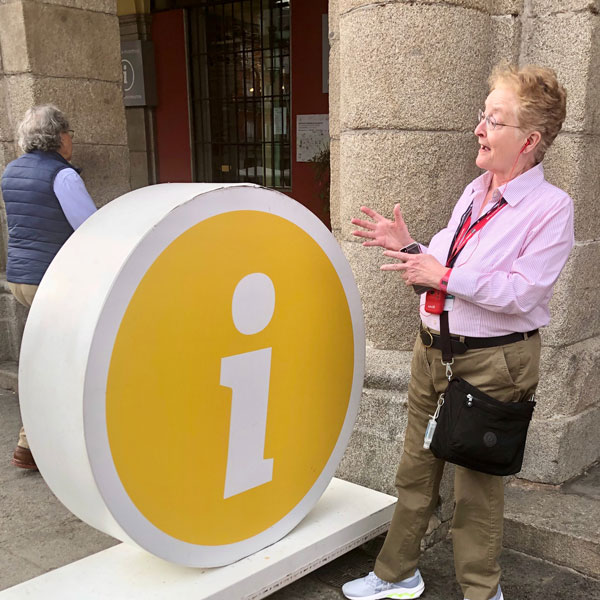
On foot now, our group snaked through the huge crowds on our way to La Puerta del Sol, one of the two most iconic plazas of Madrid. This is the home of Madrid’s New Year’s Eve celebration each year.
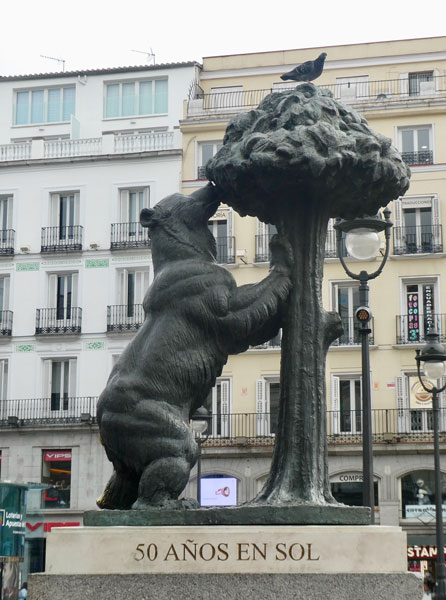
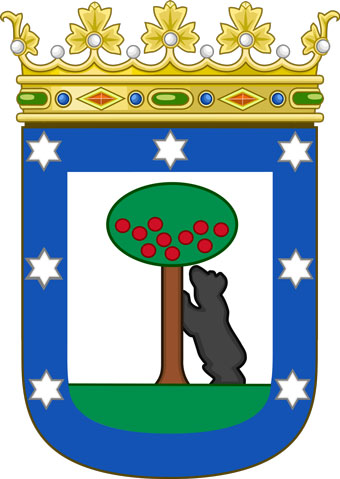
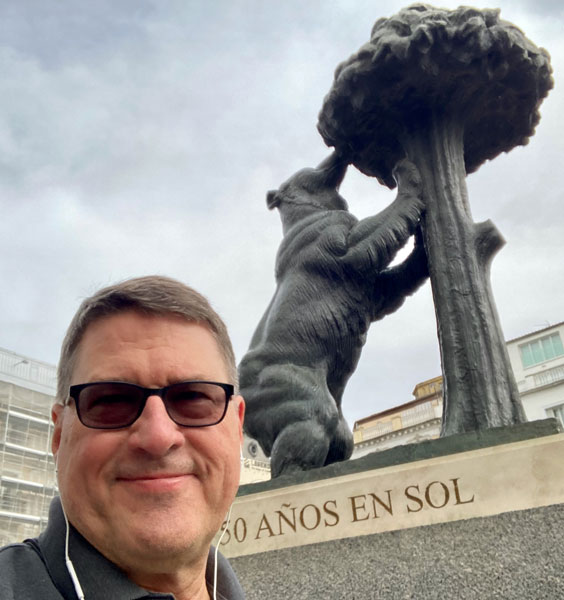
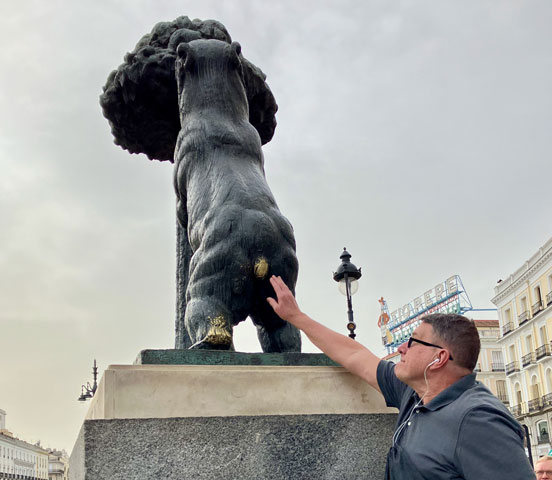
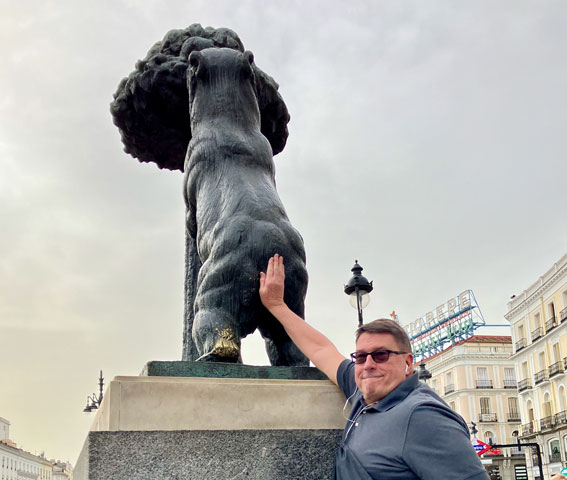
Here, we had a little fun with the Bear and the Strawberry Tree statue. The bear and tree represent the coat of arms of Madrid. And, a plus: strawberries just happen to be in season now in Spain! (The pigeon was a bonus.) Not really sure if there is any luck attached to wiping the bear’s ass…but I did it anyway. From its shine, so have many others!

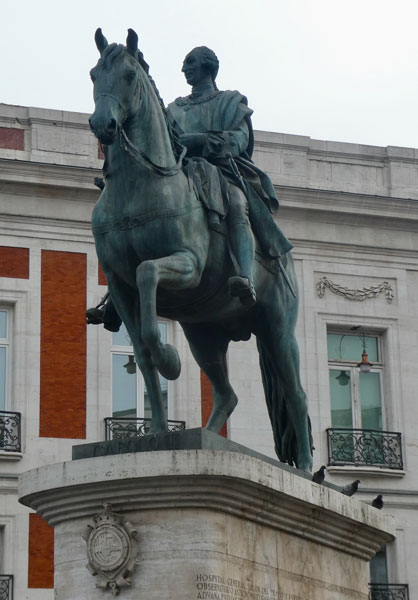
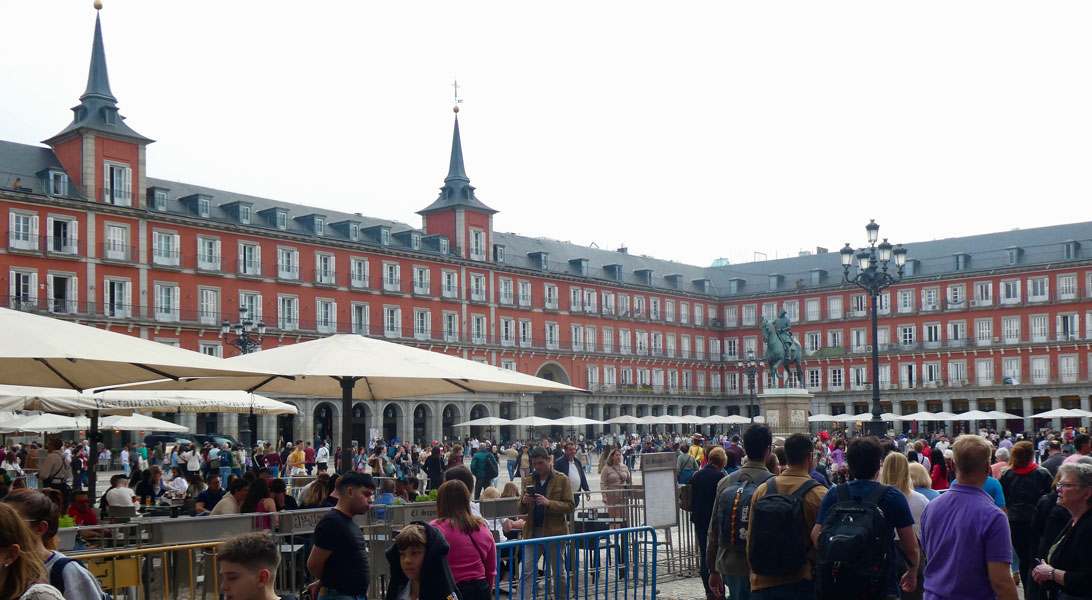
From there, we proceeded to the other must-see square, the Plaza Mayor. The heart of Madrid, the rectangular space is lined with pillars and arches supporting nearly identical buildings. The entire esplanade is pierced with nine access gates. And in the center, there’s a statue of Phillip III, who planned it all, sitting on horseback overseeing his grand design.
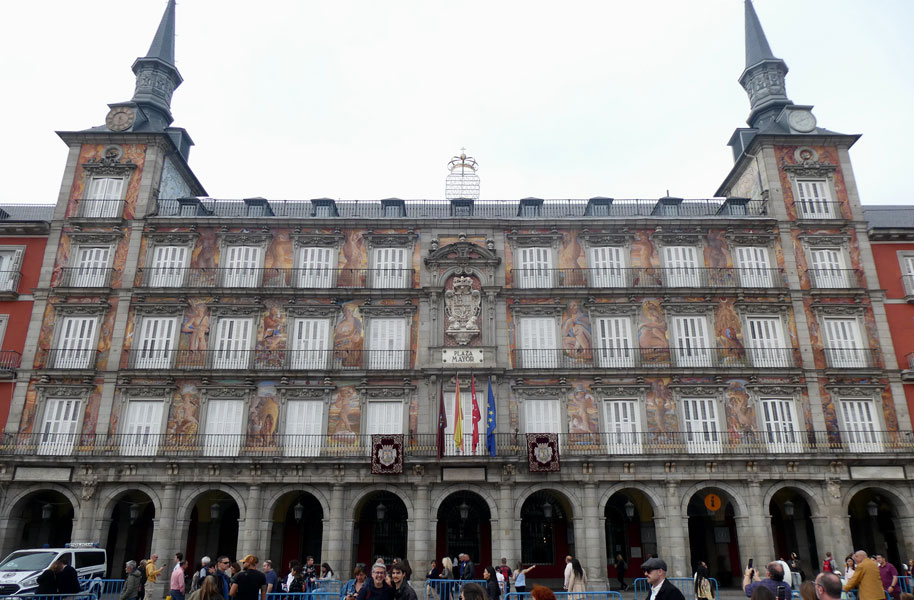
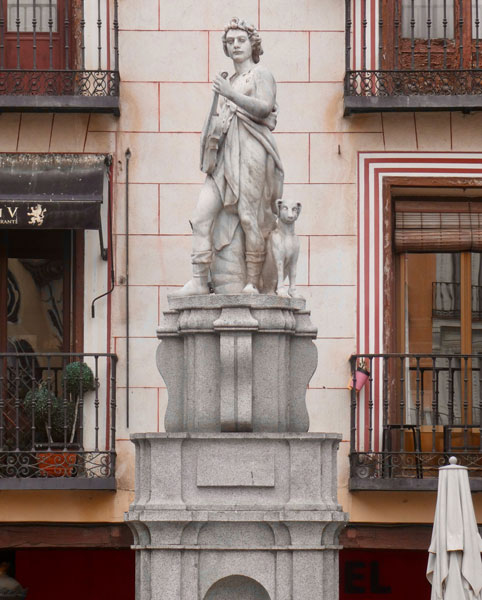
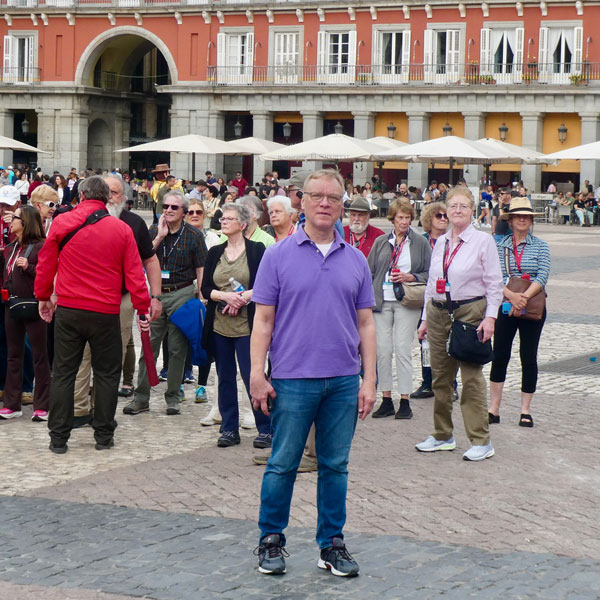
Then we hit the jackpot: leaving the Plaza Mayor, we found ourselves on one of the streets through which a Holy Week procession was scheduled to march. Finding good viewing locations on the sidewalk, we experienced our first procession of the week…or so we thought.
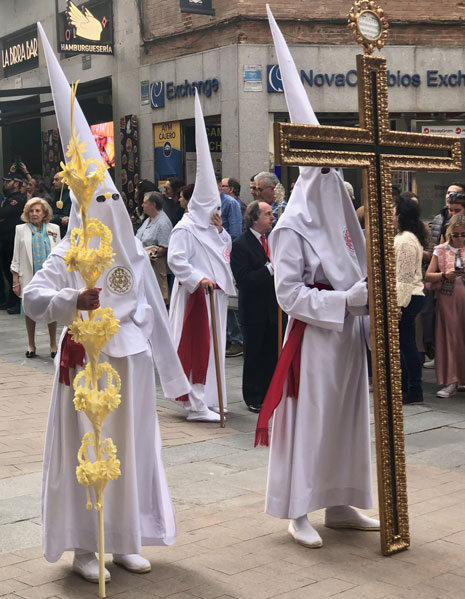
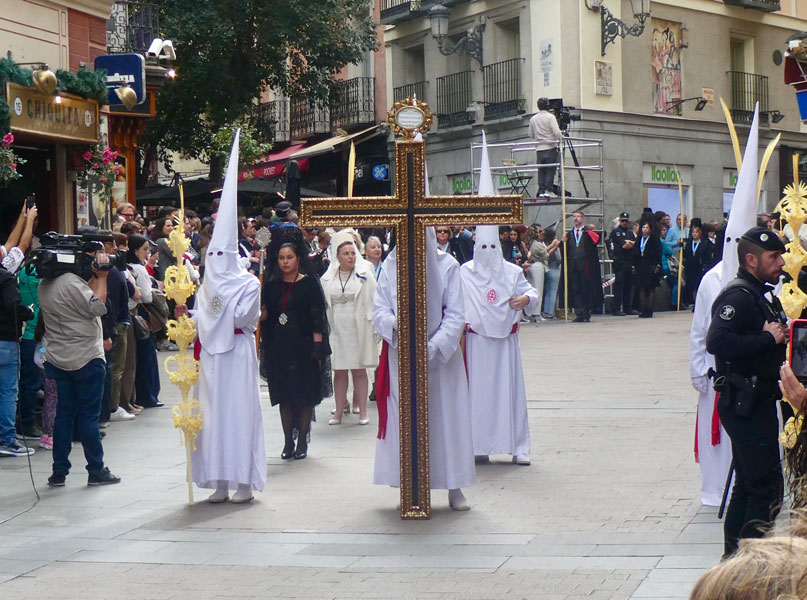
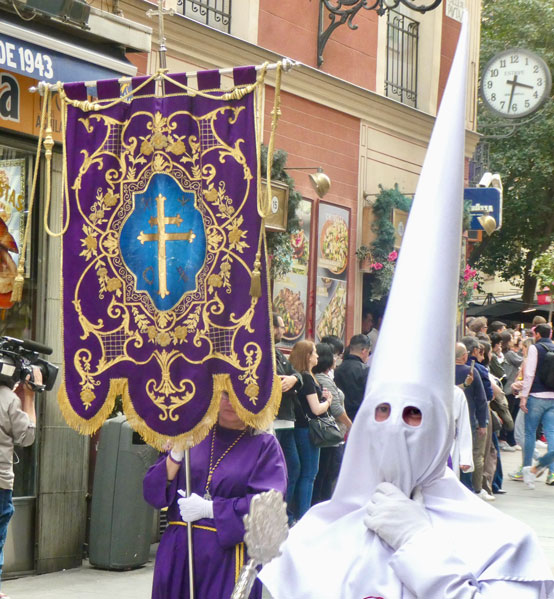
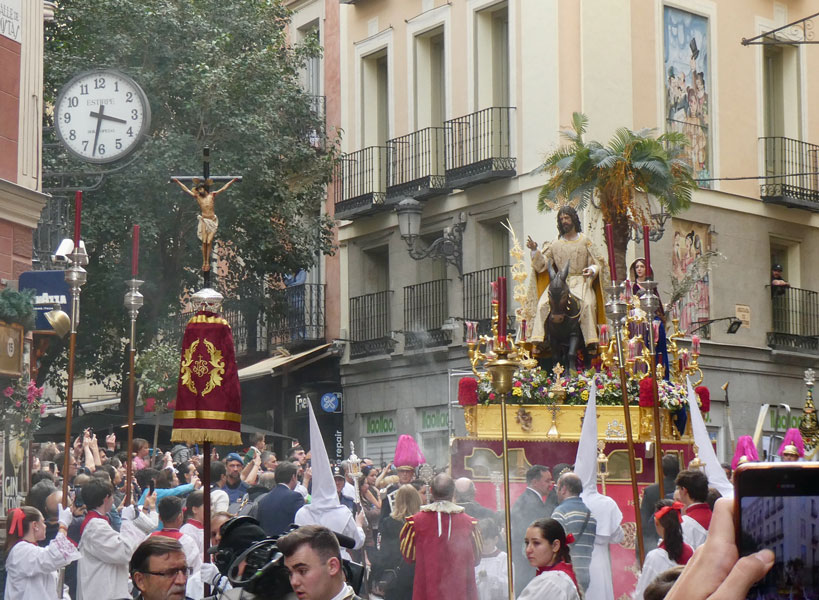
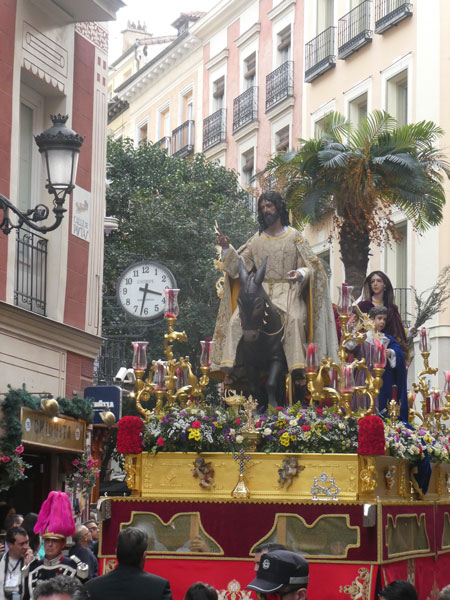
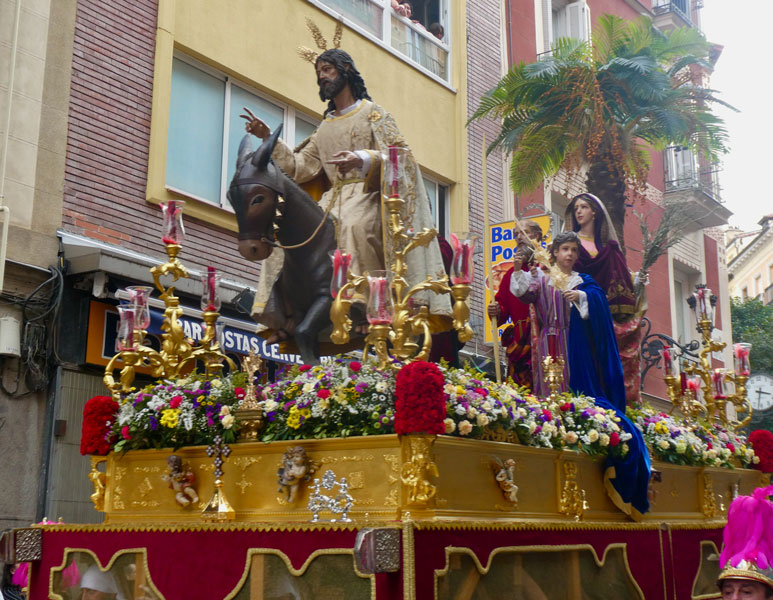
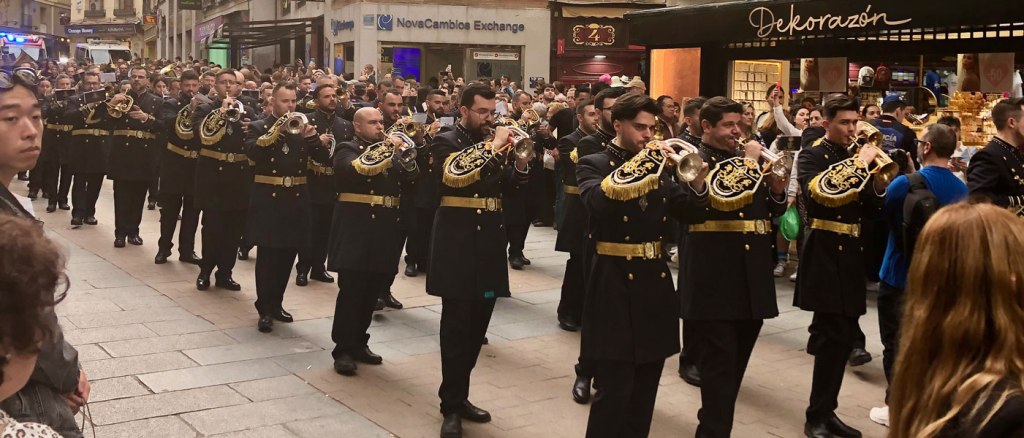
After the procession, Juanjo maneuvered us all back onto the bus and to the hotel.
A few hours later, Rob, Peg and I hopped in a taxi and headed back to the La Latina barrio of old Madrid for dinner at a restaurant that Rob had researched. The meals were very good–I had paella–with the chocolate cake we split for dessert being especially delicious. But the icing on the cake came when we realized there was another Holy Week procession winding its way around our corner restaurant. And our table faced a wall of large windows looking out on said procession! From what we could tell, the float was largely composed of candles…lots and lots of candles…and lots of lights. If there were any representations of Jesus’ triumphant entry into Jerusalem on Palm Sunday, I did not see them. (It was dark.) However, progress past our windows was very slow, moving only a few feet at a time, which was probably due to the sharp left turn they had to make when the street dead-ended at the intersection. Behind the float, there was a much smaller band and crowd following it than the one this afternoon.
But, two processions in one day! Score! (Sorry, no pics. I couldn’t fight my way outside through the crowd inside the restaurant.)
Sated both spiritually and gastronomically, we left the restaurant, hailed a taxi and returned to our hotel.
1 Two fun facts about Philip II:
- The Philippines were named after him
- He was married to Bloody Mary — the Tudor queen, not the cocktail. She was wife #2 of 4
 Spain and Portugal in Depth