
No hay nada como la pena de ser ciego en Granada*
There is nothing like the pain of being blind in Granada
Humpday in Granada
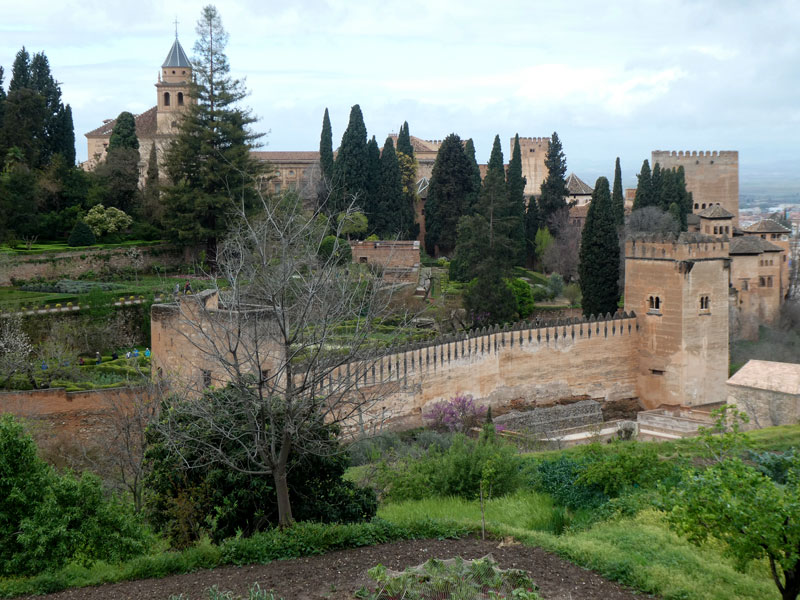
Today, the morning was spent at the top tourist attraction of Granada–and Andalusia in general–the Alhambra. The Alhambra was a self-contained palace-city surrounded by fortifications, built up by the Nasrid rulers of the Moorish Emirate of Granada in the 13th to 15th centuries. Multiple palaces were added and expanded over the years by different rulers. Once Spain reconquered Granada, they began to stomp their Christian footprint on the place. Fortunately for us and future generations, it was not completely leveled and built over with churches, convents and monasteries by the Catholic Monarchs and their successors.
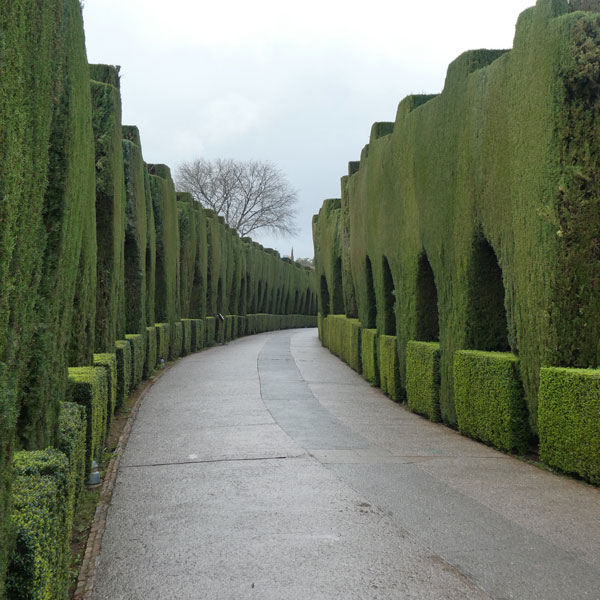
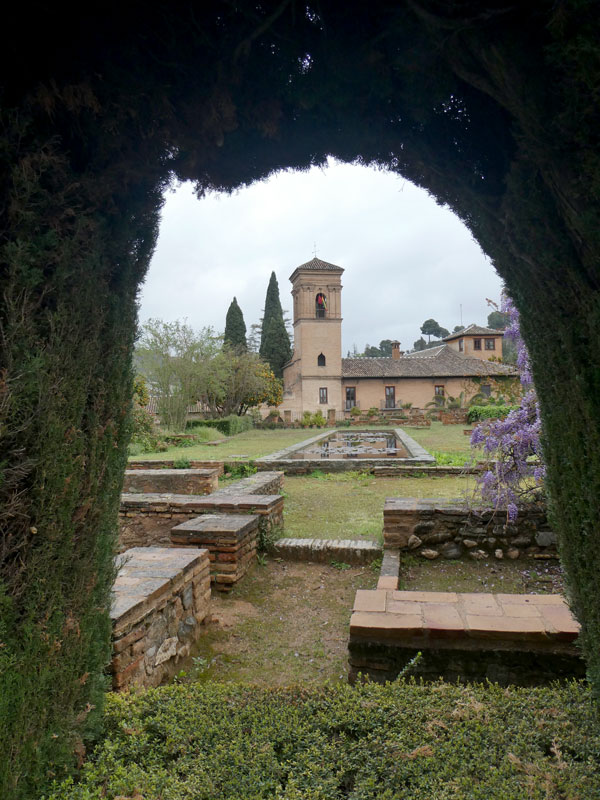
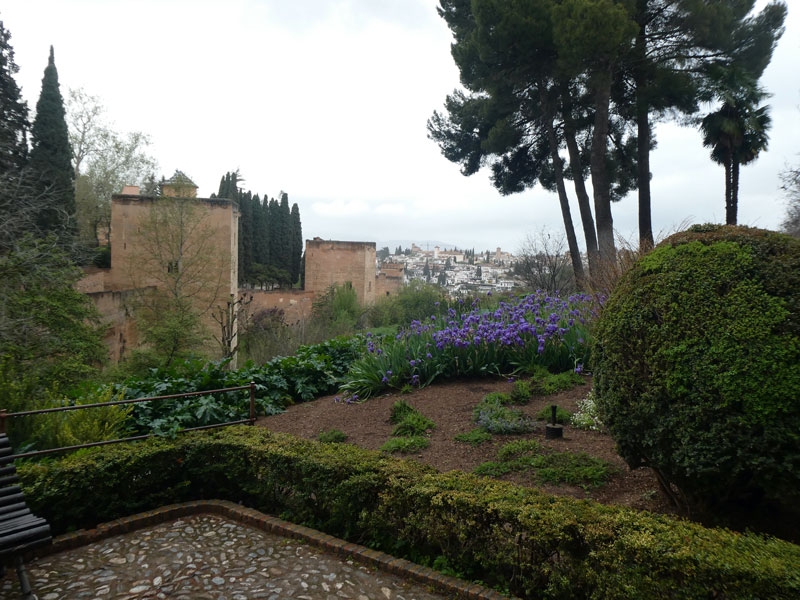
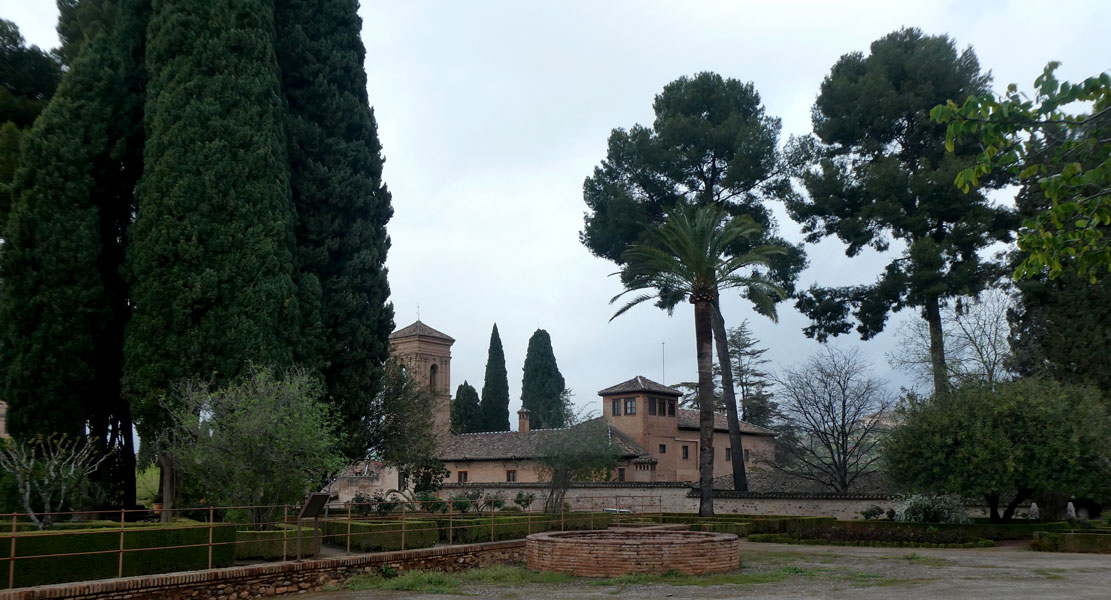
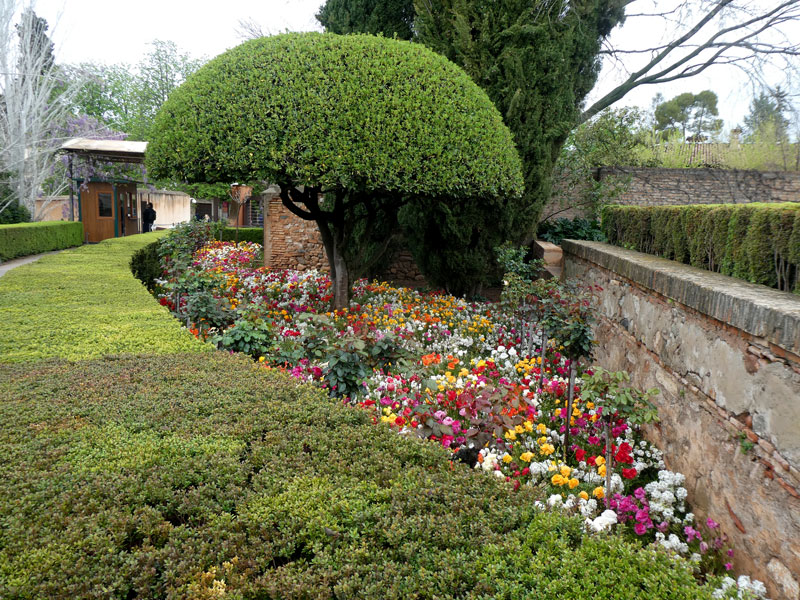
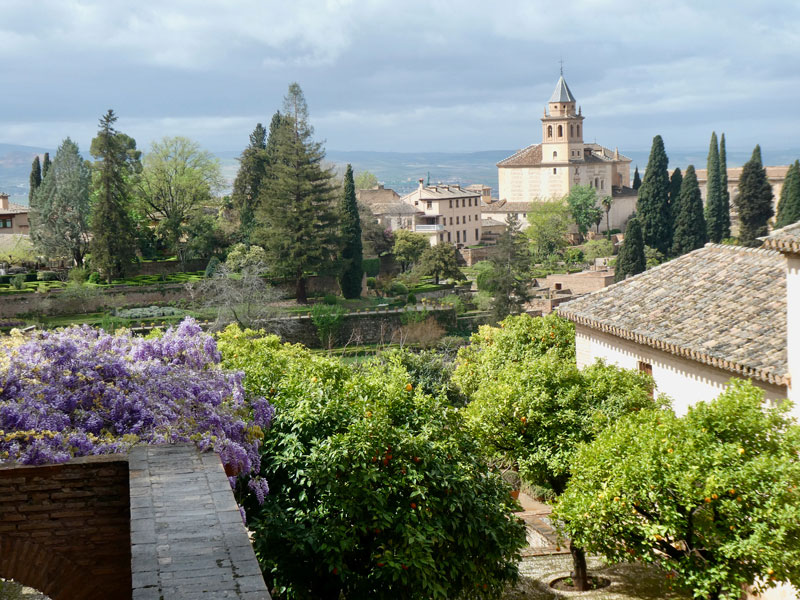
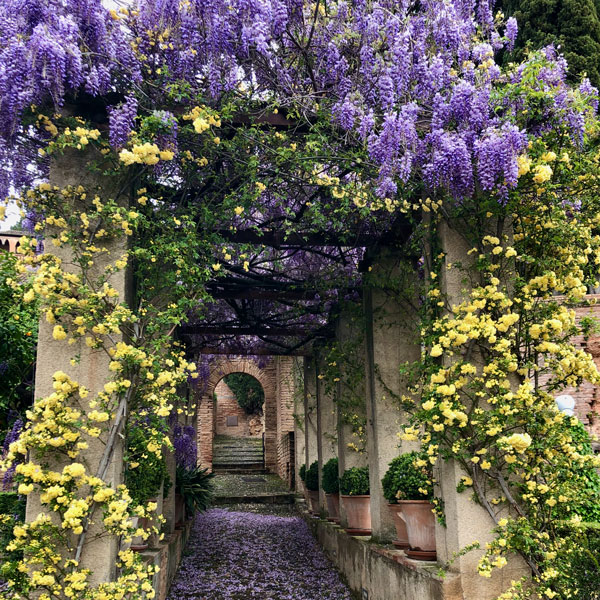
After a drive up…up…up to the hilltop location, we entered the grounds down a long walkway flanked with sculpted shrubbery. Through the arches, we caught glimpses of different Alhambra structures, both Moorish and Christian, as we continued past floral gardens already blooming with spring flowers.
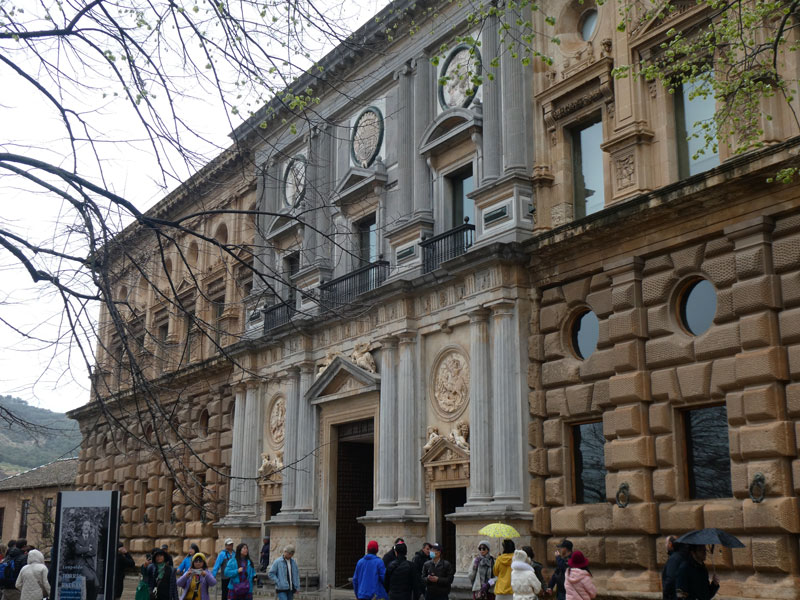
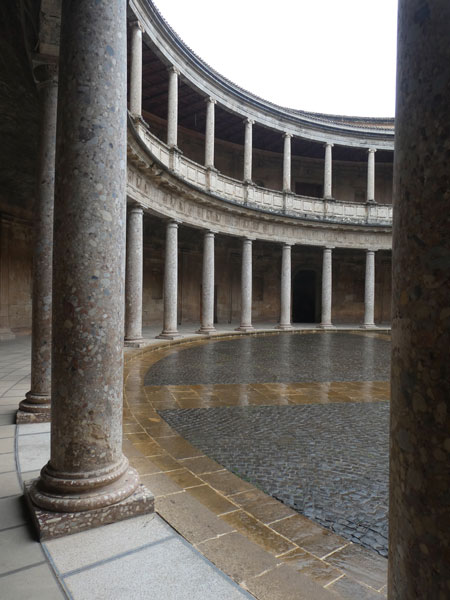
Once through security, we continued to a large plaza fronting an enormous Renaissance-styled palace built by Charles V. Commissioned by the king after visiting the Alhambra on his honeymoon, he never returned, leaving a beautiful Italianate palazzo unoccupied, unfurnished and unfinished. (There was supposed to be a third floor above the colonnade.)
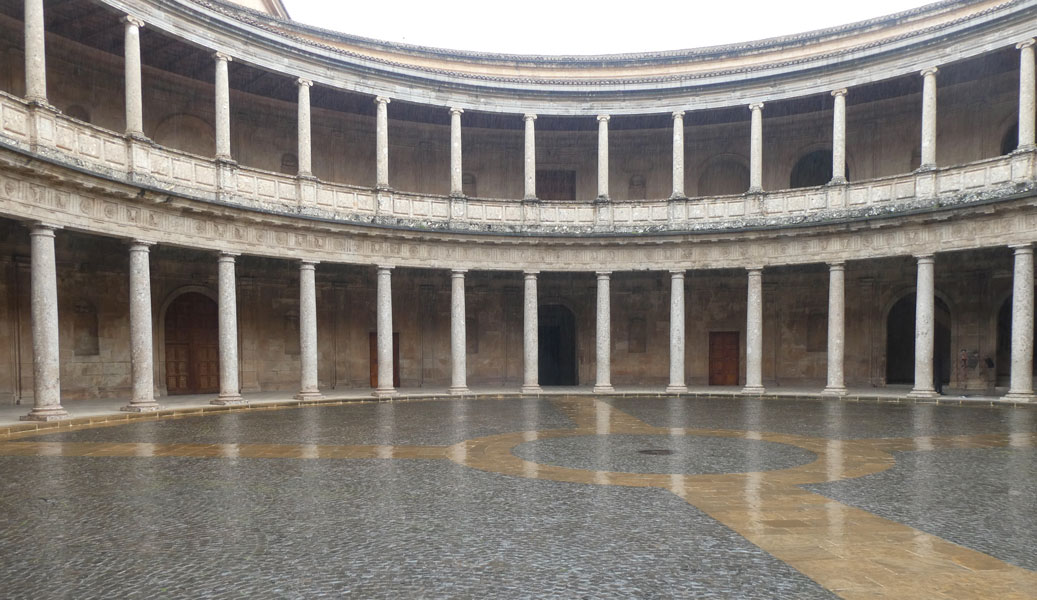
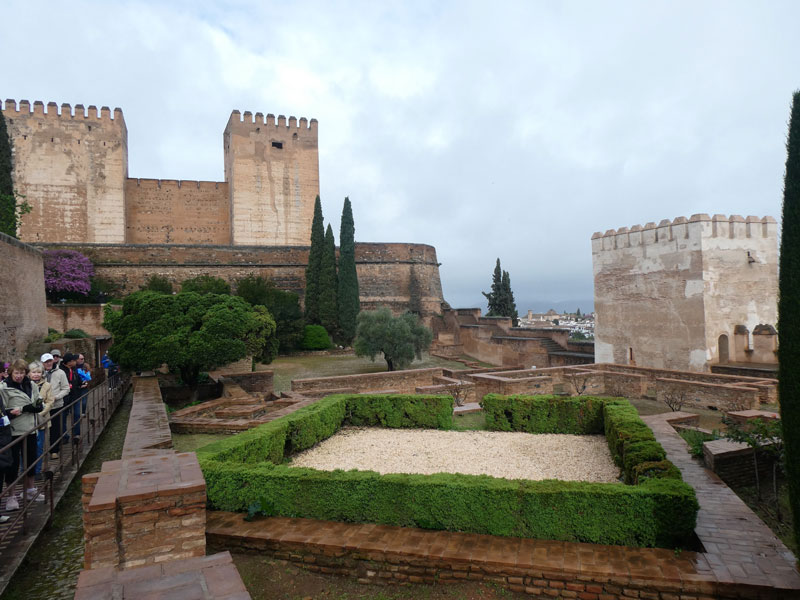
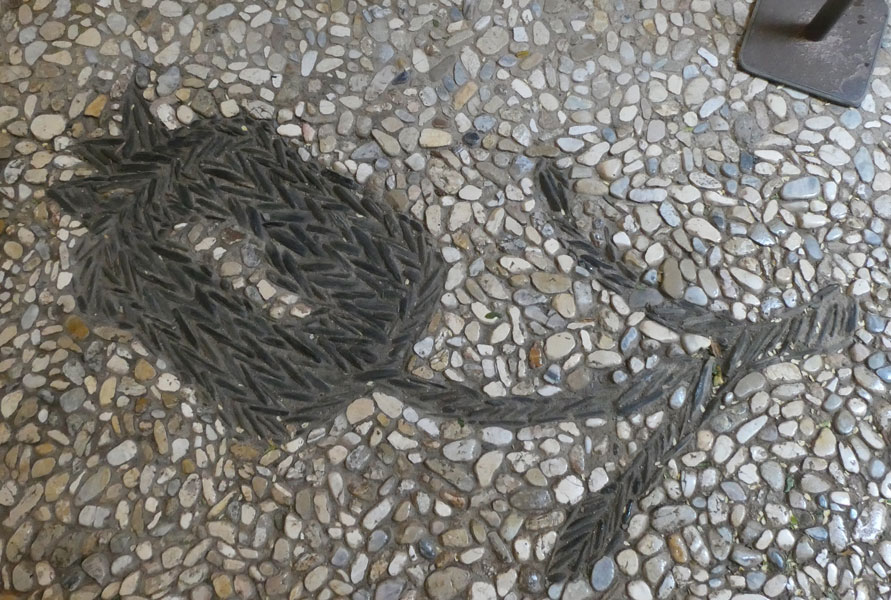
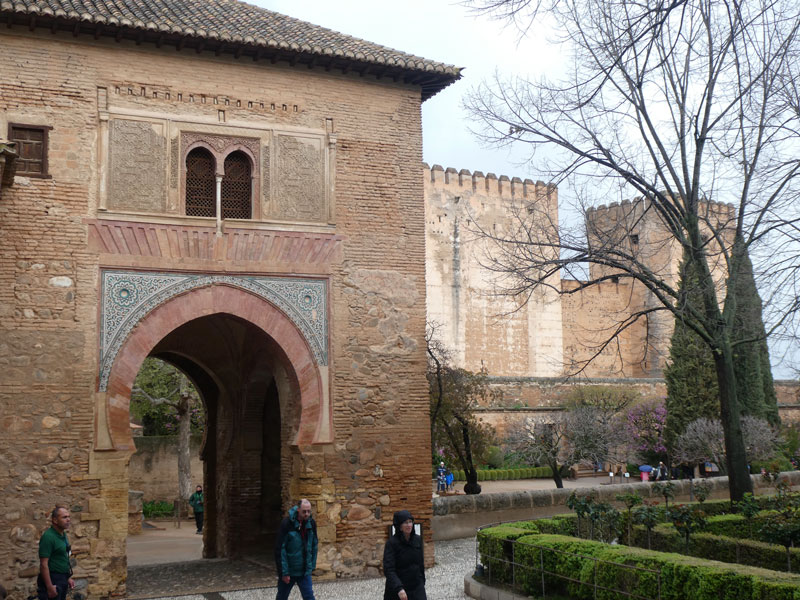
Leaving this misplaced Renaissance power statement behind us, we passed through the Puerta de Vino (the Wine Gate) to began our tour of the Sultan’s residence, the Nasrid Palace.
Some of the first rooms we entered had once been a meeting area for the Sultan’s councillors. Under Spanish rule, the conquerors did what they usually did when finding such a space: they turned it into a Catholic church! Fortunately, much of the tile and calligraphy remained intact. However, most of the elaborate inlaid wood ceilings are actually post-Reconquista. Prior to the installation of a wood ceiling, the space had been open to an upper level gallery where the Sultan could listen, unseen, to his ministers’ discussions. From here, we passed by a large, windowed room with floor-to-ceiling Islamic design and a view of the neighborhood.
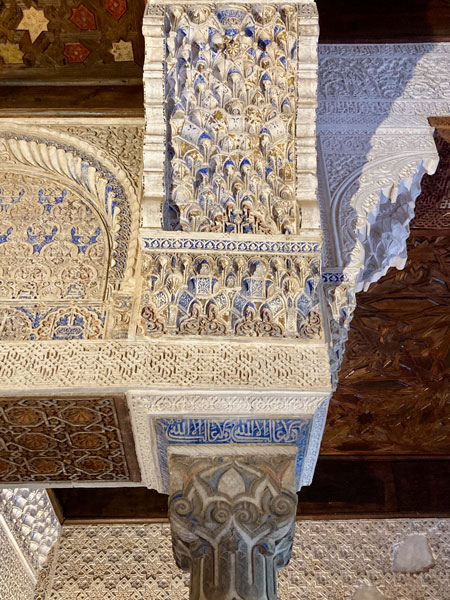
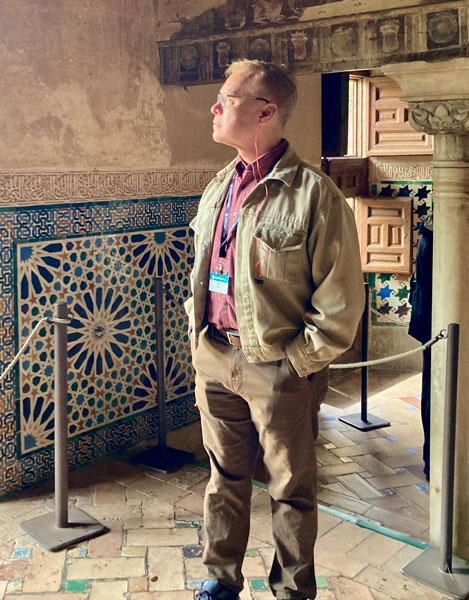
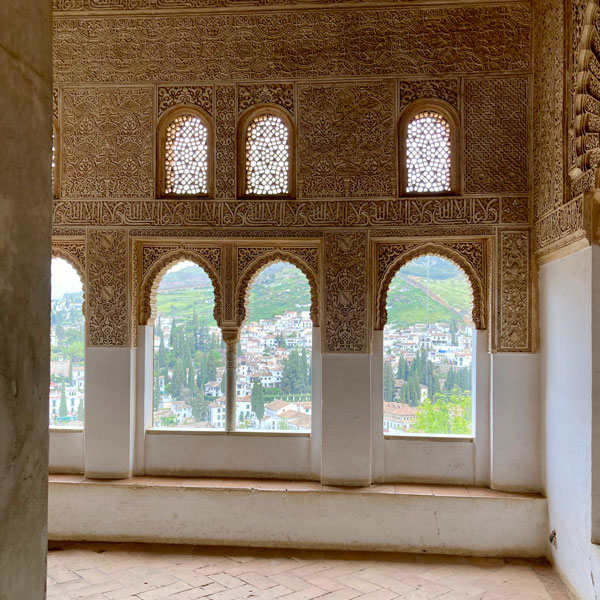
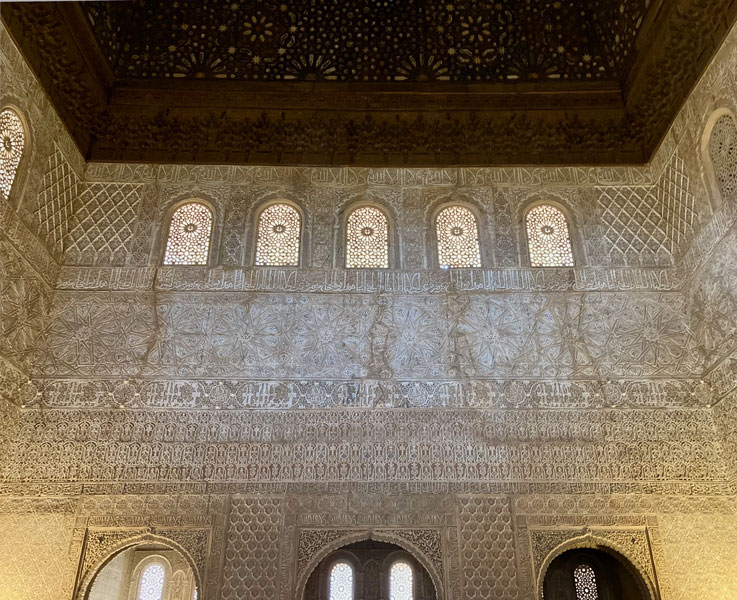
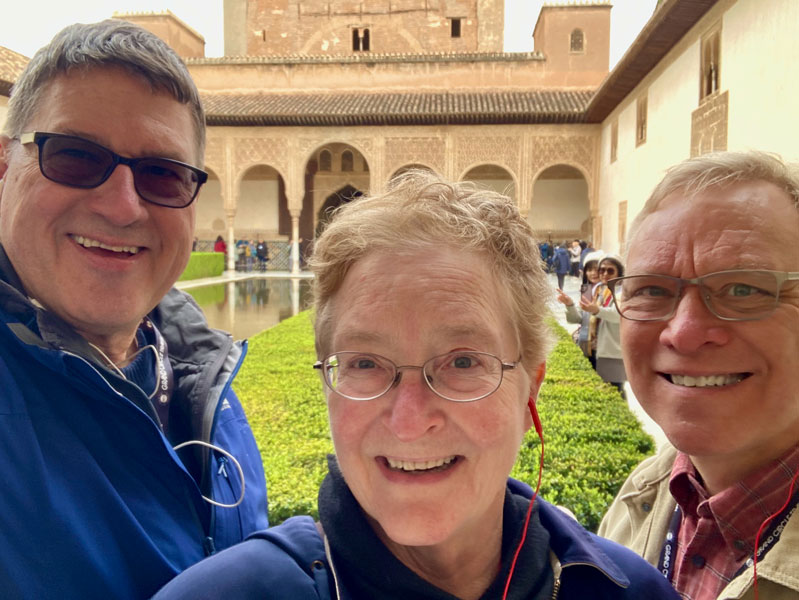
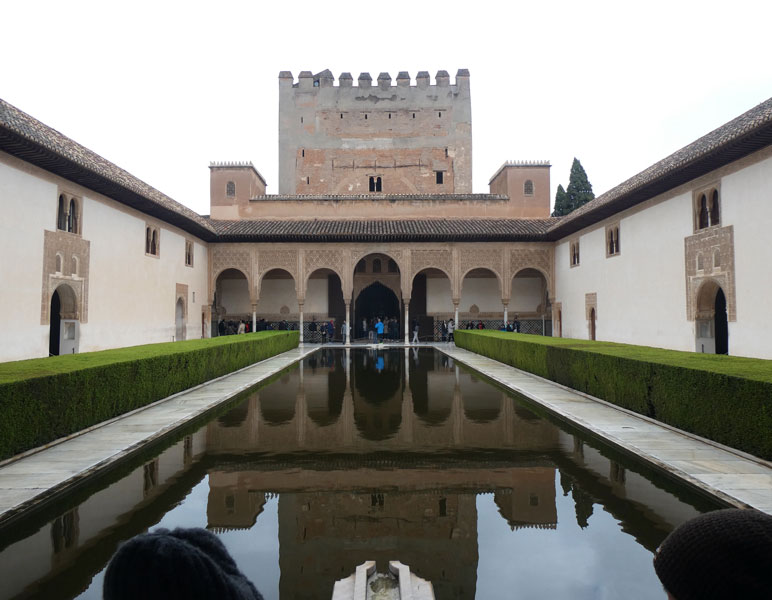
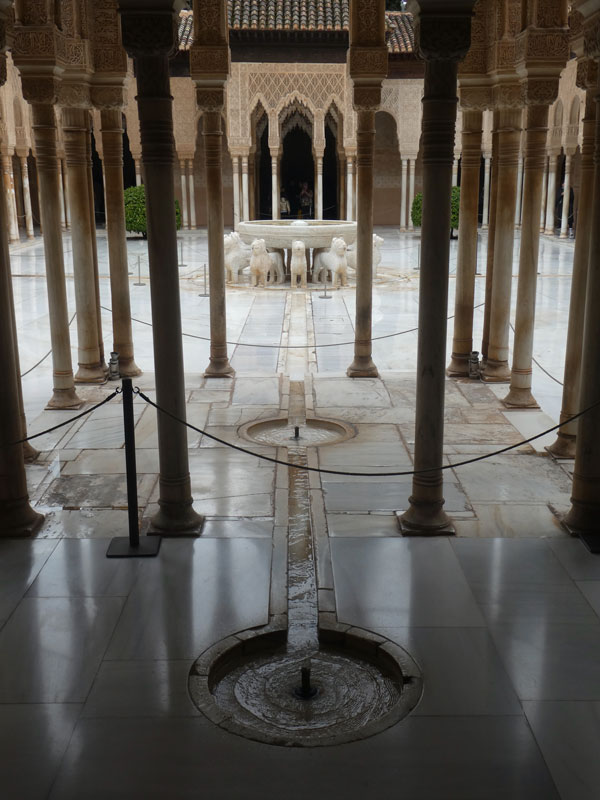
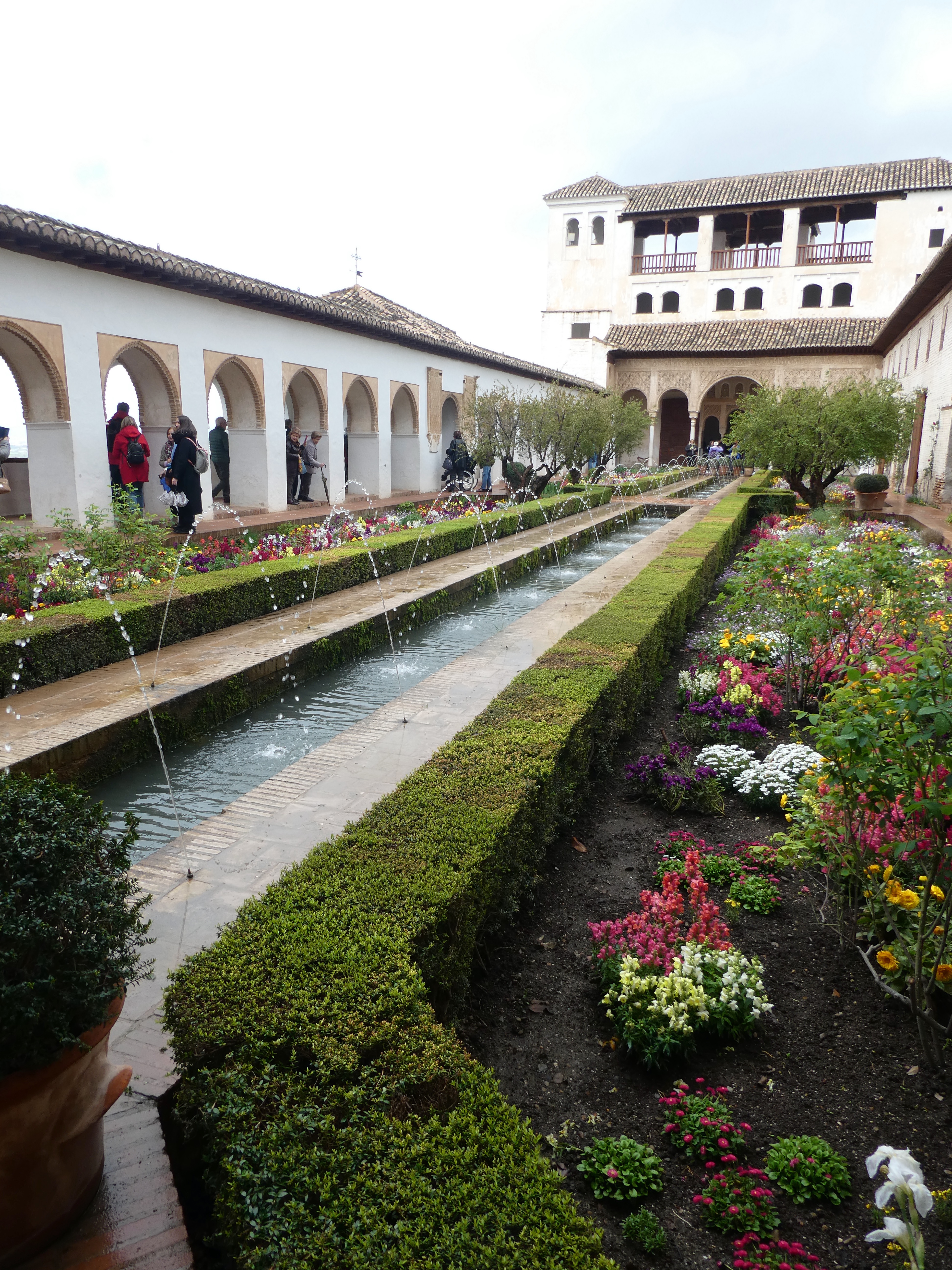
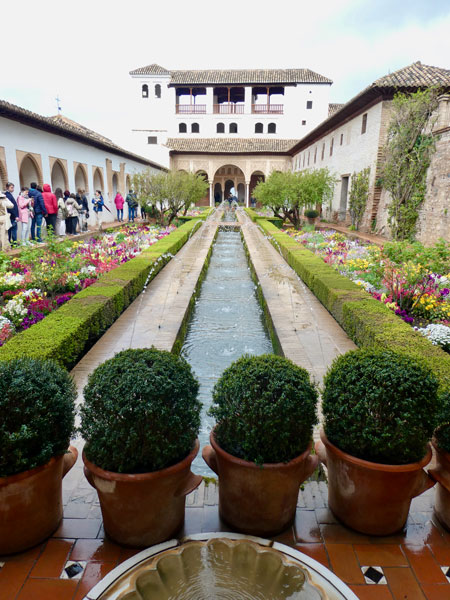
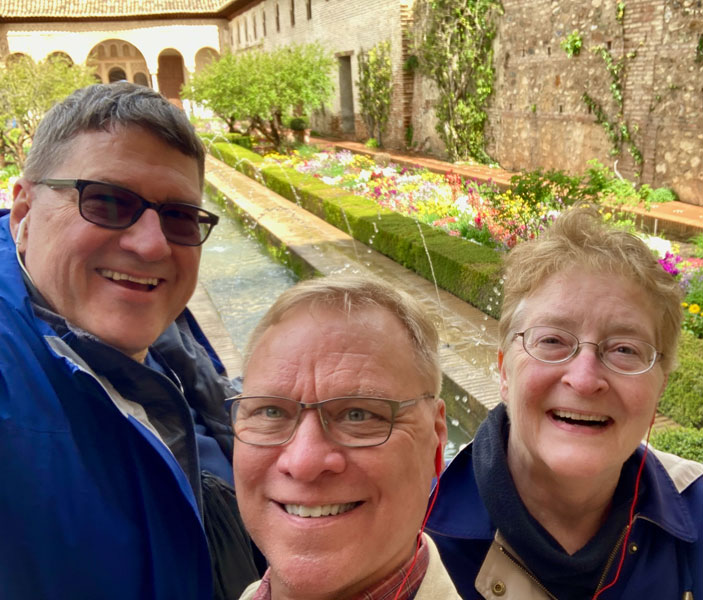
A few things about Moorish design and its affinity with Islam: Most rooms in the original palace contained a water feature. While some were removed during the “Christianization” of the palace, those that remain are ingenious in their design. First and foremost, they are quiet. The water flows naturally. It bubbles up silently, filling fountain bowels and then flowing along stone troughs from one fountain to another, all under the power of gravity. Water was very important to the faithful: one must wash before each of the five daily prayers. It also helped to keep rooms cool in the summer heat. There is a marked contrast between the contemplative quietude of flowing Moorish water and the intrusive splashing of more contemporary fountains which seem to demand your attention.
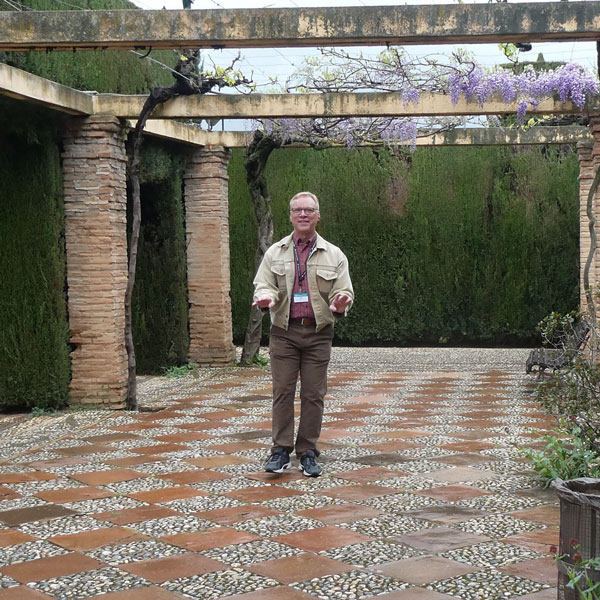
Gardens, too, were an important part of these Moorish palaces. For the Moors, they represented Paradise and were cultivated to be an earthly representative of the hereafter.
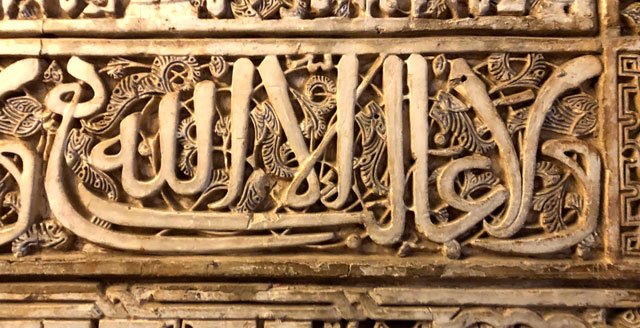
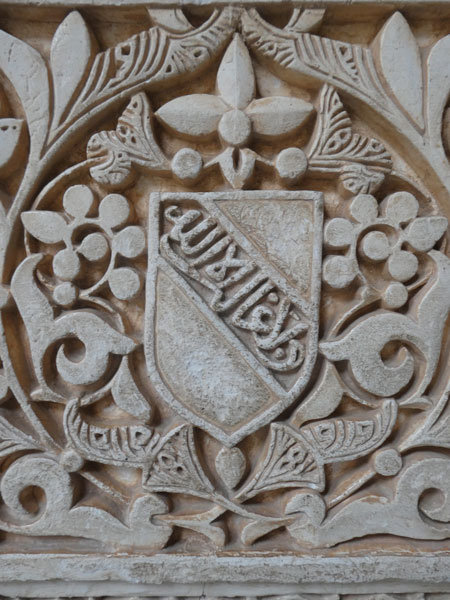
And, from the start, we were introduced to the Nasrid dynastic motto “There’s no greater conqueror than Allah.” A reminder to mortals of who was in power, this phrase, inscribed in Arabic, is the continuous decorative motif of the entire Alhambra.
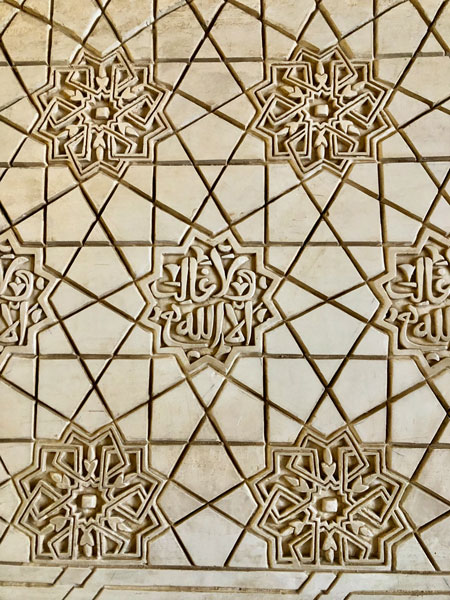
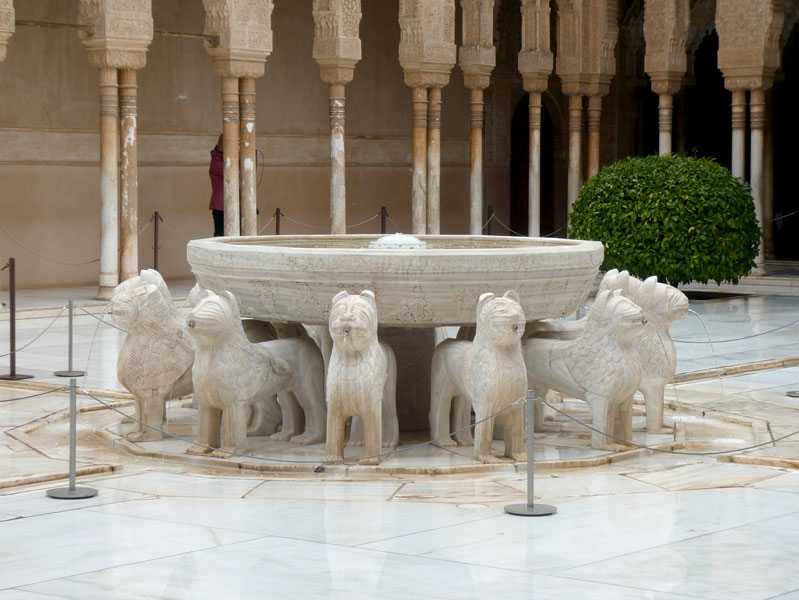
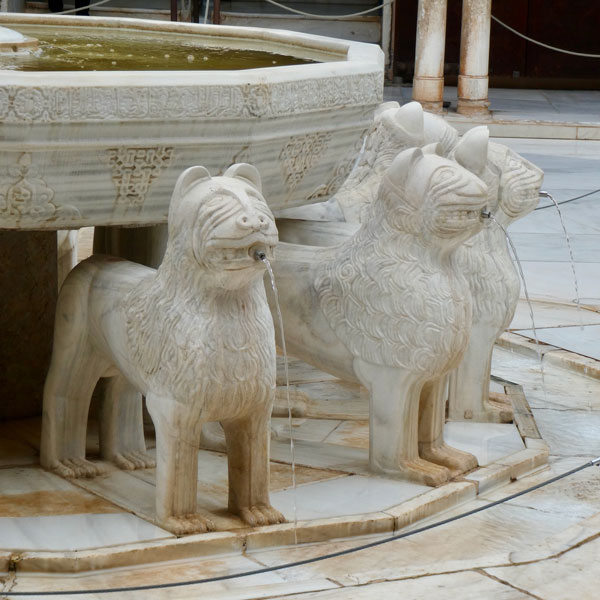
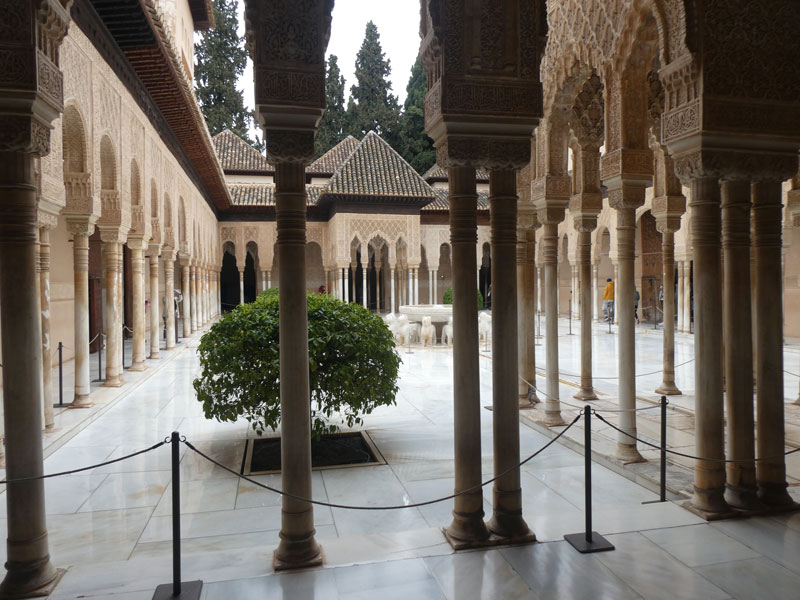
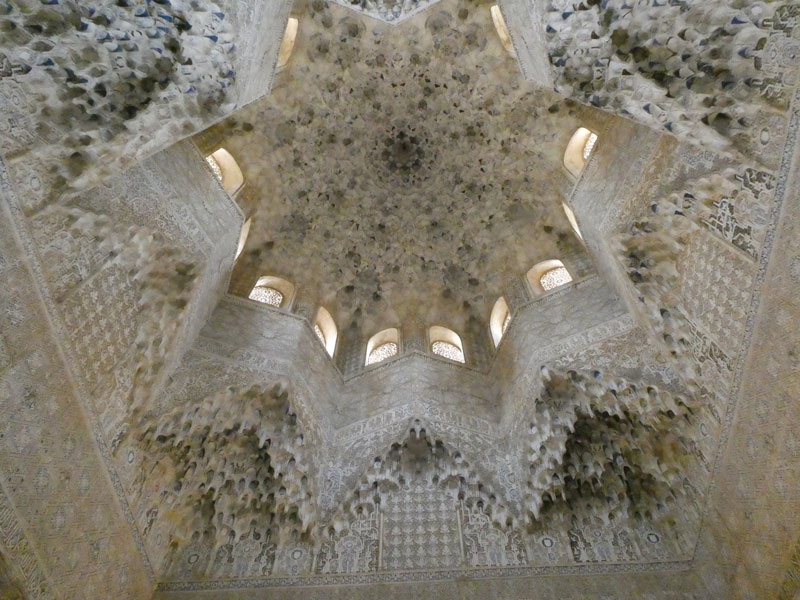
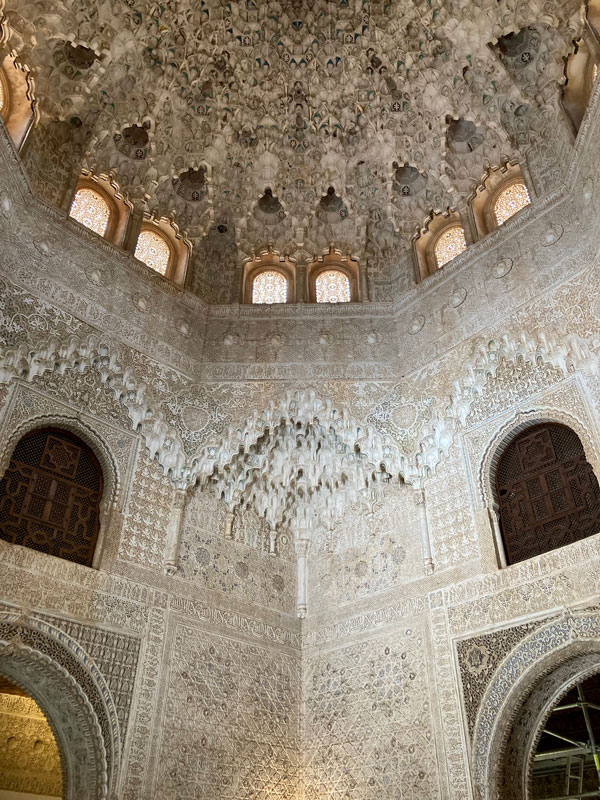
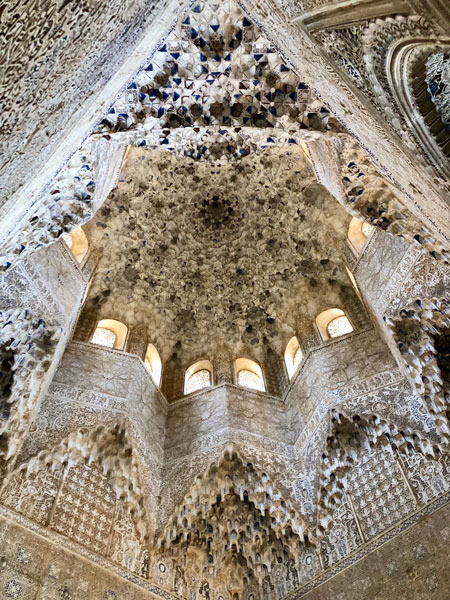
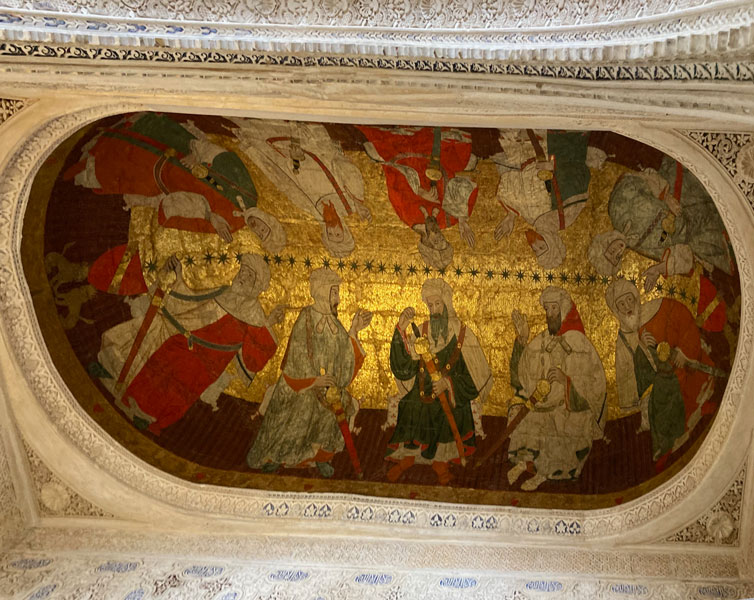
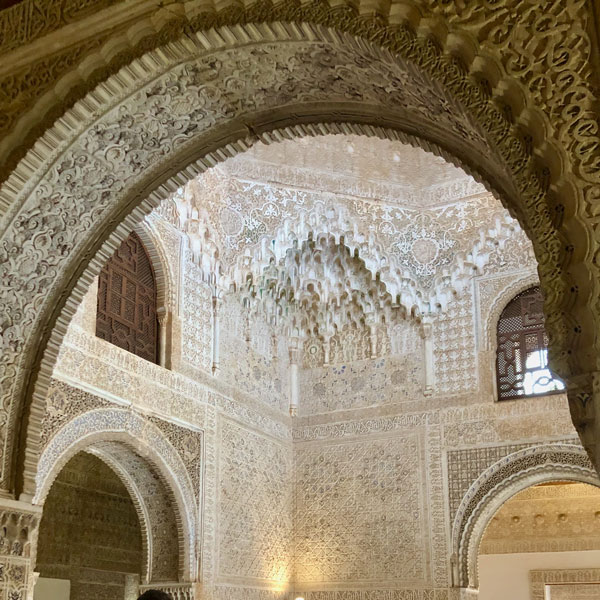
Leaving the Sultan’s quarters, we entered the Sultana’s domain via the Court of the Lions, the heart of the Alhambra. Defined by multiple slender columns, the court is dominated by a large water fountain guarded by twelve lions, with the entire patio surrounded by numerous rooms and chambers. And upon entering these adjacent rooms, we were introduced to even more dramatic styles of ornamentation. There was elaborate ceiling sculpturing that mimics the stalactites of caves plus illustrated ceiling medallions painted on leather that, on first glance, could be mistaken for Christian medieval decor. But no, it was Islamic. We learned that it is a common misconception that the Quran forbids the depiction of human figures. This is not exactly true. It merely condemns idolatry. Of course, the palace motto was well represented throughout.
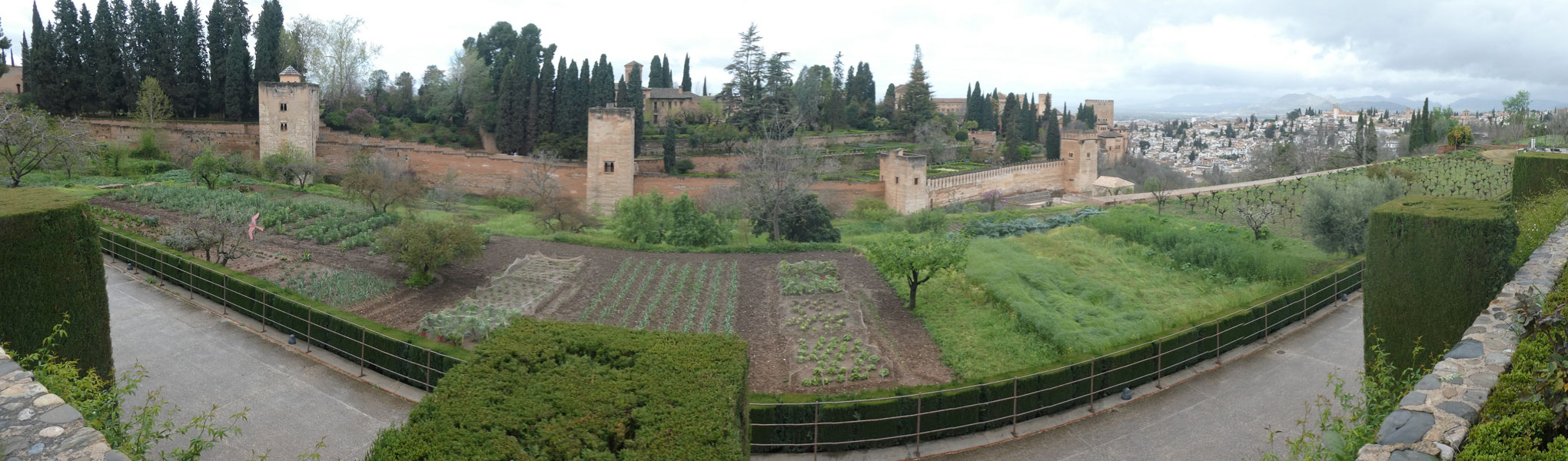
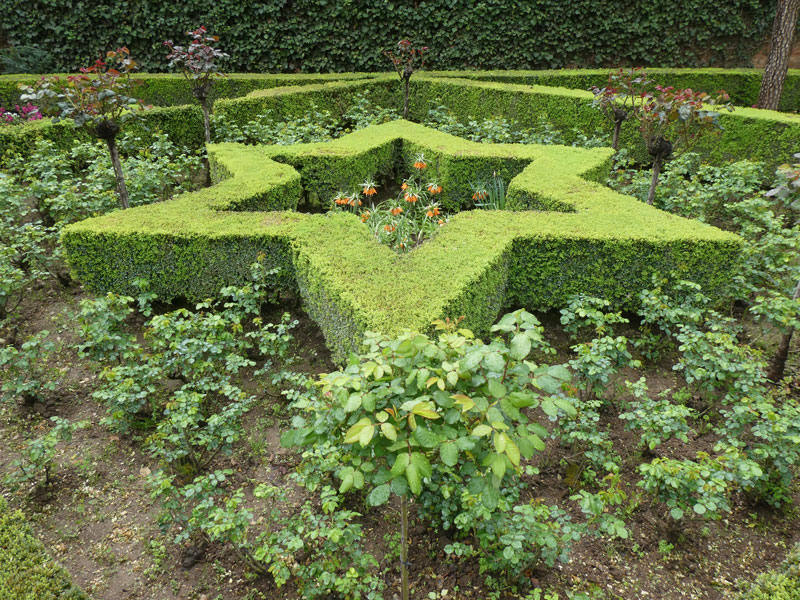
The finale of the tour was through an area of modern formal gardens added to the complex much later. A defining sign of its non-Moorish design is that the water features here are noisy: arches of water splash loudly into pools versus the silent bubbling up and flowing of nearly every fountain of Moorish design. With a nod to its original use, one area has been planted with agricultural plants, replicating the food gardens of old.
Returning to the hotel, Rob and I set out on a two-pronged adventure. First, I was still searching for the elusive replacement shoelaces I needed…and I did find a satisfactory replacement. Once that was accomplished, we set out with a more historic goal in mind.
Granada is the final resting place of the Catholic Monarchs, Queen Isabella I of Castille and King Ferdinand II of Aragon. Their marriage and joint rule created a unified Spain. And before Isabella financed Christopher Columbus’ voyage in search of a new route to the East Indies, their armies had finally defeated and expelled the last of the Moorish rulers from here in Granada in 1492. With this final victory, the rulers moved to Granada. And, despite having already established a Franciscan monastery and church as their final resting place in Toledo, they revised those plans and left instructions for a new tomb to be built here, the Royal Chapel of Granada. I wanted to see their tomb.
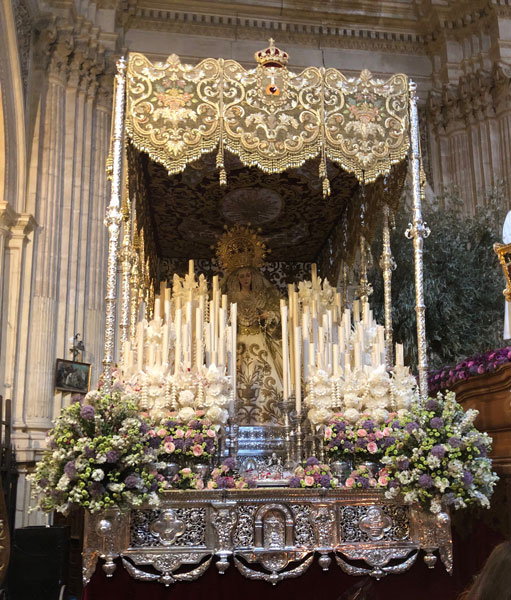
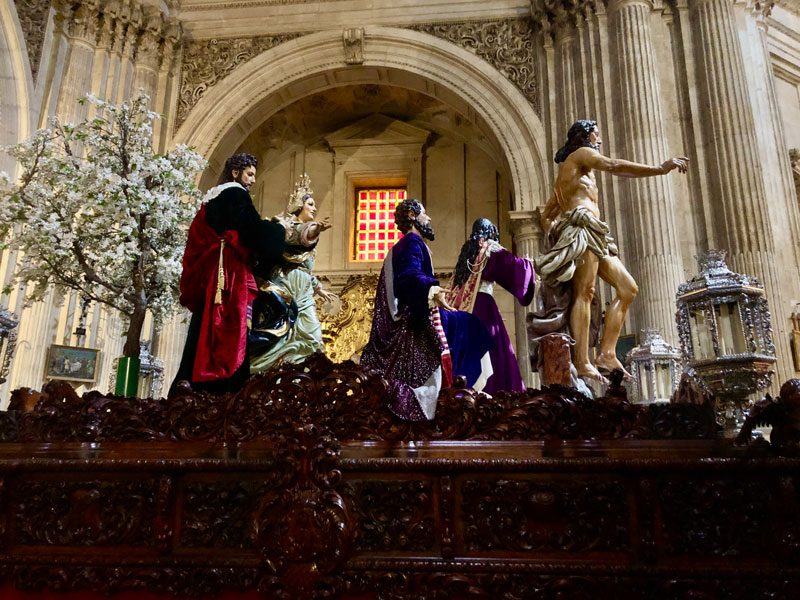
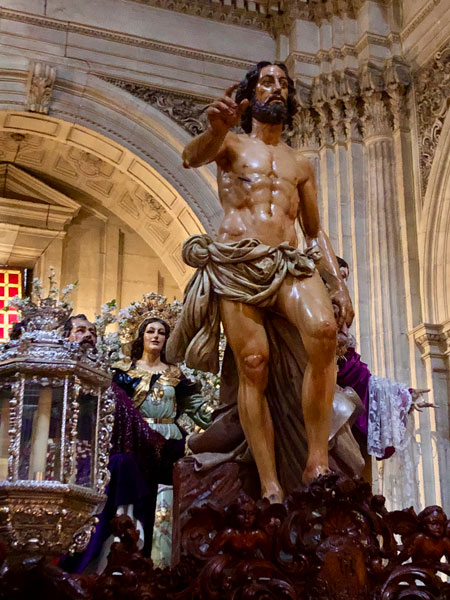
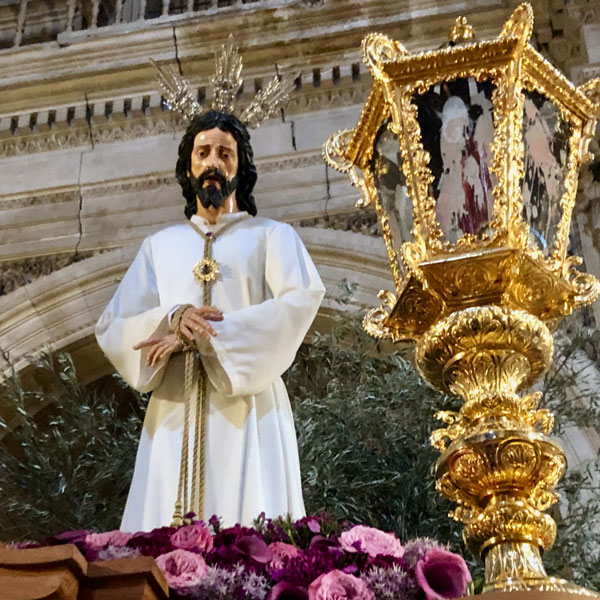
However, finding the actual entrance proved to be almost as difficult as finding shoelaces had been. We first tried the cathedral–wrong–but there were three of their Holy Week processional floats in the church to view. Leaving the cathedral, we had to walk three-quarters of the way around the building to locate the actual chapel entrance.
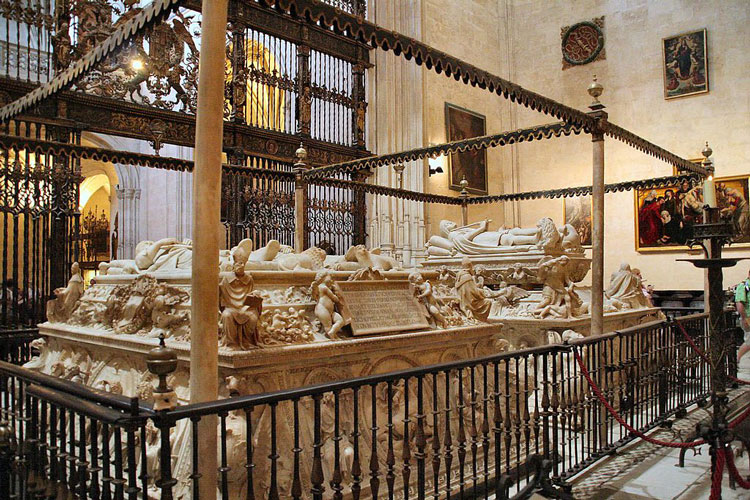
Because no photos were permitted, I have “borrowed” a few images from the Chapel’s website. From the foot (or feet-end) of the elaborately carved effigies, Ferdinand and Isabella are to the left; Philip the Handsome and Joanna the Mad (their second daughter) are to the right on a slightly higher platform. A staircase leads down to a viewing window for their actual tombs beneath.
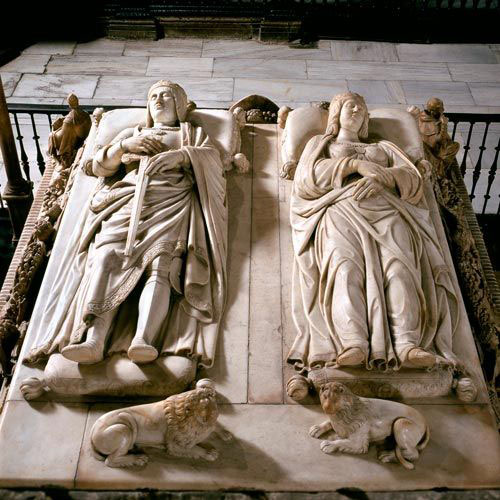
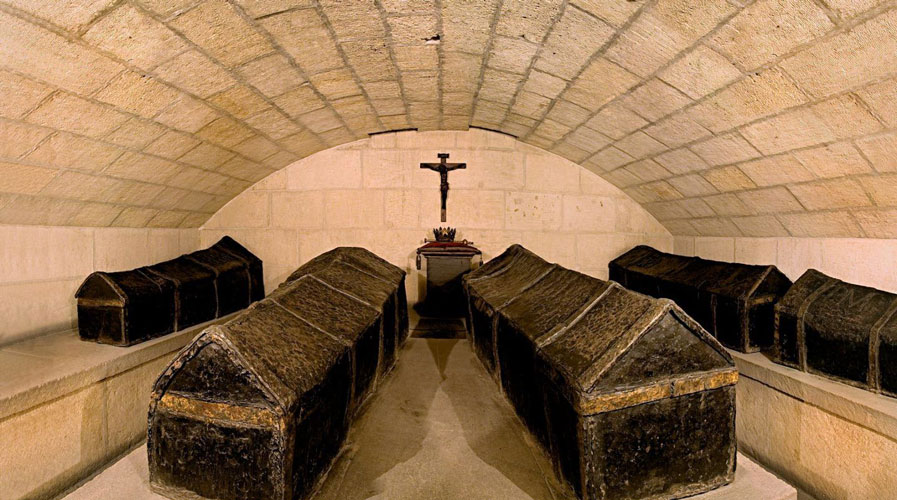
There was an app to download and play as one toured the site. Unfortunately it was less than helpful. Neither of us had brought earbuds and there was so, so much written text, it was taking me away from actually experiencing the chapel and museum. Maybe later.
Having satisfied the history itch, we window-and-wine shopped our way back to the hotel where Peg invited us to share her sandwich fixings. Then, we all squeezed in a short disco nap before the evening’s events.
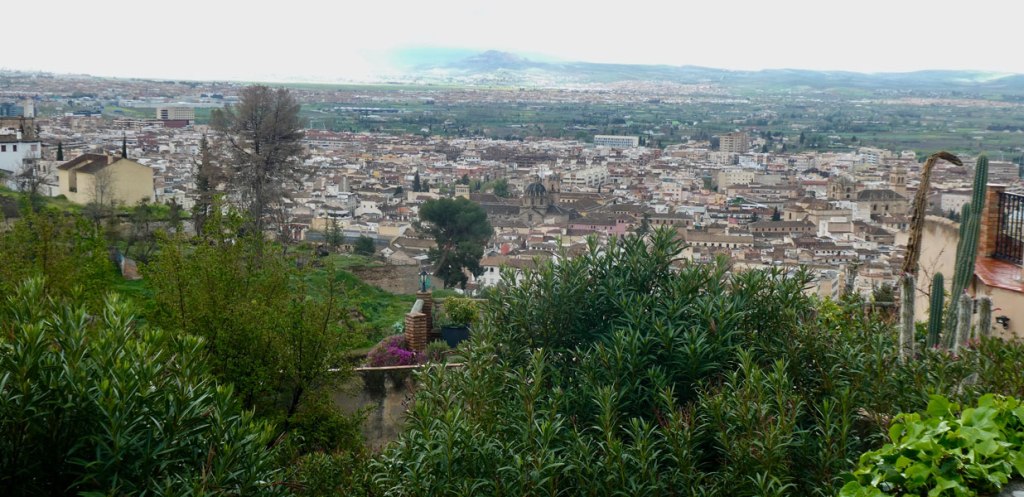
At 4:30 PM, we all piled onto the bus for a narrated ride through Granada. This culminated in a photo op stop high up in the old town that afforded us panoramic views of the Alhambra from afar and the Granada plateau below.

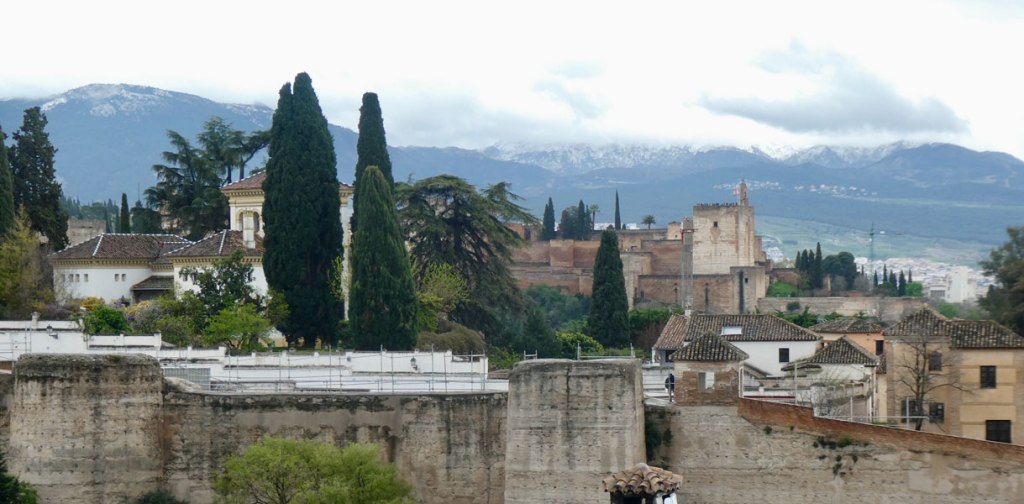
From there, we were taken on a Grand Circle Discovery: a tapas meal at a local, family-owned restaurant. In true tapas tradition, we were served three different tapas dishes, each accompanied by a beverage of choice. The three dishes were 1) potatoes with peppers & onions; 2) meatballs with rice (I had two of these!); and 3) fried eggplant with a molasses sauce. Drinks included wine, beer, sangria or non-alcoholic beverages. And, with the last plate, a Spanish quartet arrived and performed several songs. This was a nice surprise.
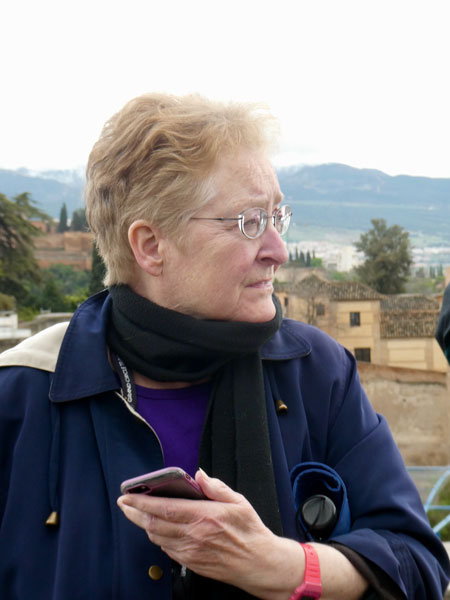
Also, Peg and I were pegged as siblings by one of our fellow travelers. She thought so because she said I was frequently a bit “cheeky” with Peg, like a sibling would be.
Because rain was projected, this evening’s Holy Week processions were cancelled. So we returned, one and all, to the hotel to pack for tomorrow’s trip to Torremolinos.
* This saying is famous in its own right. For me, it calls back to my university years.
A close friend, a Spanish major, would occasionally let fly with little Spanish phrases in that rapid way Spaniards speak.
This was one of her favorites. It comes from a proverb written by Francisco Asís de Icaza…with some alterations.
 Spain and Portugal in Depth