
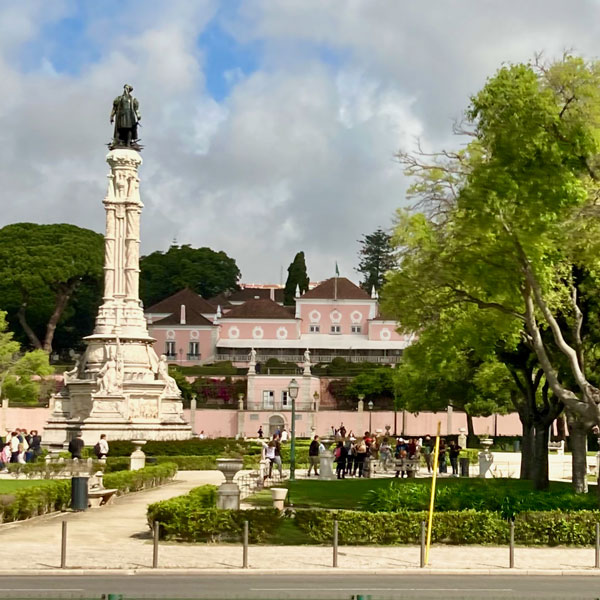
We began the day with a bus tour (When do we not?) around the city. Starting from one of the many public squares, we road down a tree-canopied boulevard to the city’s more modern business area. Our driver then took us through the center of Edward VII Park, a large green oasis in the city’s center with expansive lawns, playgrounds, a botanical garden and more named for the British king who visited Portugal in 1903. From there, we headed towards the river.
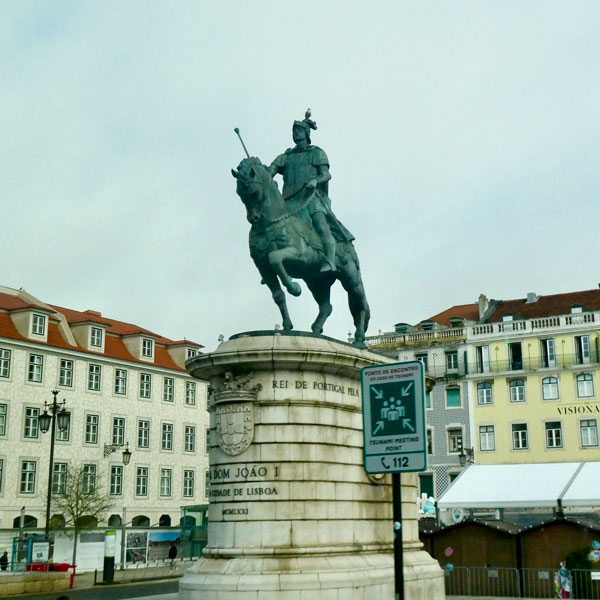
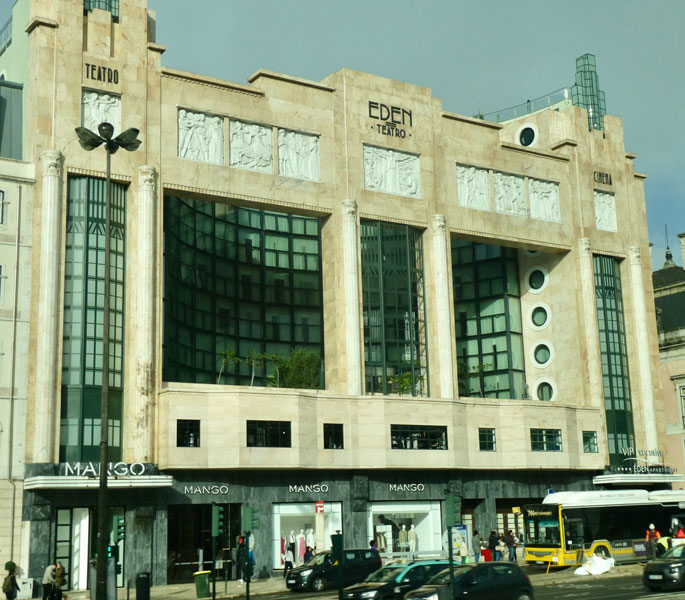
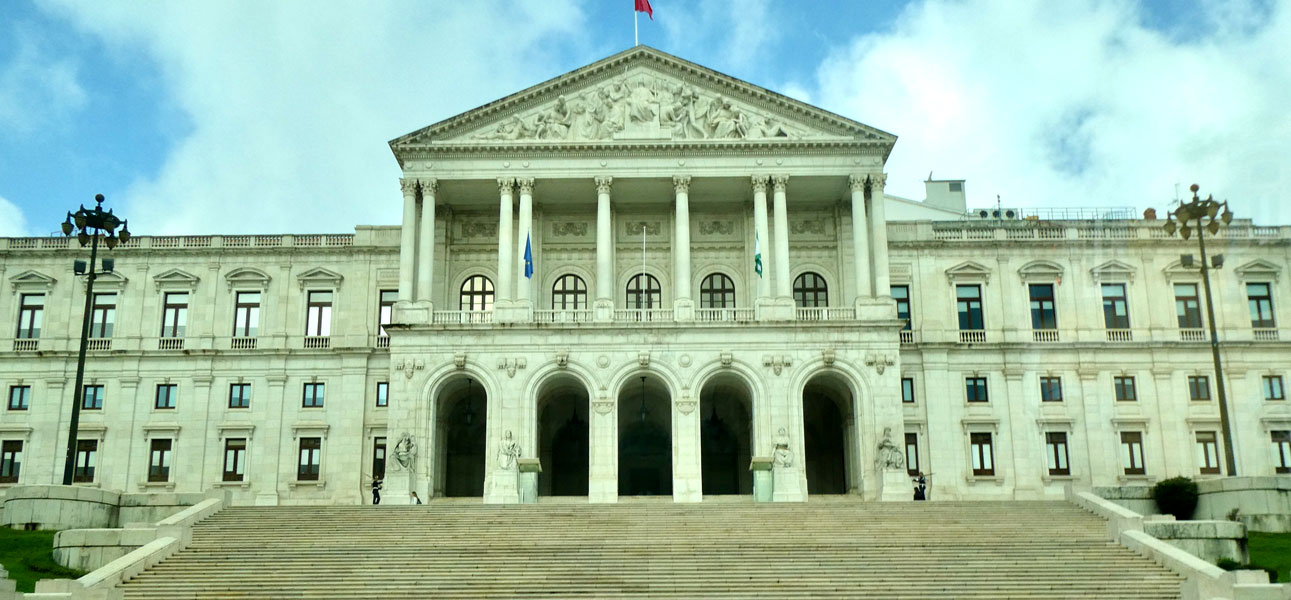
Reaching the waterfront, our bus made a beeline west for Belém Tower, the first of several prominent points of interest along the riverfront.
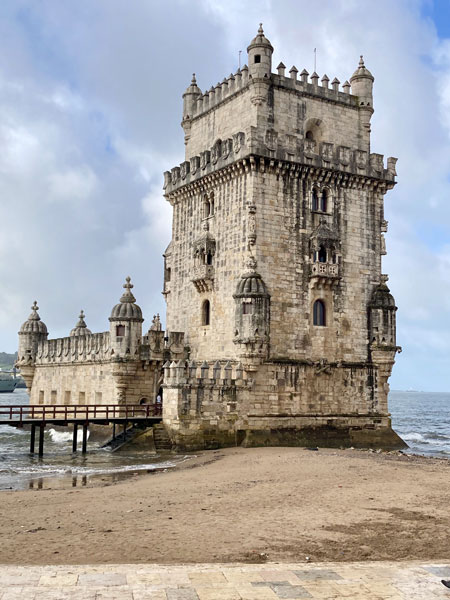
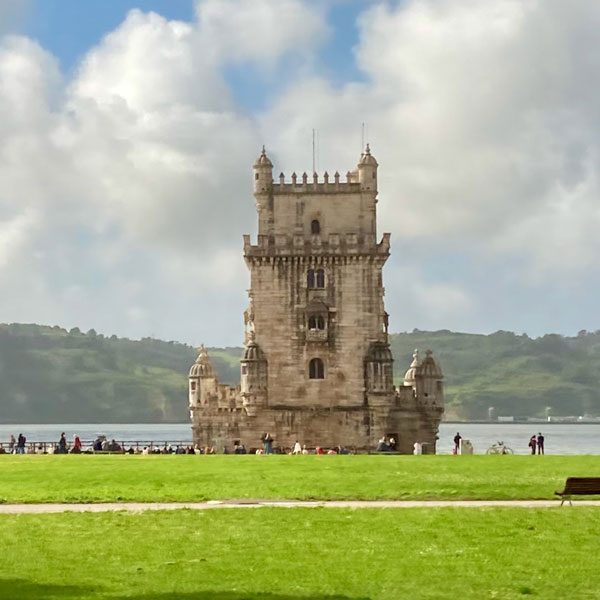
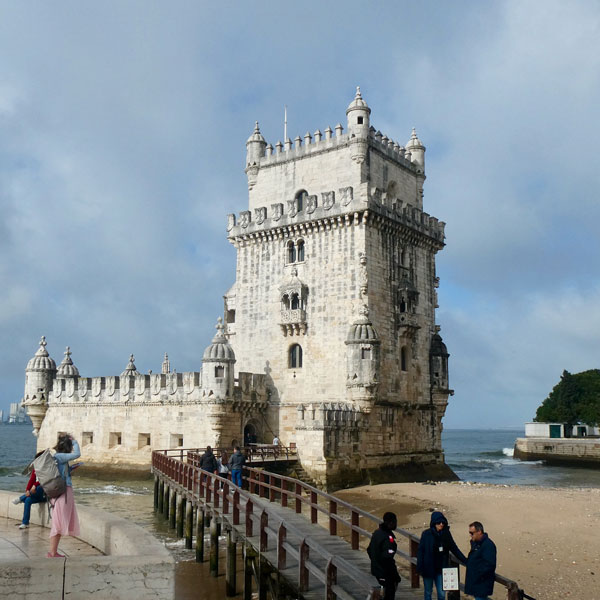
The Belém Tower, a 16th century fortification, was built to add another point of defense for the Tagus River mouth. While it nestles along the shore today, it was originally built on a small island off the shoreline and surrounded by water. Landfill has closed the gap between the old and the new coastline, uniting the tower with the shore. A proud symbol of Portugal’s maritime and colonial power, it is a prominent example of the Portuguese architectural style called Manueline. (More on that later.)
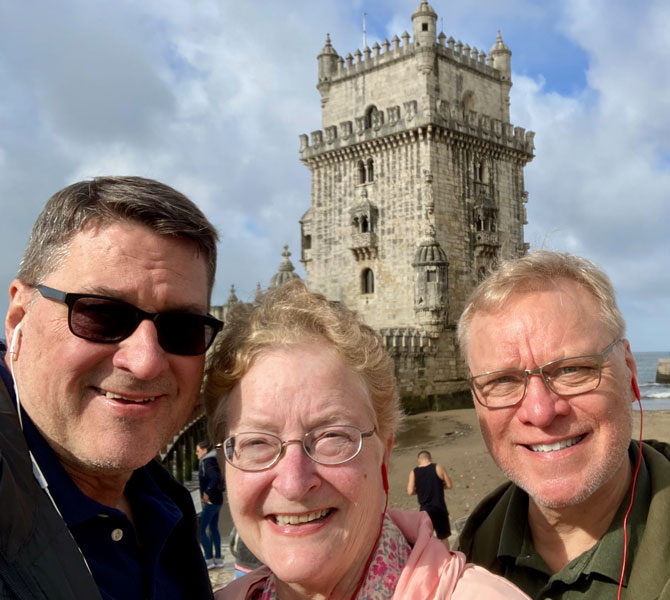
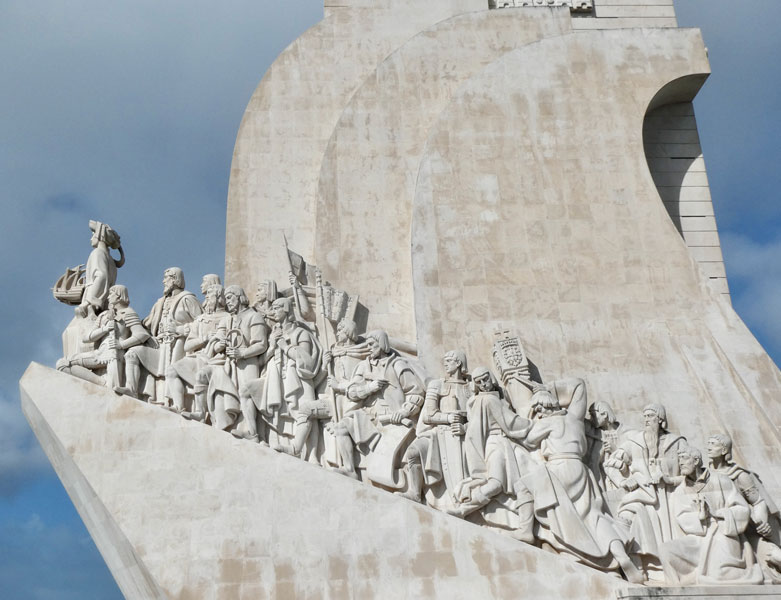
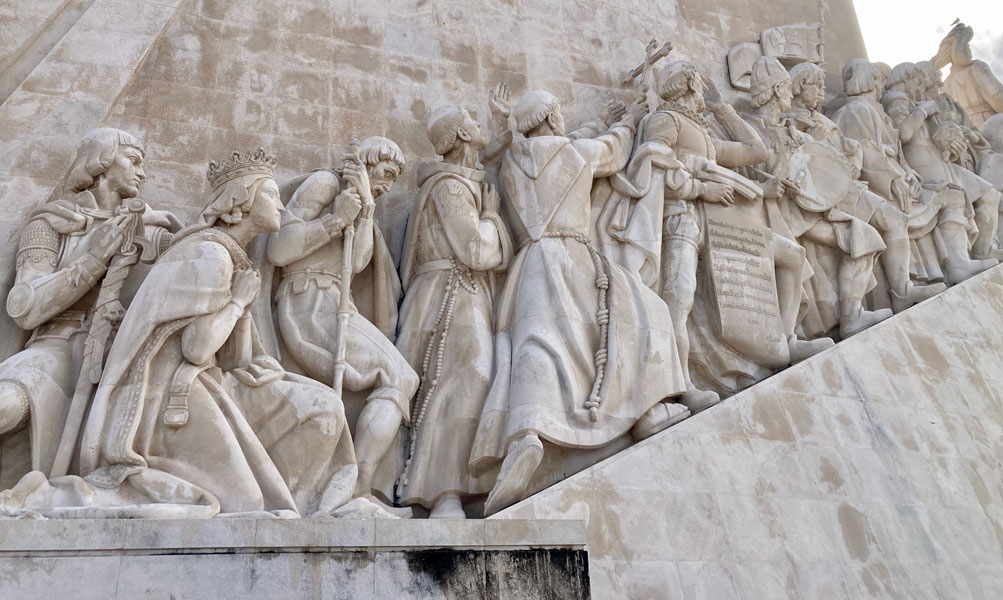
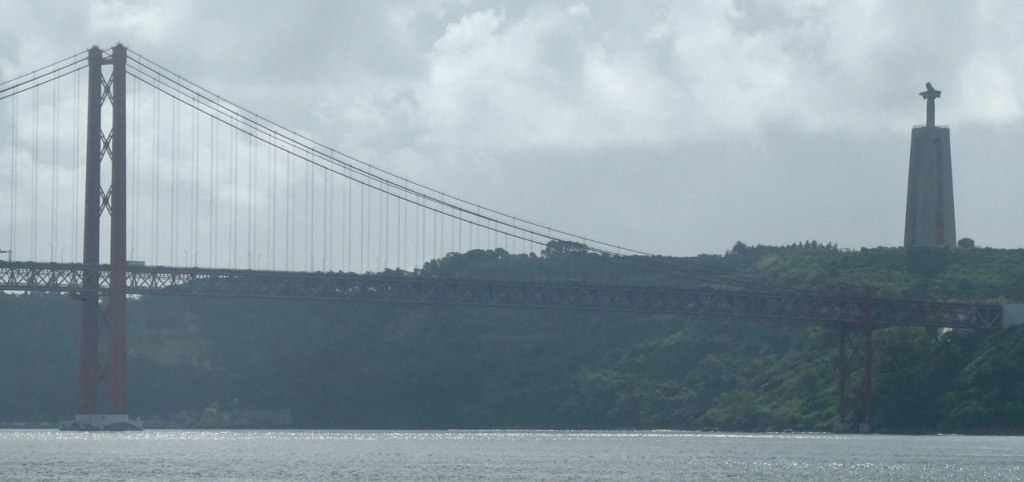
Leaving Belém Tower, we re-boarded the bus and rode east to the Monument of the Discoveries, also on the water’s edge. This structure’s origins go back to the 1940 Portuguese World Exhibition where a previous Monument of Discoveries was constructed at a different location. Never meant to be permanent, it was torn down in 1943. But the idea stuck and the concrete and limestone monument we visited today was inaugurated in 1960 in honor of the fifth centennial of Henry the Navigator’s death.
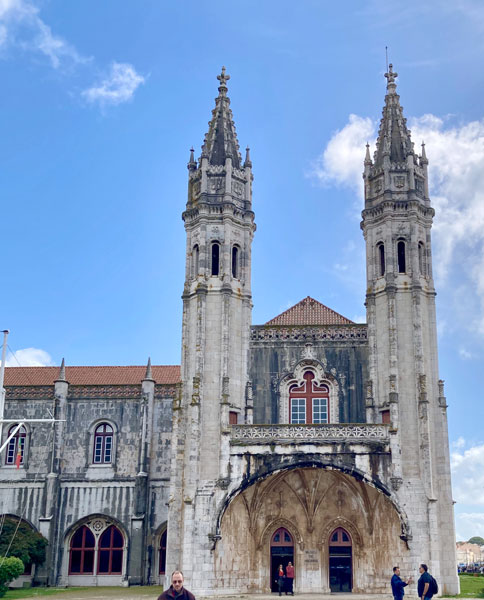
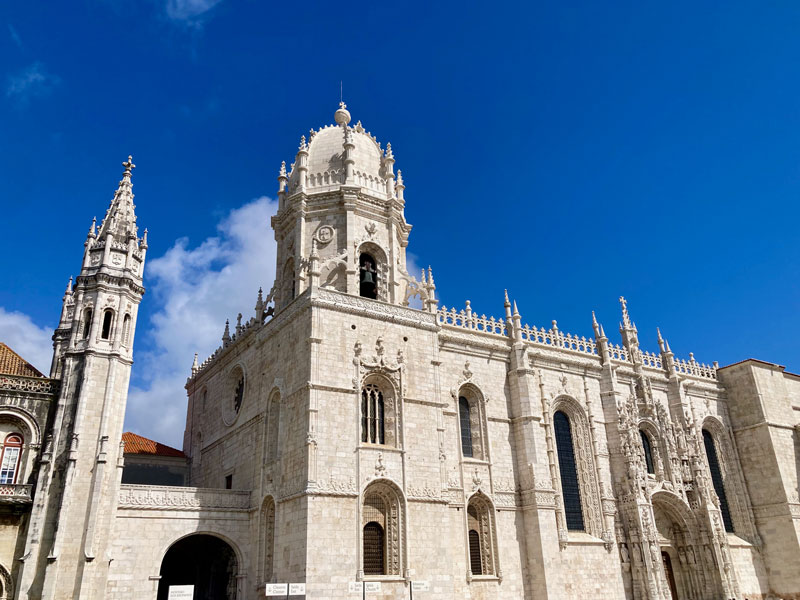
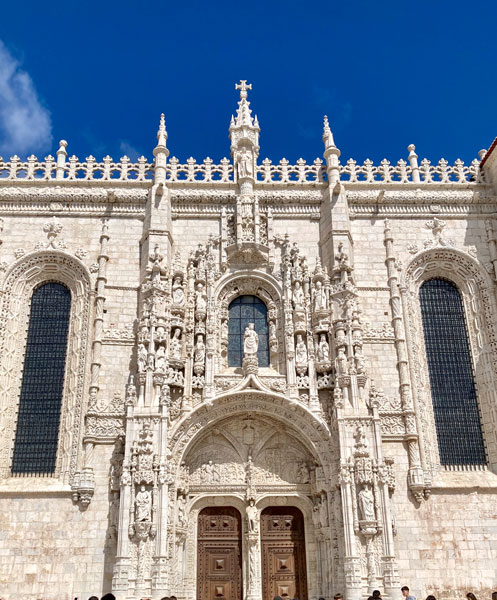
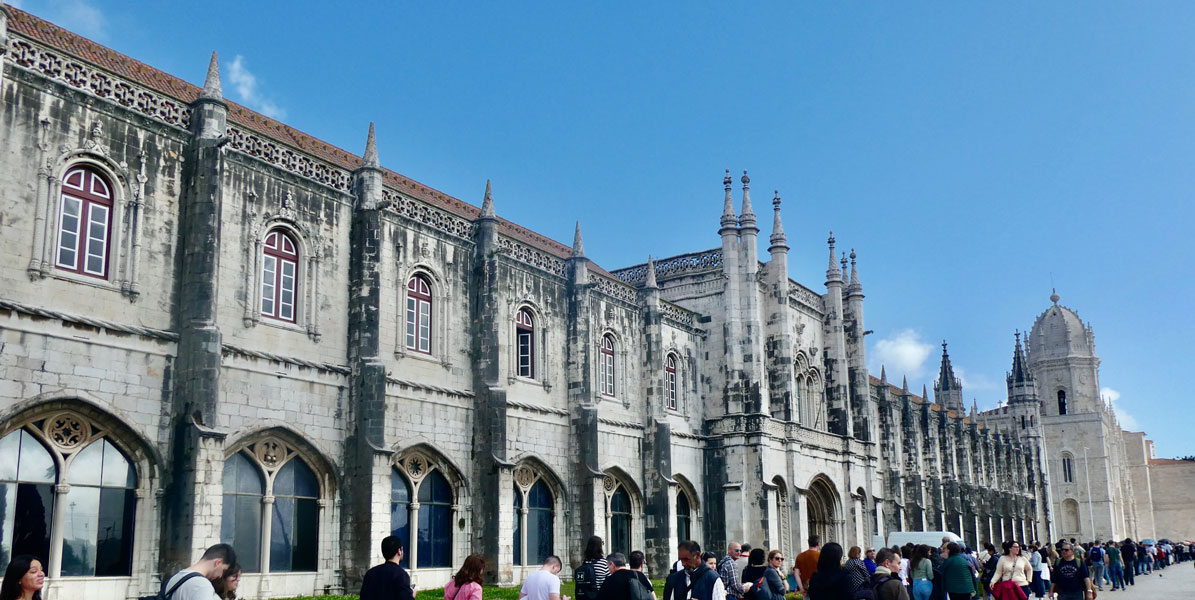
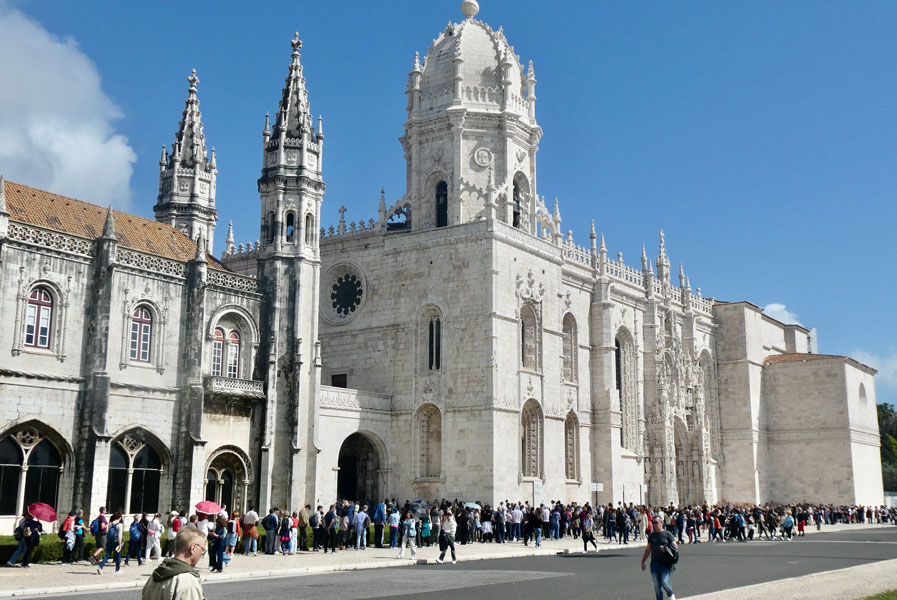
We left the tidal-lapped shores of the actual waterfront for the other side of the tracks, literally, where we took a comfort break at a museum complex that included the former monastery of the Order of St. Jerome. The monastery and church construction was begun by King Manuel I and was designed in what is now known as the Portuguese Manueline style: a richly ornate architecture with complex sculptural themes carved in limestone that incorporate maritime elements. Unfortunately, as can be seen in the photos, the lines to tour either the monastery or the church were extremely long. We skipped them.
After our morning tour of Lisbon and its waterfront, we returned to the hotel for lunch on our own. This time, we took Juanjo’s suggestion of a good place for pork sandwiches (bifanas). At 3:00 PM, we joined Juanjo for another Discovery: a walking tour up, down and around the hotel neighborhood.
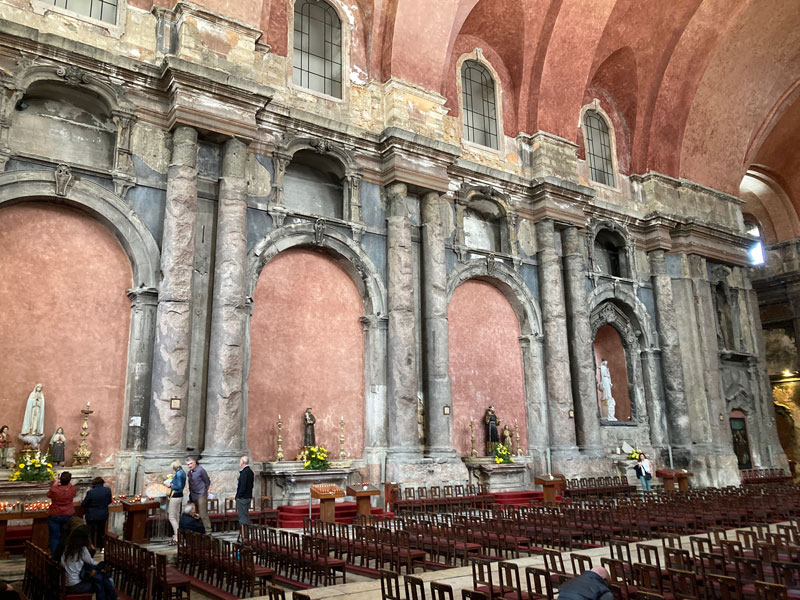
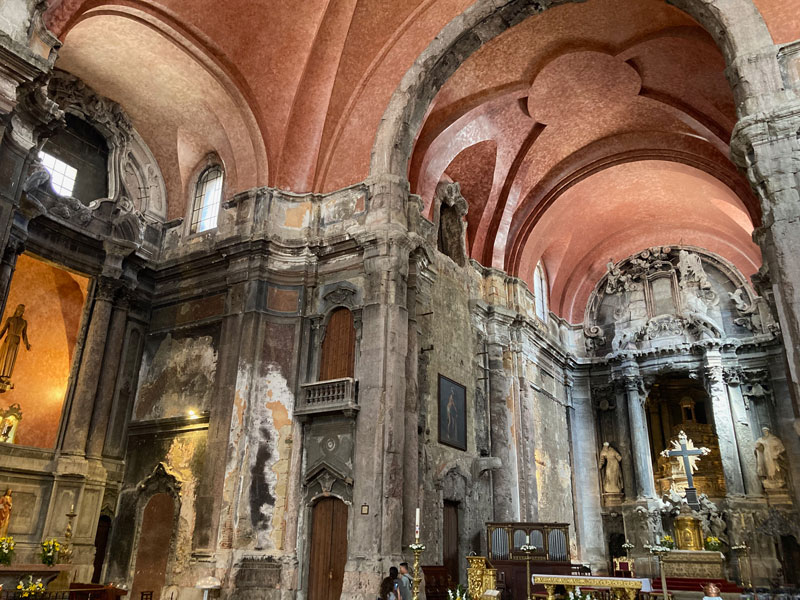
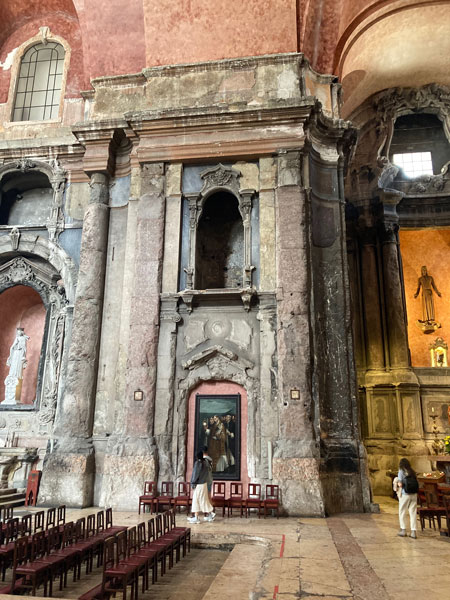
One of the first interesting stops was at the Church of the Convent of S. Dominogo. One evening n 1959, after the church was closed, there was a disastrous fire that brought the roof down literally. When they rebuilt, they decided to leave the fire-scarred pillars and walls in their damaged state. This was a very different look for a Baroque church, needless to say.
Then we came to the “up” part of the tour: a funicular ride to one of the hilltop parks that offered sweeping views of the city below. (Walking up the hill was an option…that everyone resisted!)
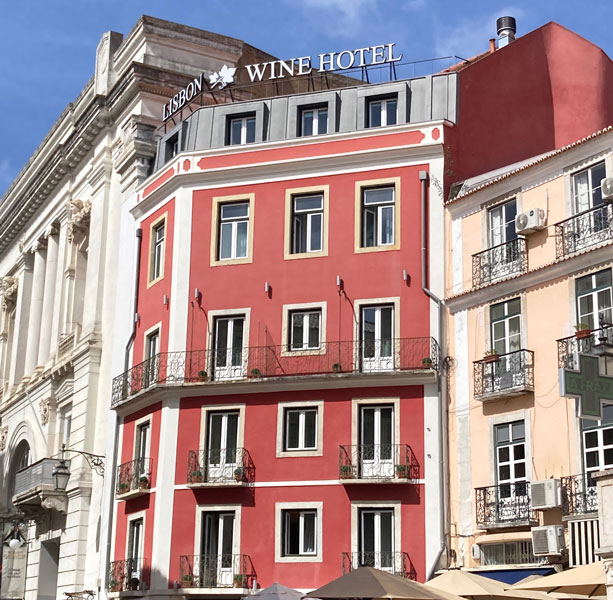
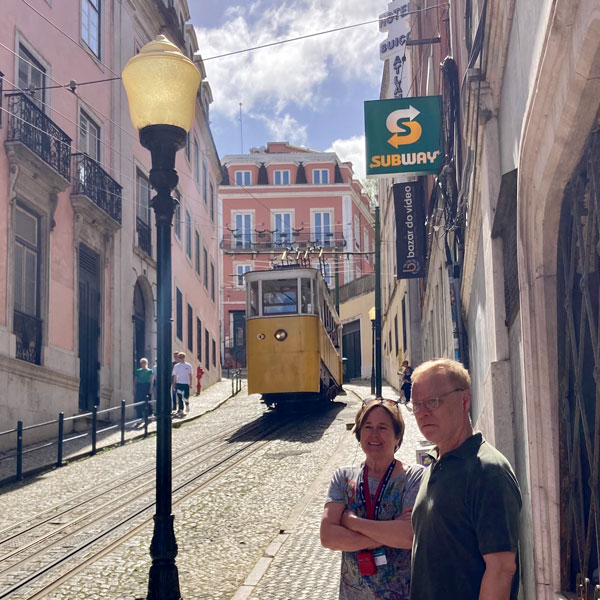
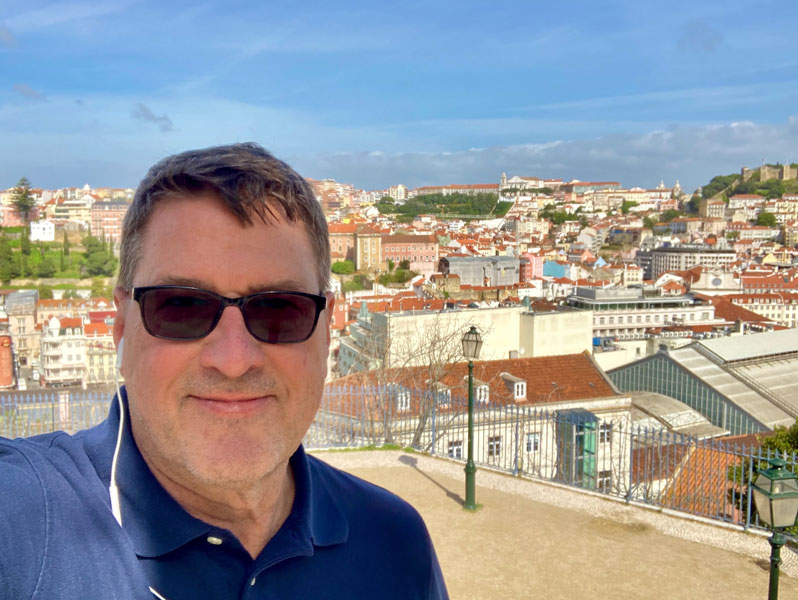
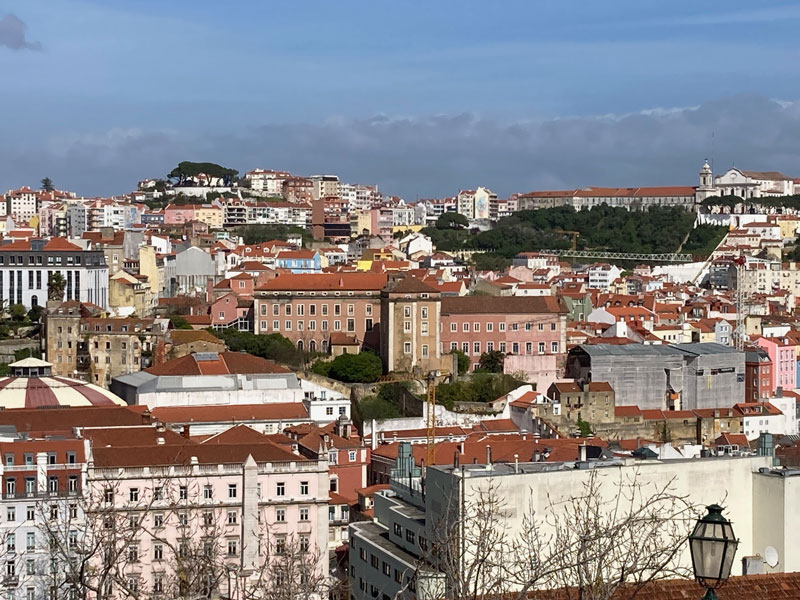
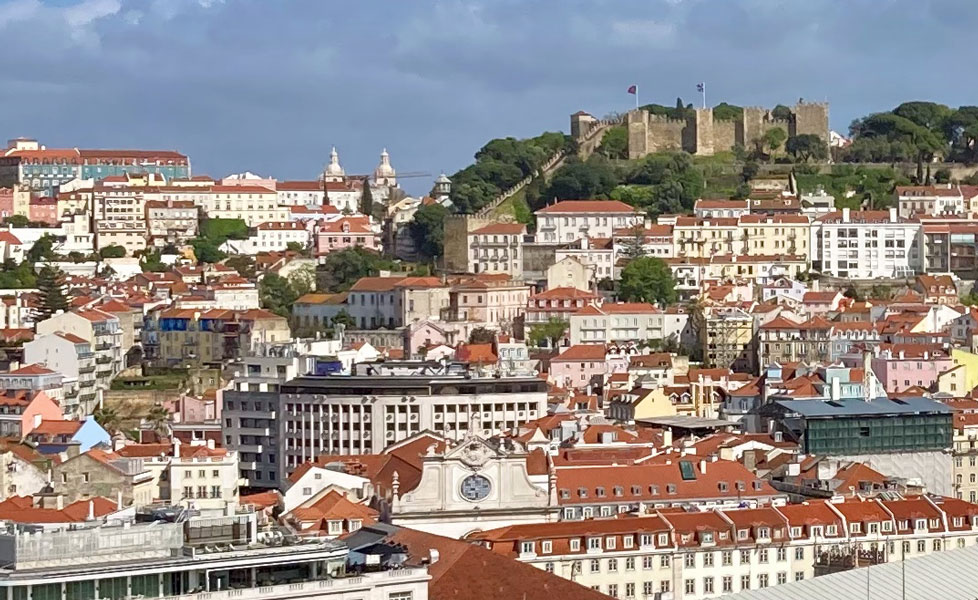
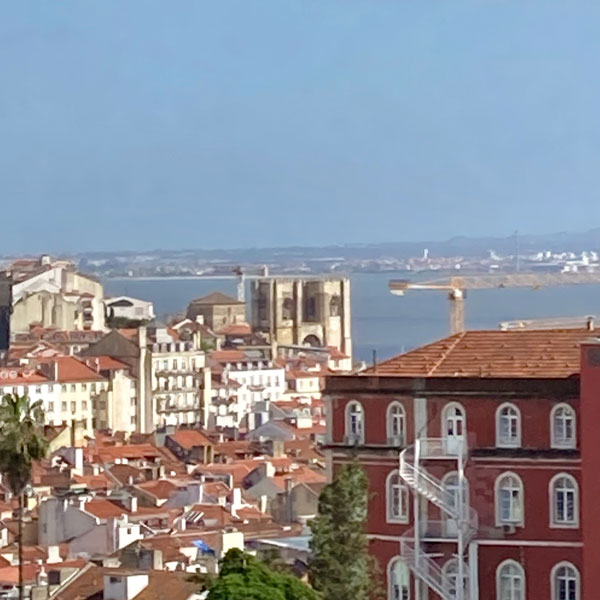
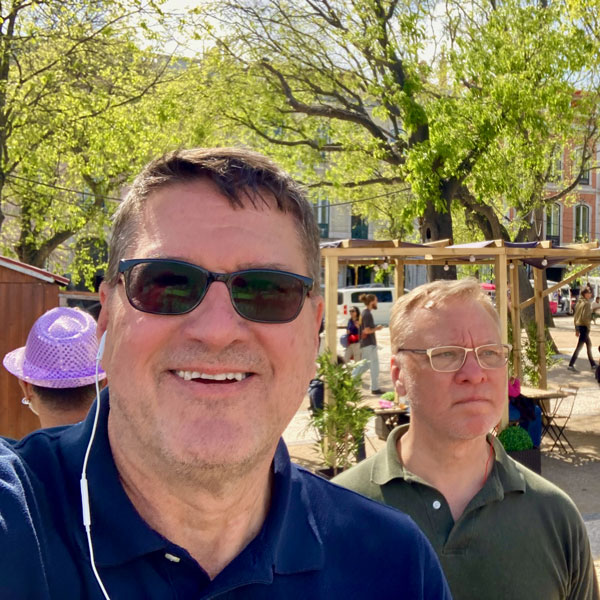
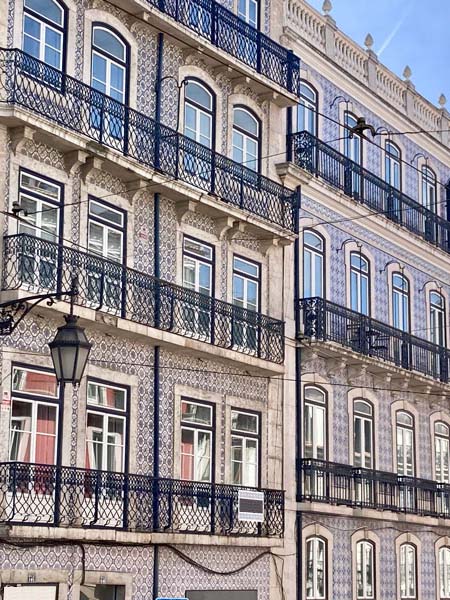
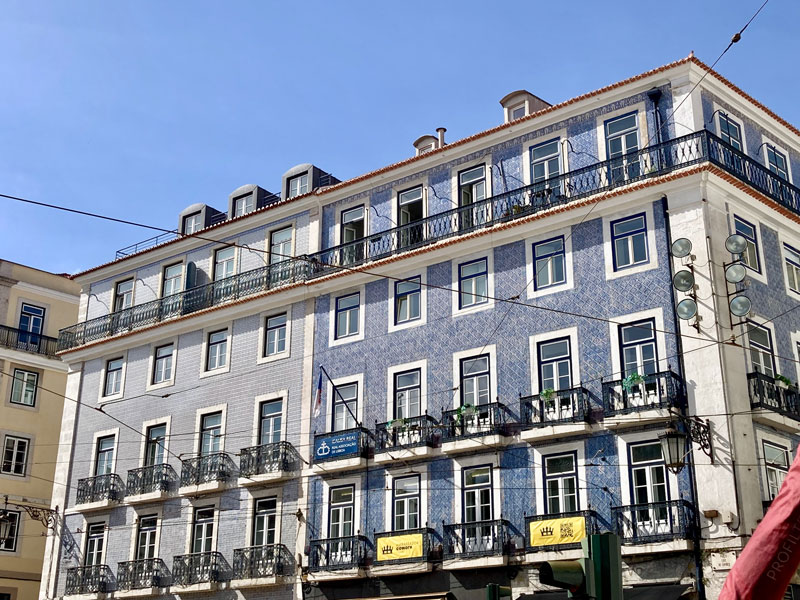
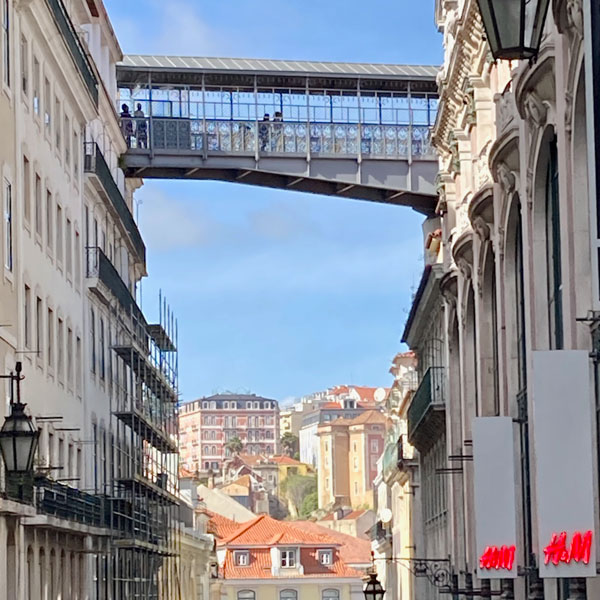
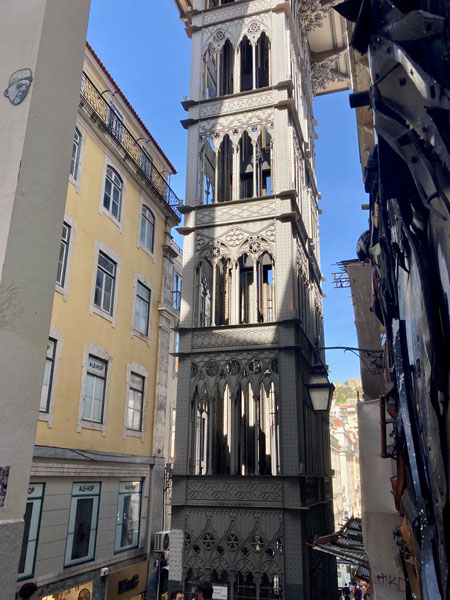
After taking in the view (and a lot of pictures as well), most of us decided to make the long descent back to the lower town on foot. We snaked our way through vibrant neighborhoods with beautifully-tiled buildings and other unusual sights. Near the end of our walking tour, we passed beneath the famous Santa Justa Lift, a cast iron elevator reminiscent of its contemporary, the Eiffel Tower, built to carry residents-now-tourists from the lower streets to Carmo Square above.
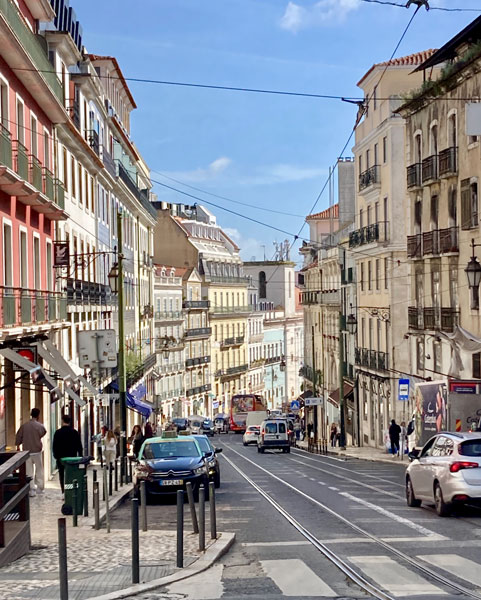
Dinner was on our own again and we three set out from the hotel to scope out the possibilities. We climbed many sets of steps and steeply-sloping streets until we eventually found ourselves eating in a small neighborhood taberna. (I had a great burger here, BTW.)
After dinner, Peg had a quest of her own on the way back: she wanted to stop in a pastry shop she’d seen “somewhere” for a particular sweet before calling it a night. After a futile search of locations that she found familiar but wrong, she satisfied her need for something sweet at the Easter food market that was set up in the middle of the Praça da Figueira (Square of the Fig Tree).
 Spain and Portugal in Depth