
It’s Easter Sunday here in Spain. Nary a chocolate rabbit or a minefield of plastic eggs was to be found anywhere.
Our journey today took us from the Mediterranean coast to Spain’s only inland river port and the largest city in Andalusia, Seville. But, on the way, we stopped in the historic town of Córdoba, which had been an important Roman city and a major Islamic center during the Middle Ages.
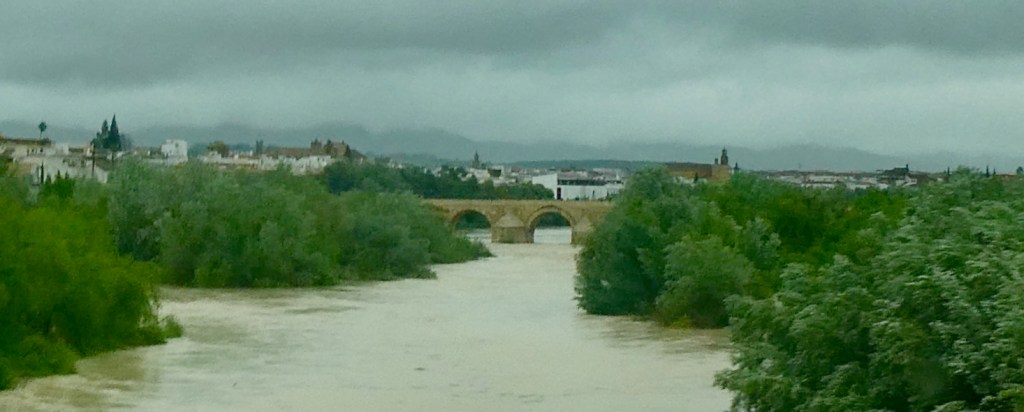
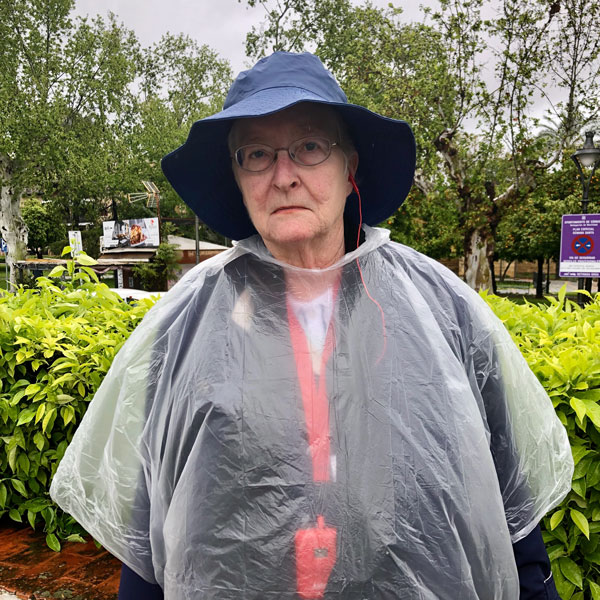
The day did not start out well. Again…it rained. And rained. And rained! While this did not impact us much while inside the bus, once we were out and walking in the old city, the excursion did not look promising. And during the bus tour of the town, we were unable to get clear photos of passing landmarks due, once again, to the streaking water across the windows.
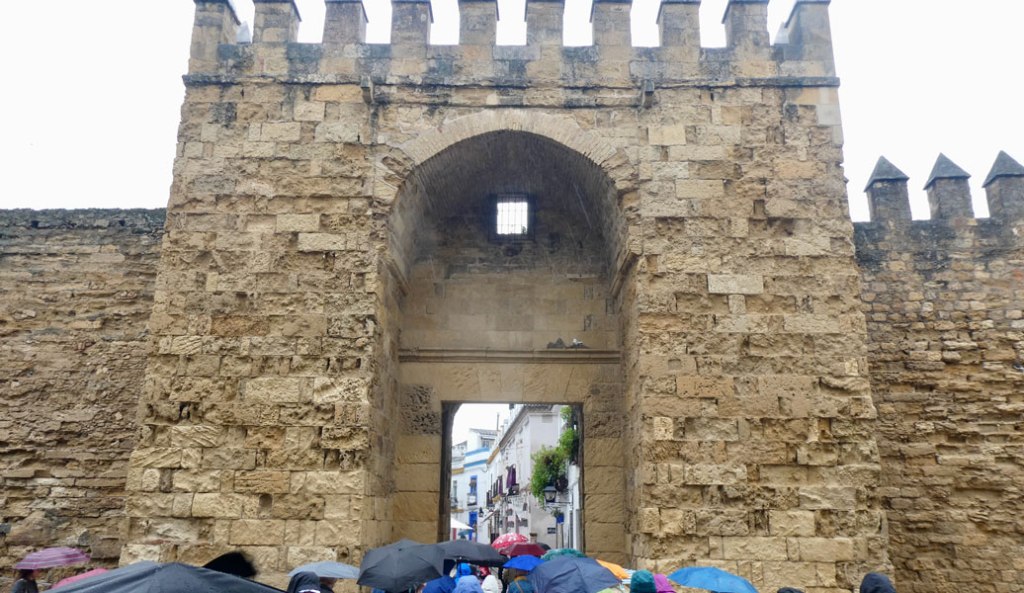
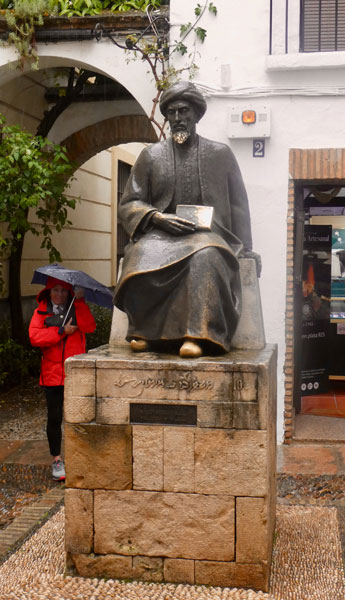
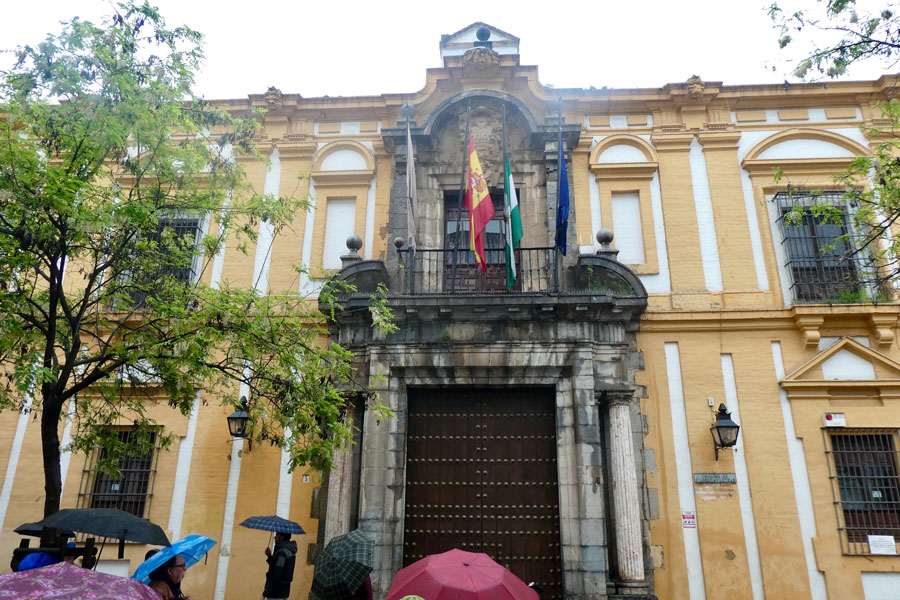
Once off the bus, we entered the ancient Jewish quarter of Seville through the Almodóvar Gate…and the struggle began! Our umbrellas clashed with those of other passing tourists in the narrow cobblestone streets as torrents of water fell from the eaves above. Thankfully, we did not experience the bitter cold wind of Ronda from the previous day.
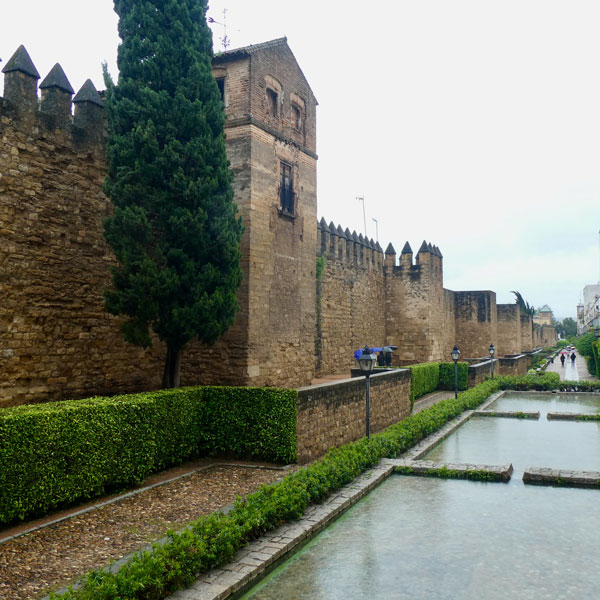
Our goal? The Córdoba synagogue, one of only three synagogues remaining in all of Spain after the expulsion of the Jews in 1492. (The other two are in Toledo.) Like that former synagogue we visited in Toledo, this building went through a number of uses after the expulsion (hospital, hermitage and pre-school) before some falling mortar from one of the walls exposed the temple’s concealed plasterwork and revealed its historic function. It has been a National Monument since 1885.
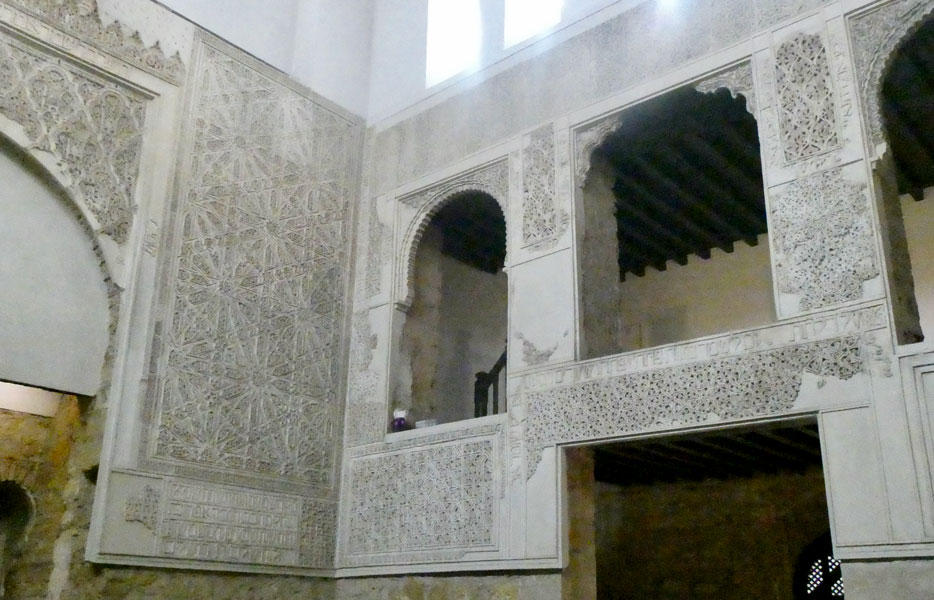
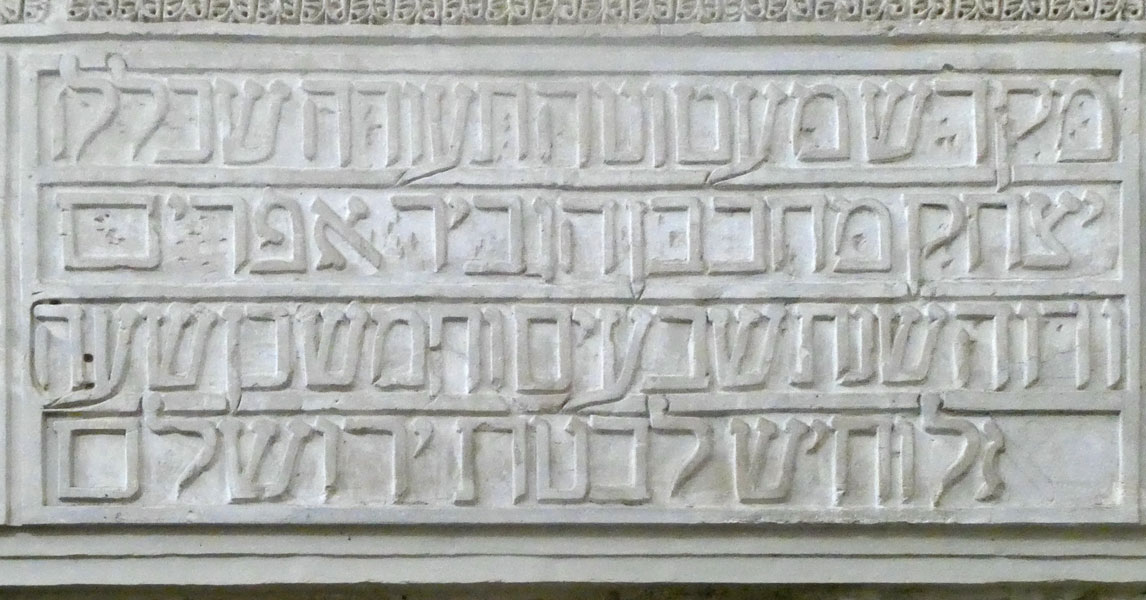
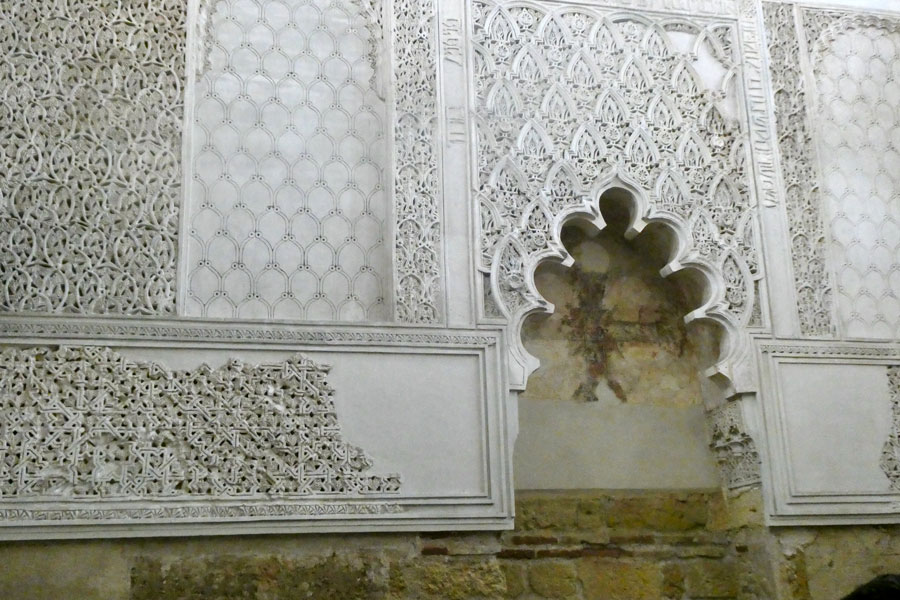
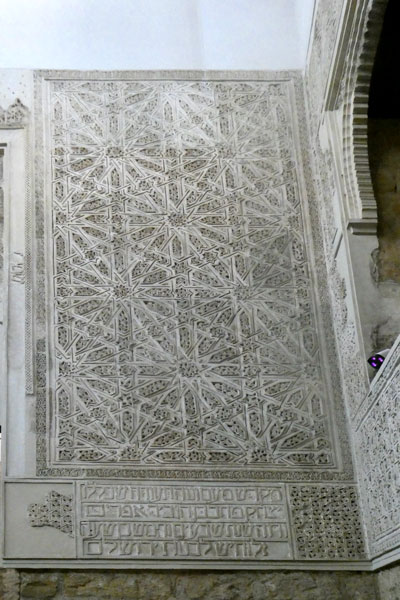
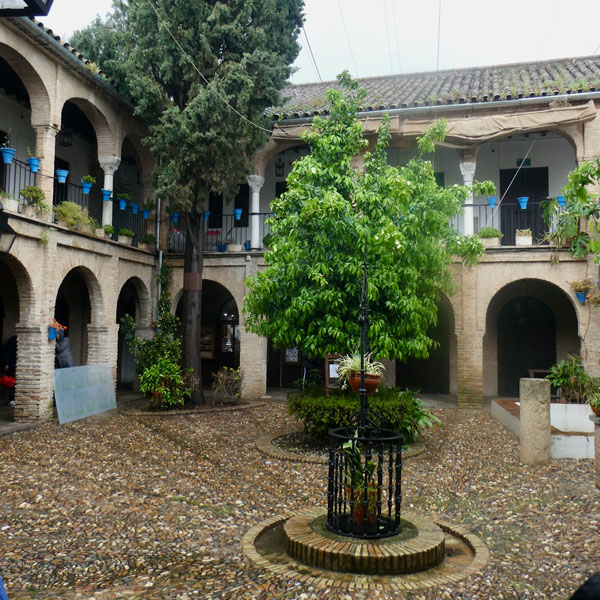
After leaving the synagogue, Juanjo led us to the enclosed courtyard of a formerly single-family home typical of the neighborhood that has been repurposed into artists’ studios and shops. (I think the best part of this stop was the relief from the rain we found standing under the surrounding arcade.)
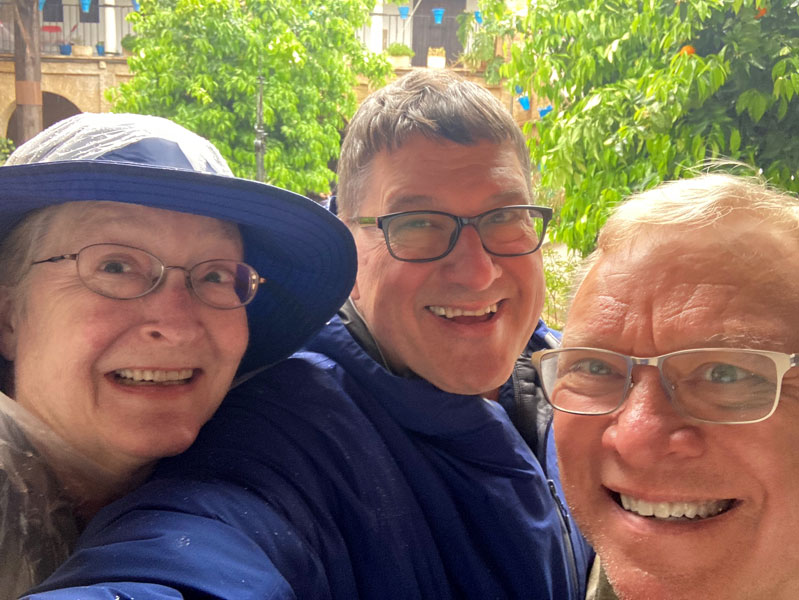
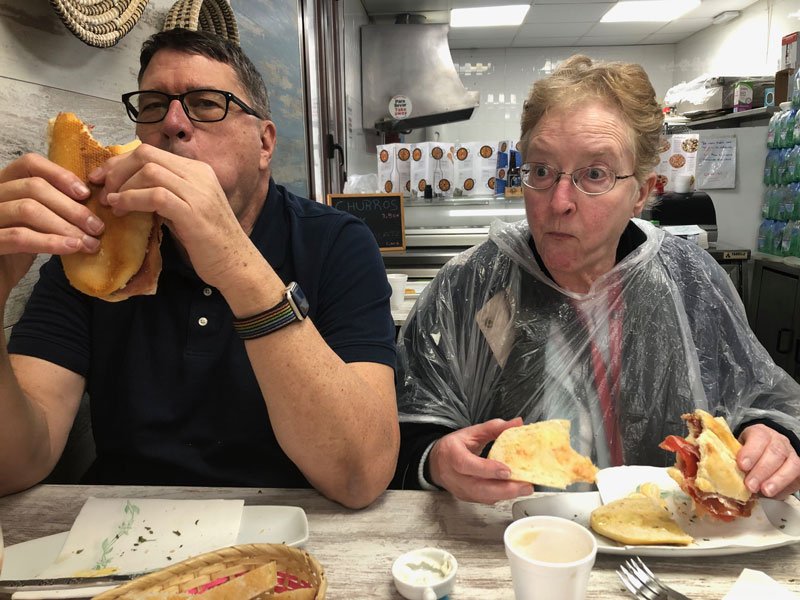
After wading about the Juderia a bit more, we were released for two hours for lunch and shopping before the main event this afternoon. To escape the rain, we literally squeezed into a tiny corner restaurant for food and churros with chocolate.
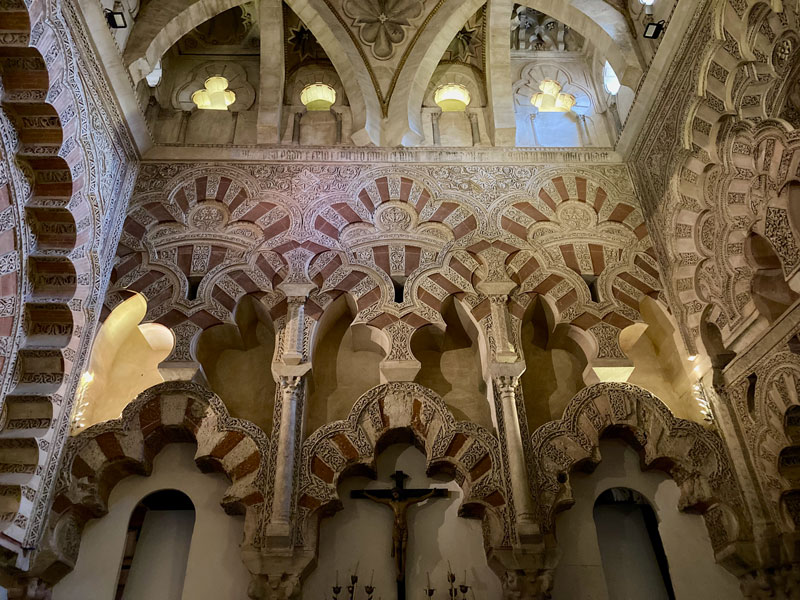
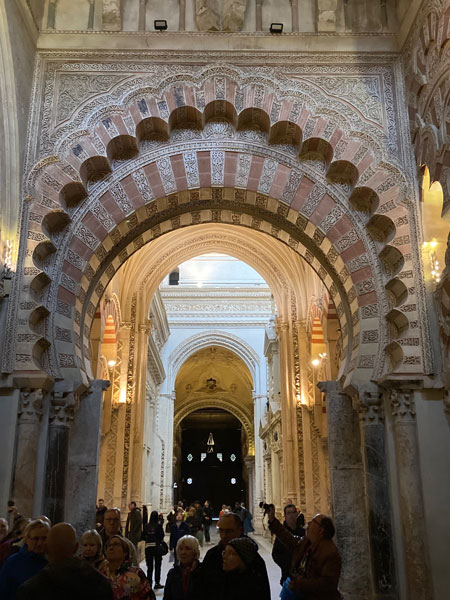
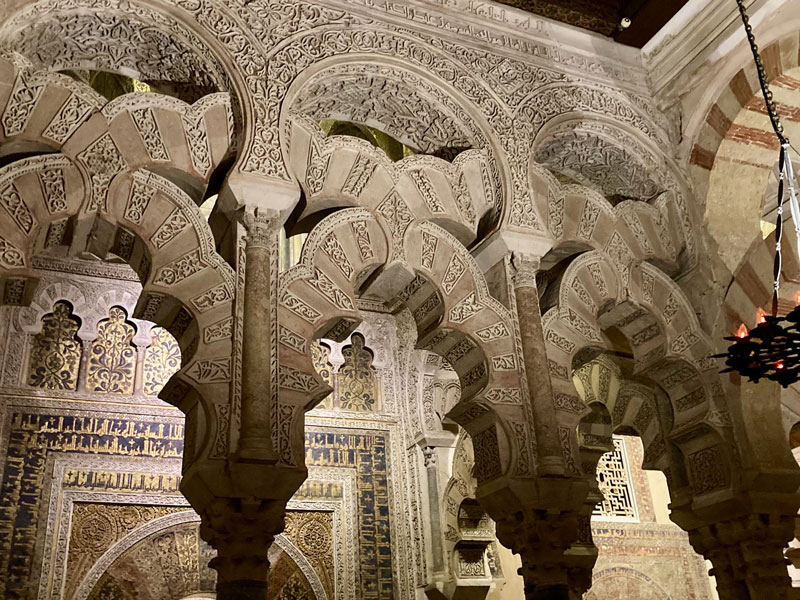
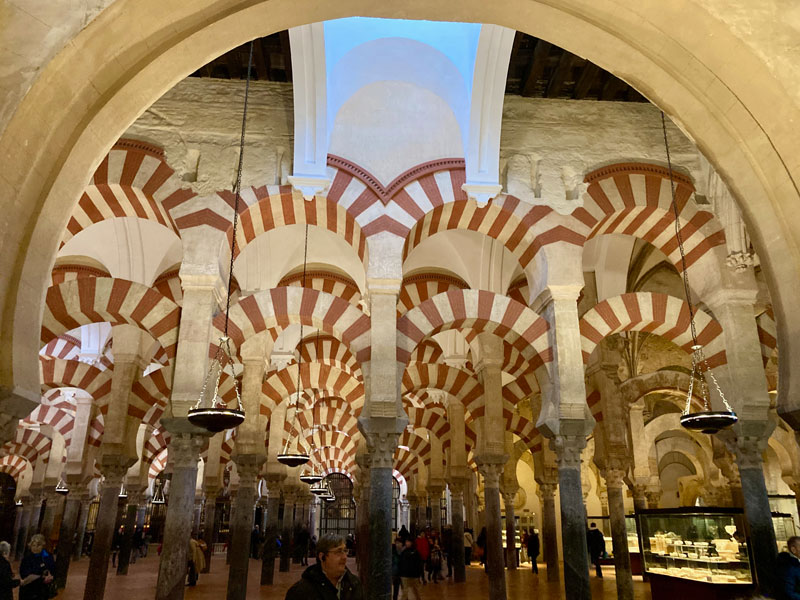
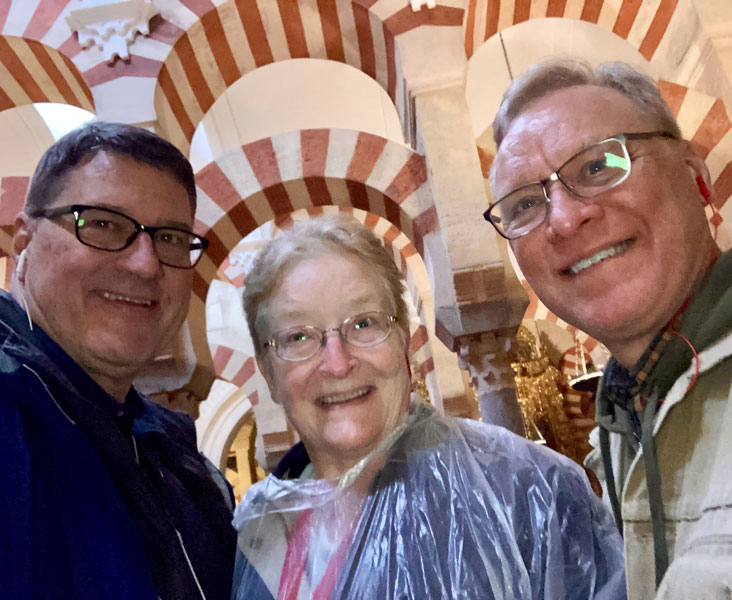
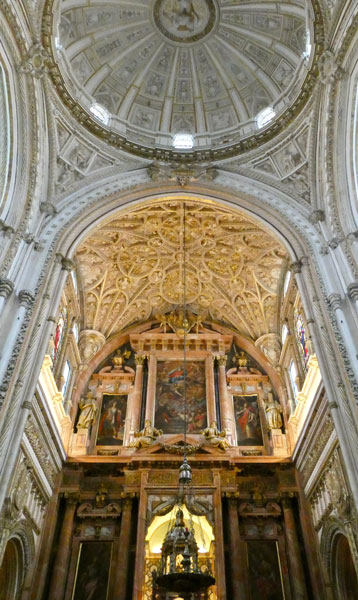
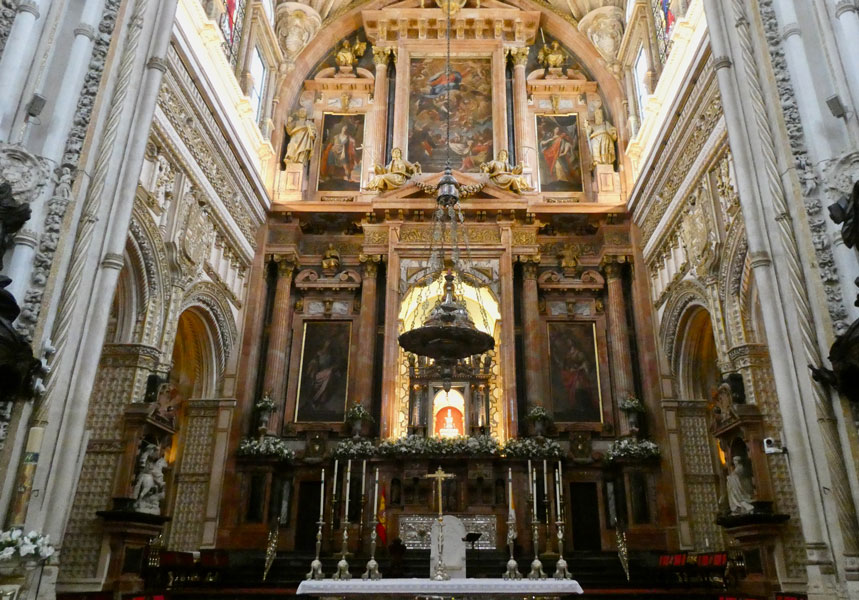
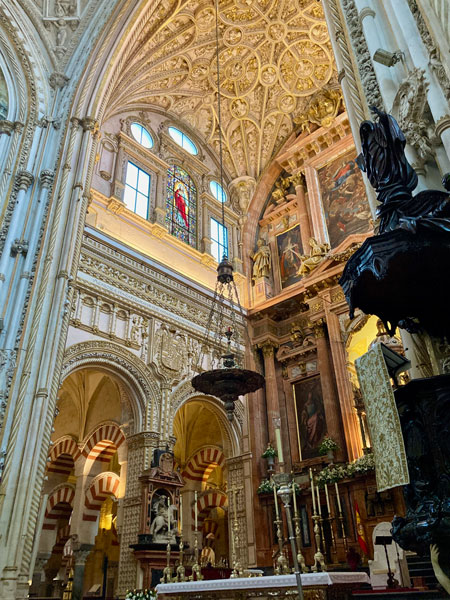
But all the misery of being wet and bedraggled was forgotten upon entering the Mosque-Cathedral — the centerpiece attraction of Córdoba.
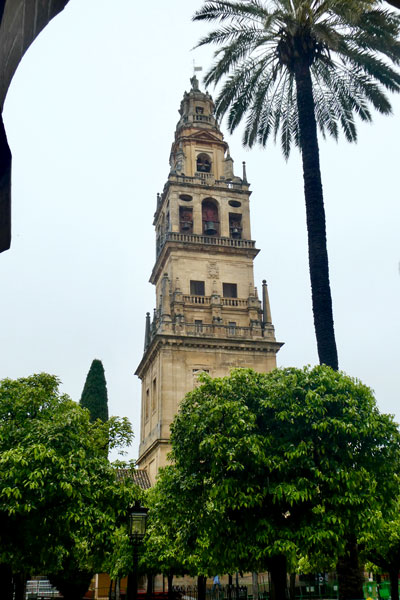
As seen in this bird’s-eye view, the original mosque encompassed a large rectangular area with a minaret (converted to a bell tower), a garden, and a vast worship space for 25,000 men. This was reconfigured with a Christian cathedral in the center after the Moors surrendered. Fortunately, this creative Christian “conversion” preserved about 80% of the original Moorish architectural design for us to enjoy today, thanks to the wisdom and recognition of Charles V.
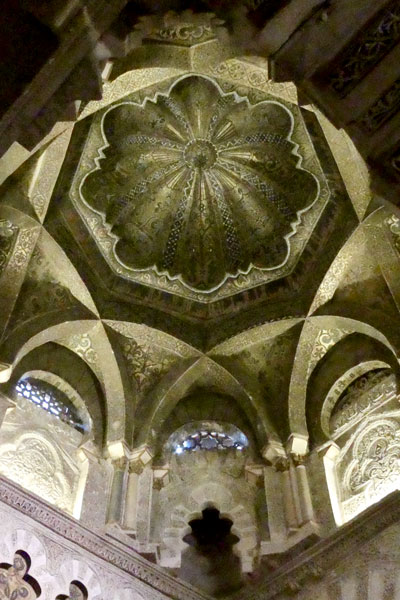
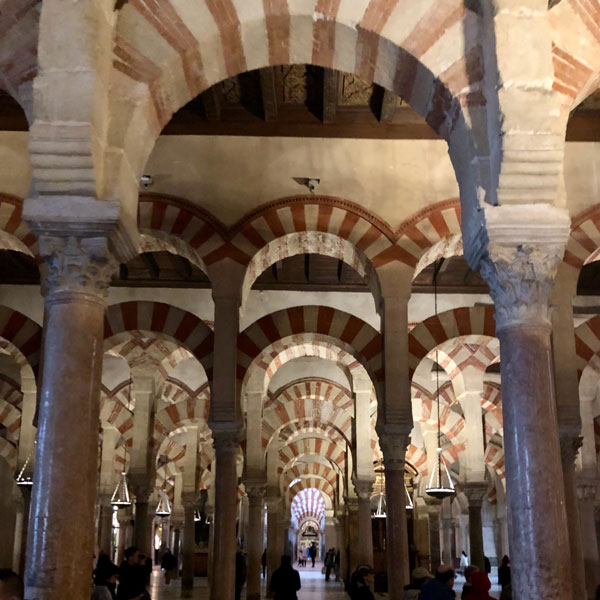
And while the cathedral is a visual amalgam of Gothic, Baroque & Renaissance architectural elements, I found the original mosque itself far more impressive and affecting. The internal “prayer” space created by row after row of two-toned stone arches alone was mind-boggling.
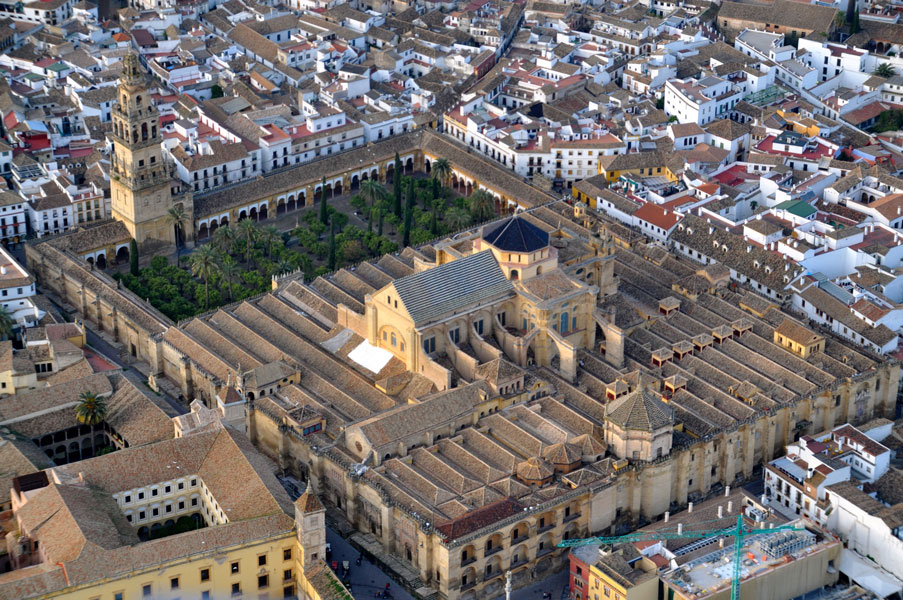
Fun mosque fact: this particular structure it is not oriented towards Mecca, as most are, because of pre-existing foundation and street configurations.
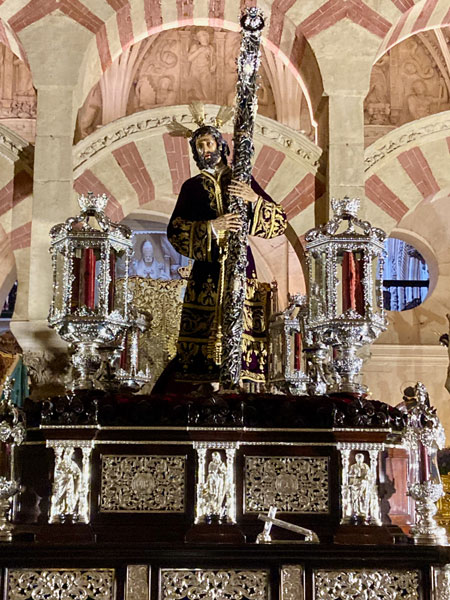
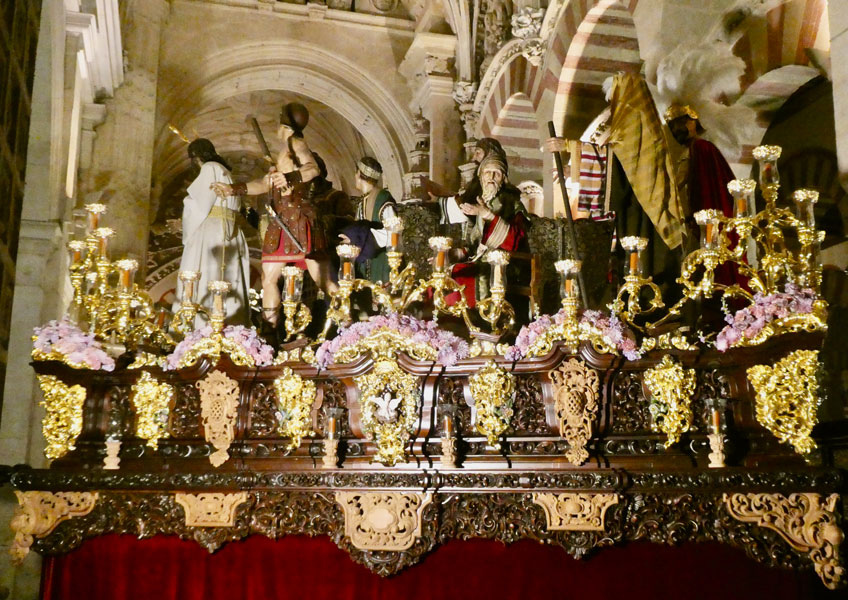
Last week, with the sole exception of Palm Sunday in Madrid (where we hit the jackpot with two), almost every planned procession in each city we visited had been cancelled due to rain. But we have seen a number of the floats stored in church buildings. Here are two that are being stored in the Córdoba Mosque-Cathedral building until they can be returned to storage.
Still in awe, we returned to our bus and continued our journey on to our next stop, Seville.
 Spain and Portugal in Depth
Interesting.
LikeLike